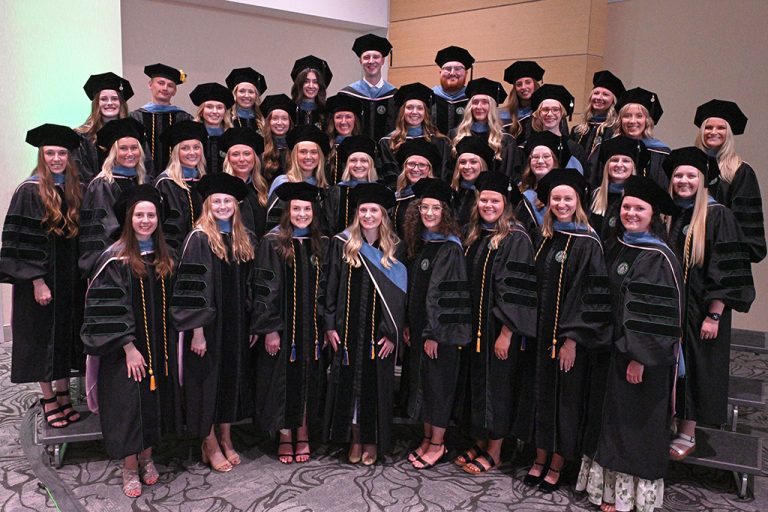
Community (courtesy Dr. Andy McLean)
In my last column, I spoke of the various pillars important to the University and the School of Medicine & Health Sciences. Recently, UND President Armacost declared this new academic year to be the “Year of Community,” with the theme espoused by the UND Strategic Plan elements of Learning, Equity, Affinity, Discovery, and Service.
What exactly is “Community,” though? Interestingly, the word is derived from the Latin roots “cum,” meaning “along with,” and “munus,” meaning “gift.” So, essentially, “community” is “the gift of togetherness.”
According to Fran Norris and colleagues, healthy and resilient communities typically share the following common traits:
- Strong leadership
- Engagement of its members
- Wise use of resources
- Attention to psychosocial issues
They also note that those communities are deliberate and collectively action-oriented.
In addition, such communities typically have clear guiding principles, acceptable practices, and foster of open communication.
In actuality, we belong to many different communities to which we contribute (and to which we often have significantly varying functions). For example, think of your roles in the following communities: civic, professional, spiritual, neighborhood, recreational, familial. Now, think of the health of those communities to which you belong. Do they share the qualities noted above? If not, what’s missing and how might you contribute?
If you would like to share inspirational quotes, stories, or ideas on well-being that might be helpful to others, email Dr. Melissa Naslund at melissa.naslund@UND.edu.