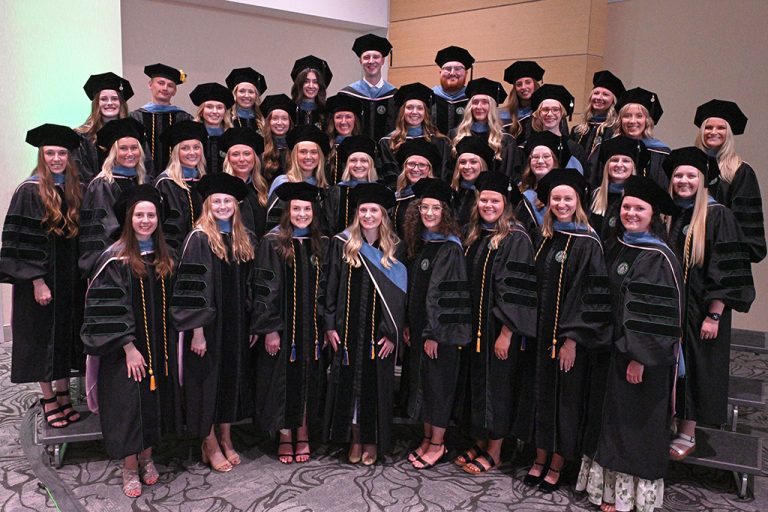
Generations of trust (courtesy Dr. Andrew McLean)
My family has seen four generations working in the healthcare field. Some of you have likely heard me speak of growing up in a rural physician’s household, where our telephone number had five digits and our phone system was a “party line.” Likewise, I’ve heard stories (and contributed my own) about the changes in healthcare and education over the years.
Along those lines, a group of us from UND SMHS recently attended the annual Association of American Medical Colleges (AAMC) meeting Learn Serve Lead, where round table lunch discussions took place—our designated topic was generational issues in healthcare education. To be honest, as a facilitator, I thought I was going to navigate senior level academicians complaining about the changes required to successfully teach Gen Z. Instead, most of the hour was spent listening to medical students’ concerns about successfully learning in an environment where they didn’t always feel heard.
Interestingly, the discussion coincided with a theme woven throughout a number of AAMC sessions: trust.
In a review of multiple studies, featuring over one million participants, Zhao and colleagues found a correlation between trust and well-being. And according to Chew and others, students who trust their teachers and each other are more willing to take academic risks, to pursue challenging work, and to grow. Much like a patient’s expectation of their physician, they note that students need to know their teacher has competence, integrity, and beneficence. Two other traits frequently cited in research about trust are reliability and respect. Student characteristics of integrity, reliability, and respect allow for enhanced trust in them by their teachers. Furthermore, trust is bidirectional.
Each generation trusts that what occurs in healthcare education and practice is for the benefit of the patient. But such environments must also foster the well-being of trainees and trainers. As teachers, trainees, and as an institution, it is useful to ask ourselves if we strive for competence, are consistent in our efforts, and display integrity and show respect and caring. If we say “yes,” it is also important to reflect: “And this is evidenced by…?”