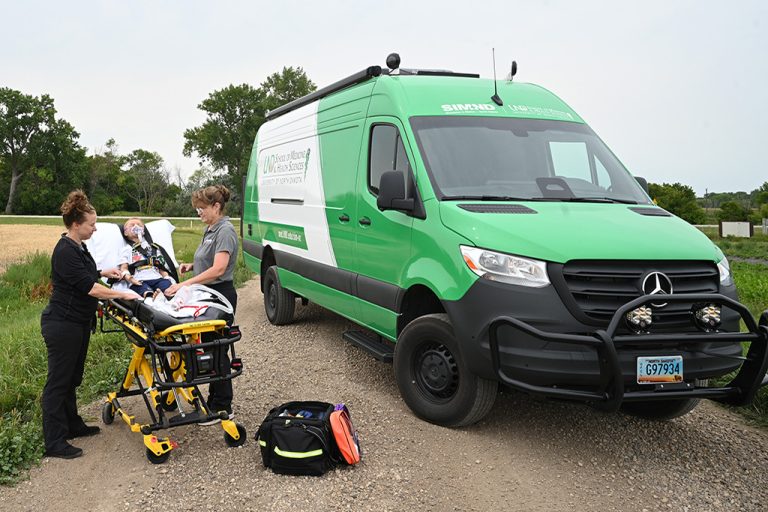
Imposters! (courtesy Dr. Andy McLean)
Some sayings in medicine are rather obsolete (“Watch one, do one, teach one,” for example). Both in medicine and society, we might hear, “Fake it till you make it.” There is both wisdom and risk in this.
Clearly the risk relating to those in safety-sensitive occupations (healthcare, aviation, engineering) would be misrepresenting one’s ability or expertise—pretending to possess knowledge, skills, or qualifications that one does not actually have. Such behavior could have deadly consequences.
Most people understand that the phrase refers to gaining confidence by acting as such, not waiting till you feel entirely ready. To paraphrase Voltaire, “The perfect is the enemy of the good.” For most of us, behavior precedes confidence. We learn our skills on the job.
Most of society has heard the term “Imposter Syndrome.” Although the concept is not actually a recognized psychiatric “syndrome” or “disorder,” it frequently is experienced by healthy, successful people. This is why many academics, including those who developed the concept, use the term “Imposter Phenomenon.” In healthcare training, Imposter Phenomenon often occurs with transitions: from basic sciences to clinical rotations, moving on to residency, graduating and becoming an early attending practitioner, etc. And anyone in their first leadership position knows they stepped into that role without being completely prepared. While being vigilant about one’s expertise is necessary, feeling as if you are an imposter is emotionally exhausting. It can prevent you from pursuing challenging-yet-rewarding opportunities and can interfere with recognizing your authentic self.
Another interesting thing about the idea of “faking it till you make it” in the mental health field, is that behavior can actually change attitude. It is known that for some individuals experiencing clinical depression, the act of smiling (even when they don’t feel like it) activates muscles associated with positive emotions, with a subsequent feedback loop to the brain, moderately boosting mood. We also know that for some anxiety conditions (social phobia such as public speaking in particular), placing yourself in uncomfortable situations and tolerating them eventually allows one to feel more confident, and for many, to gain a sense of mastery.
The good news about healthcare training is that there are safeguards. There are admission committees that have done their homework; they select the applicants they do for a reason. There are accredited curricula, competencies and rotations—as well as examinations. There is formative and summative feedback. And there are decades of institutional knowledge.
So, as you proceed forward with life-long-learning, know that you are building self-efficacy and participating in professional development. Be courageous as you develop confidence. Learn to trust the process.
Reminder, if you would like to share inspirational quotes, stories, or ideas which might be helpful to others, please feel free to email Dr. Melissa Naslund at melissa.naslund@UND.edu.