UAS Test Range: The New Gorman Field
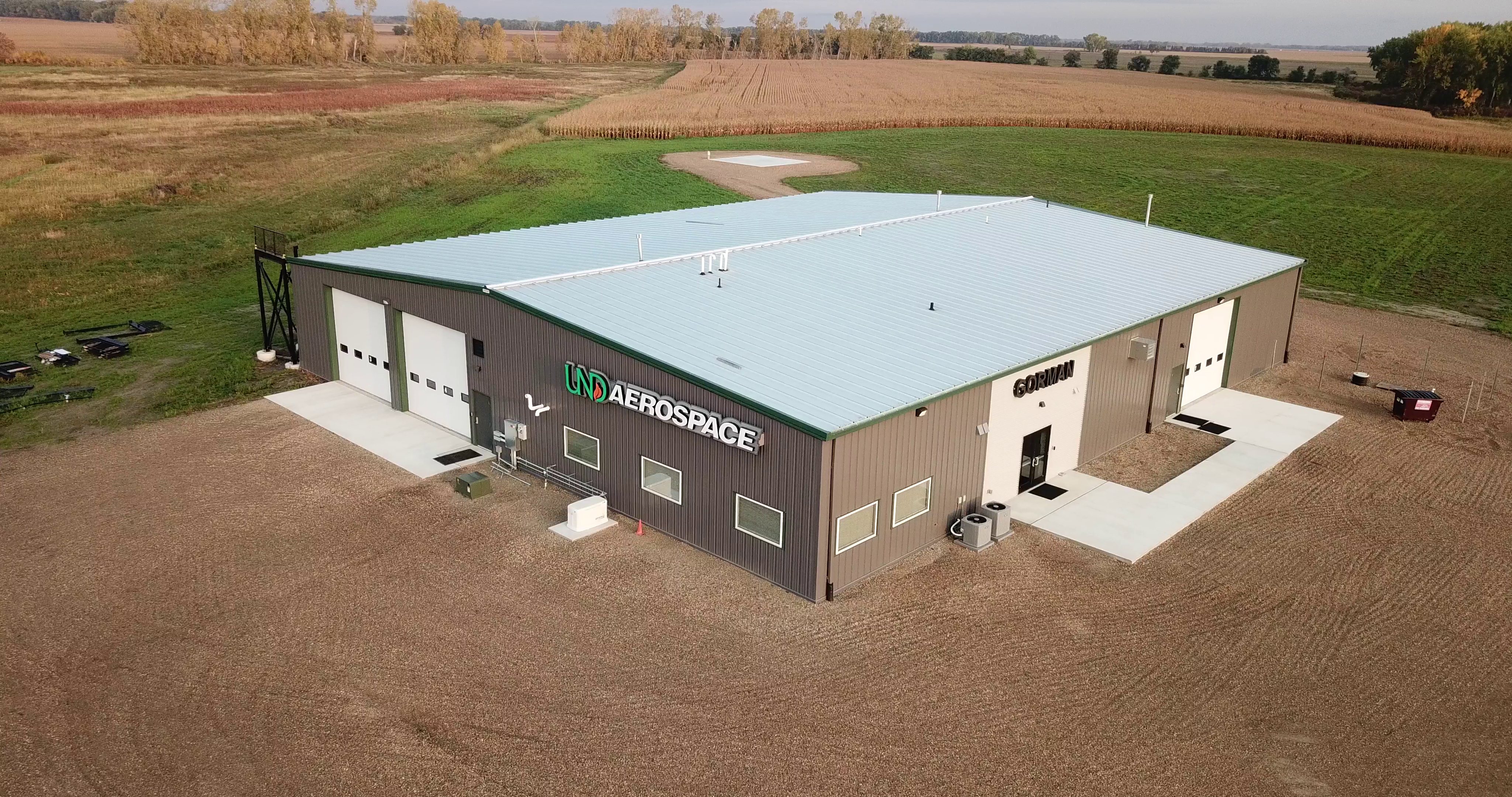
This spring marked the beginning of UND Aerospace’s use of the Gorman Field UAS Test Range to conduct unmanned aircraft systems flight training.
Background
This facility allows students and faculty to further their education, research, and training as the UAS program grows.
Gorman Field, made possible by the generosity of the Gorman family, was also partially funded by the UND Aerospace Foundation. The finished field consists of 33 acres just south of the Grand Forks Air Force Base and hosts a 12,000-square-foot facility.
“It’s an excellent state-of-the-art facility for education and training,” said Paul Snyder, director of UND’s Unmanned Aircraft Systems Operations program. “It provides a highly professional, safe environment for our UAS Operations students to conduct training in areas such as UAS, counter UAS, commercial operations, and advanced air mobility while enabling students to continue to be engaged in UAS and autonomous systems research.”
Discussion of a dedicated airfield initially began in 2009. UND faculty and staff have been working since that time to plan and implement the completion of Gorman Field.
“The enthusiasm of the faculty towards the completion of this facility must not go unnoticed,” said Tracy Mitchell, UAS instructor and student. “Months of work behind the scenes are paying off, with student flights being conducted at a rate higher than ever and research taking place since the day Gorman Field was ready to conduct missions. Undoubtedly, the advancement of unmanned flight at UND would not be possible without the wonderful professors and directors valuing the growth of our program.”
Mission
Gorman’s goal is to help advance the growing Unmanned Aircraft Systems Operations program at UND while also providing space for local UAS companies to fly. “The field has various features, including an observation deck for visual observers, a Detect radar system to help enable Beyond Visual Line of Sight (BVLOS) operations, a cement 30’x30’ launch and recovery pad, and office space for ground control stations or electronic observers using the ground-based detect and avoid system.”
“The whole building is centered around UAS operations,” said UAS associate and student Stuart Hutt. “We have a dedicated room for the pilot and sensor operator with an instructor station and another room just for electronic observers. The rest of the building is setup nicely, too, with briefing areas and a giant hangar for storage. The whole set up makes operations easier and faster, giving us more time to focus on flying the aircraft.”
In addition, the facility provides office and classroom space and hangar space for UND to maintain its UAS fleet. Since its completion earlier this year, students and staff have begun using the field.
“Gorman Field provides an excellent opportunity for many different types of UAS operations,” said UAS associate and student Christopher Jungels. “One of the great features of the field is that it allows for multiple operations to take place at the same time because of its multiple ground control stations. This allows for a wide range of operations and research.”
Written by: Averie Eixenberger, Commercial Aviation and English major at UND.


