A Tour Through UND Law School: Insights from Professor Kimberly Dasse
As a second-year participant in the Alice T. Clark (ATC2) program, Professor Kimberly Dasse is part of a small, dedicated group of new professors at the University of North Dakota (UND).
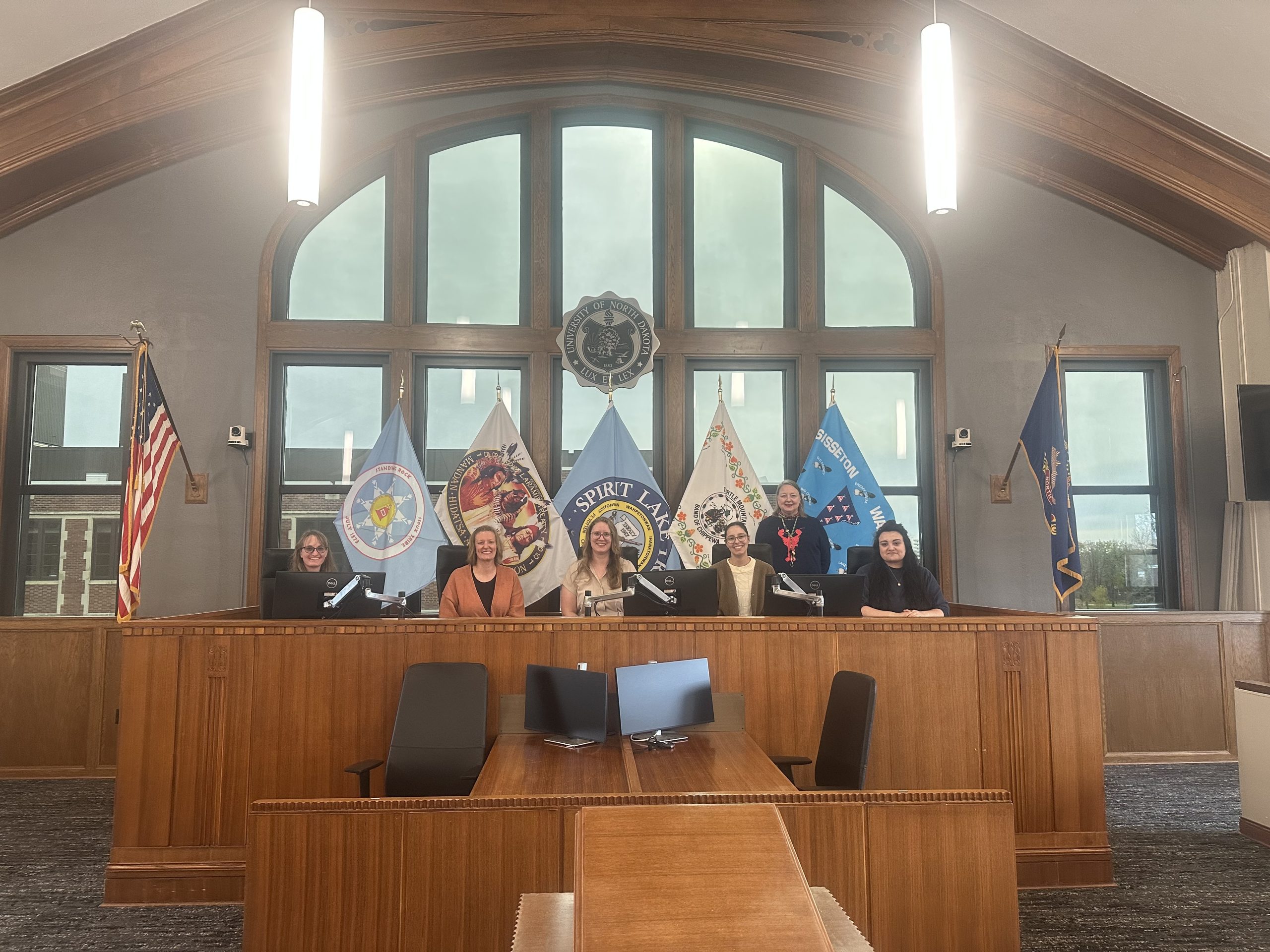
One of the goals of the program is to help participants learn more about each other’s disciplines. To achieve this, the group meets at each other’s schools every month, exploring the unique spaces and experiences each academic field offers.
In October, Professor Dasse welcomed the ATC2 class to the law school for an engaging tour. The visit began in the courtrooms, where she introduced the group to the purpose and function of each space, emphasizing how these rooms provide students with invaluable opportunities to develop their advocacy skills.
The tour continued into the law school classrooms. Professor Dasse highlighted the differences between large lecture halls—where the Socratic method might be employed—and smaller, more intimate rooms, like her own, designed for team-based learning in legal research and writing.
A stop at the law library provided a chance to reflect on the evolution of legal research. Professor Dasse shared stories from the “old school” days of using books to track down cases, contrasting that with the instantaneous access provided by modern research technologies like Lexis and Westlaw. The conversation naturally turned to the emerging role of AI in the legal profession, sparking lively discussion among the group.
On the first floor, the tour included a visit to the dean’s suites, where participants learned about the administrative work that supports the law school. Finally, the group explored the three faculty office spaces, each with its own character. Tisdale’s office, with its classic wood molding and elegant waiting area, quickly became a favorite.
The tour concluded in the second-floor conference room, where Professor Dasse and her colleagues held their monthly meeting. The visit not only offered insights into the workings of the law school but also strengthened the connections among faculty, providing a deeper understanding of how legal education shapes future advocates.