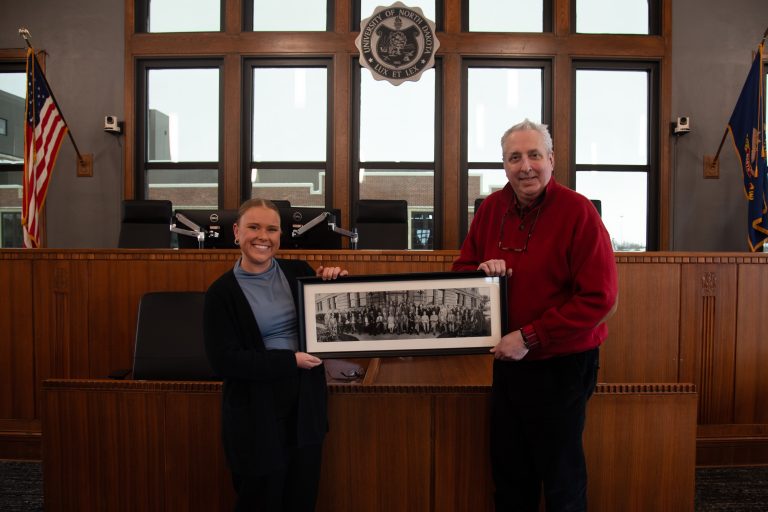
Fargo attorney stresses the importance of protecting intellectual property
Tom Kading says he founded Fargo Patent and Business Law to help business owners protect their ideas.
InForum
By David Olson

FARGO — Tom Kading founded Fargo Patent and Business Law in 2021, specializing in the area of intellectual property, patents and trademarks.
Before that, he started and later sold several companies, including real estate and cryptocurrency ventures.

Articulating that perspective in an open letter on the company’s website, Kading states that too many brilliant innovators struggle to protect their ideas because legal advice feels disconnected from their business reality.
“I founded this firm with a simple belief: Your attorney should understand both your legal needs and your business dreams,” Kading wrote.
In an interview at the company’s offices in south Fargo, Kading said Fargo Patent and Business Law works to help businesses of all kinds understand their intellectual property rights and to protect those rights.
He said it comes down to one thing: “What can we do to make it your idea and not get ripped off by everyone else?”
According to Kading, a wise step for anyone who has a good business or a valuable product would be to trademark the name.
If they don’t, they risk someone else using the name and cannibalizing the original company’s sales.
An aggrieved businesses can sue, but even a victory will likely be costly, perhaps to the tune of hundreds of thousands of dollars, according to Kading.

The solution?
“They should have went out and spent $2,000 and got a trademark,” Kading said.
When it comes to patent protection, Kading said someone who has a valuable idea can take it to the market and have a one-year year grace period in which to pursue a patent.
“If you don’t pursue patent protection on it (the idea) within that year, you’ve basically dedicated it to the public,” Kading said, adding if that happens “There’s very little you can do (to stop pirating) and it happens all the time.”
Fargo Patent and Business Law has five other attorneys in addition to Kading, who said the firm, which has a small office in Colorado, works in four specific areas of business: aerospace, including drones and aviation; energy, including oil and gas production; manufacturing; and agricultural technology.
On the subject of patents, Kading said the normal process for securing a patent may take two to three years to complete, though he added there is a fast-track option that might take six months from start to finish.
He said Fargo Patent and Business Law is not a litigation firm, but he said if a problem arises they will refer a client to a firm that does do litigation.
Kading reiterated that establishing something like a trademark can go a long way in avoiding litigation all together.
Patents help, too, he said.
“If you have to go into patent litigation, it’s a million- or two-million (dollar) process,” Kading said.
“If we can help someone invest $250,000 in intellectual property (protection) from the get-go and avoid litigation, that’s a huge win,” he added.
Kading said intellectual property rights will be an interesting field in the next few years given all that is happening with artificial intelligence.
For example, he said someone who comes up with a commercially valuable idea using AI may not necessarily have the right to protect it.
“I’d definitely be careful, because if you ever have to litigate something, there’s a real risk,” he said.
Kading also had some words of caution for those who may put stock in an idea that once upon a time carried a degree of legal weight, but apparently no longer does.
That is the notion someone can legally protect an idea by describing it in a letter and mailing the letter to themselves in a sealed envelope.
It was never an iron-clad strategy to begin with, according to Kading, who said after the law was changed around 2013 the legal chestnut is essentially “dead and gone.”