UND Law Professor Michael McGinniss Weighs In as ABA Considers Repeal of Law School Diversity Standard
The American Bar Association’s accrediting council recently voted to send a repeal of Standard 206 for notice and comment.
LAW.COM By Christine Charnosky

What You Need to Know
- Council voted to send a repeal of Standard 206 out for notice and comment and will discuss the proposed repeal further during its May meeting after reviewing comments.
- Standard 206, which governs diversity in law school admission, has been suspended since February 2025 after the ABA faced pressure from the Trump administration.
- Council had directed the Standards committee in November to try to revise the standard, but the committee said it was unable to do so and asked a second time for it to be repealed.
Following an emotional discussion about the future of the American Bar Association’s accreditation standard that governs diversity and inclusion requirements in law school admissions, the ABA’s Council of the Section of Legal Education and Admissions to the Bar hasdecided to advance a proposal to repeal the standard.
The council voted Friday to send a proposed repeal of the standard out for notice and comment and extend the current suspension of Standard 206 until Aug. 31, 2027.
A year ago, the council voted to suspend the standard until Aug. 31, 2025 and then extended the suspension during its May meeting until the end of August 2026.
The original suspension came in response to the Trump administration’s efforts targeting diversity, equity and inclusion programs, including the U.S. Department of Education’s “Dear Colleague“letter, which declared DEI programs illegal and gave schools two weeks to bring their programs into compliance or face the loss of federal funding.
“Council directed the standards committee to reconsider whether we could redraft 206 in a way that would comply with current law,” Carla Pratt, chair of the ABA’s Standards Committee, said, but added that the committee could not find a way to revise the standard, so “we voted again to recommend to the council that we repeal standard 206.”
The council has been carefully monitoring legal developments at the state and federal levels since first suspending the standard a year ago, and “we’ve been considering the effects of these developments on the power law schools,” Pratt said, adding, “Laws at the state level have made it impossible for the council to have a meaningful standard that can apply to all accredited schools across the country, and we do not want to place law schools in a position of having to choose whether to comply with the state or local law or the accreditation standards.”
For the measure to send the standard out for notice and comment, 12 supported, four opposed and one member abstained.
Melissa Hart, chair-elect and member of the standards committee, said it bears emphasizing that “a repeal of the standard does not prevent the law school from incorporating the values underlying206 in its mission, consistent with state and federal law,” but the standard, if repealed, would no longer be required for accreditation.
“A repeal is also not a statement about any individual council members’ commitment to the values underlying standard 206,” Hart said, but “it’s a recognition of our responsibility to law schools and the students attending those law schools to allow them to comply with state and local law.”
As written, the standard mandates that law schools “demonstrate by concrete action a commitment to diversity and inclusion by providing full opportunities for the study of law and entry into the profession by members of underrepresented groups” and “having a faculty and staff that are diverse with respect to gender, race, and ethnicity.”
“I have agonized over this question, as many of you know, it’s a very difficult one, and I think it’s one that presents challenges in a number of different dimensions,” council member Beto Juarez said, adding that after prayer and reflection, he decided to vote in favor of the motion because it’s being sent out for notice and comment, and “I want to note that it will be very important for me asa member of the council to review the comments that we receive, and I want to encourage our colleagues to send those comments to us so that we can take those comments into consideration when we deliberate at our next meeting about whether to actually do away with this particularStandard.”
Council member Renee Jefferson said ahead of the vote she would be voting in favor of the motion because she wants “to hear from our constituencies in the notice of comment period, and I think it’s really important for that process to play out again.”
Council member Sue Kay, too, said she would be voting to send the standard out for notice comment even though “it breaks my heart to do that.”
Council member Alicia Alvarez, however, was among those who opposed the repeal, saying, “I feel strongly that repeal sends the wrong message to prospective law students, to our current law students, to faculty and to all the other employees of the law school and to the greater society,”Alvarez said. “I think it shirks our obligation to protect their civil rights and their human dignity.”
“I went to law school because I believed in the promise of equal rights under law,” Alvarez said.
Council member Deidre Keller, who also voted against the repeal, said, “I cannot, in good conscience, vote to repeal this standard,” council member Deidre Keller said. “I just wanted to say on the record that we are not accrediting schools of you know, future veterinarians,” Keller continued. “We’re accrediting schools that will educate lawyers. Lawyers must serve in a multiracial democracy, and that is a very different responsibility and other accrediting bodies.”
Following the notice and comment period, the council will revisit Standard 206 further during itsMay 26 meeting.
The Standards Committee first asked the council to repeal Standard 206 in November, but the council sent the request back to committee, with council Chair Daniel Thies saying during the November meeting due to “understanding the complexity of these issues and the need for further reflection and deliberation.”
In the November memo, the committee recommended repealing the standard, stating that “the legal landscape at the state and federal levels has made compliance with Standard 206challenging for law schools.”
Additionally, the committee wrote that new state laws “make it impossible for the Council to have a meaningful Standard that could apply equally to all accredited schools, creating a patchwork of requirements that vary by location,” and that “interpretations of existing requirements have evolved, creating tension between prior practice and future operations.”
The memo further states that the “uncertain and dynamic environment facing law schools compelled action to ensure the Council would not place law schools in the position of believing they had to comply with accreditation requirements that potentially conflict with legal requirements or interpretations of the law.”
The committee further argued that repealing Standard 206 is similar to that of other professional accreditors who have revoked or indefinitely suspended similar standards.
Daniel Rodriguez, Harold Washington Professor of Law at Northwestern University Pritzker School of Law and dean emeritus, told Law.com that he has “no insight into the thinking of either theCouncil or the Standards committee about this matter.”
However, the council “did itself no favors by its intransigence with regard to the original rule when they were given an off-ramp,” Rodriguez said. “That ramp has closed, and so they are in the jam they are in.”
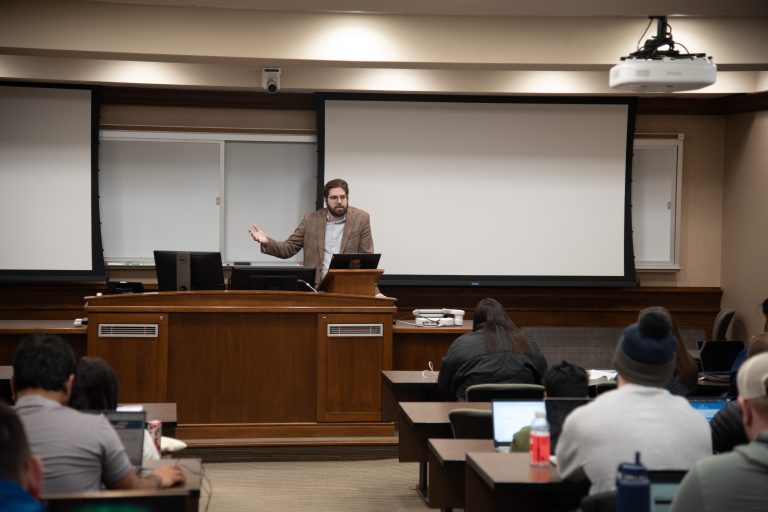
“I support the Standards Committee’s recommendation to repeal Standard 206,” Michael McGinniss, professor of law and J. Philip Johnson Faculty Fellow at University of North Dakota School of Law, told Law.com, emphasizing that he is speaking in his capacity as a law school professor, and that his views do not represent UND School of Law or the Federalist Society, where he is currently the chair of executive committee for the Federalist Society’s Practice Group on Professional Responsibility and Legal Education.
“I don’t recall any prior occasion when a Standard was repealed in full,” McGinniss said, along with other legal experts who spoke to Law.com off the record. “The general practice has been to revise or replace the language in existing Standards, or to add provisions.”
ABA couldn’t provide information about the last time a standard was repealed.