Addressing North Dakota’s Legal Deserts: UND School of Law Engages in National Conversation
Dean Del Crandall and Professor Paul Traynor join legal leaders from across the country to explore solutions to attorney shortages and improve access to justice in rural communities.
For many North Dakotans living in rural communities, finding an attorney to help navigate a legal issue can be a challenge in itself. With attorney shortages affecting communities across the state, ensuring access to legal services is an increasingly important issue for North Dakota.
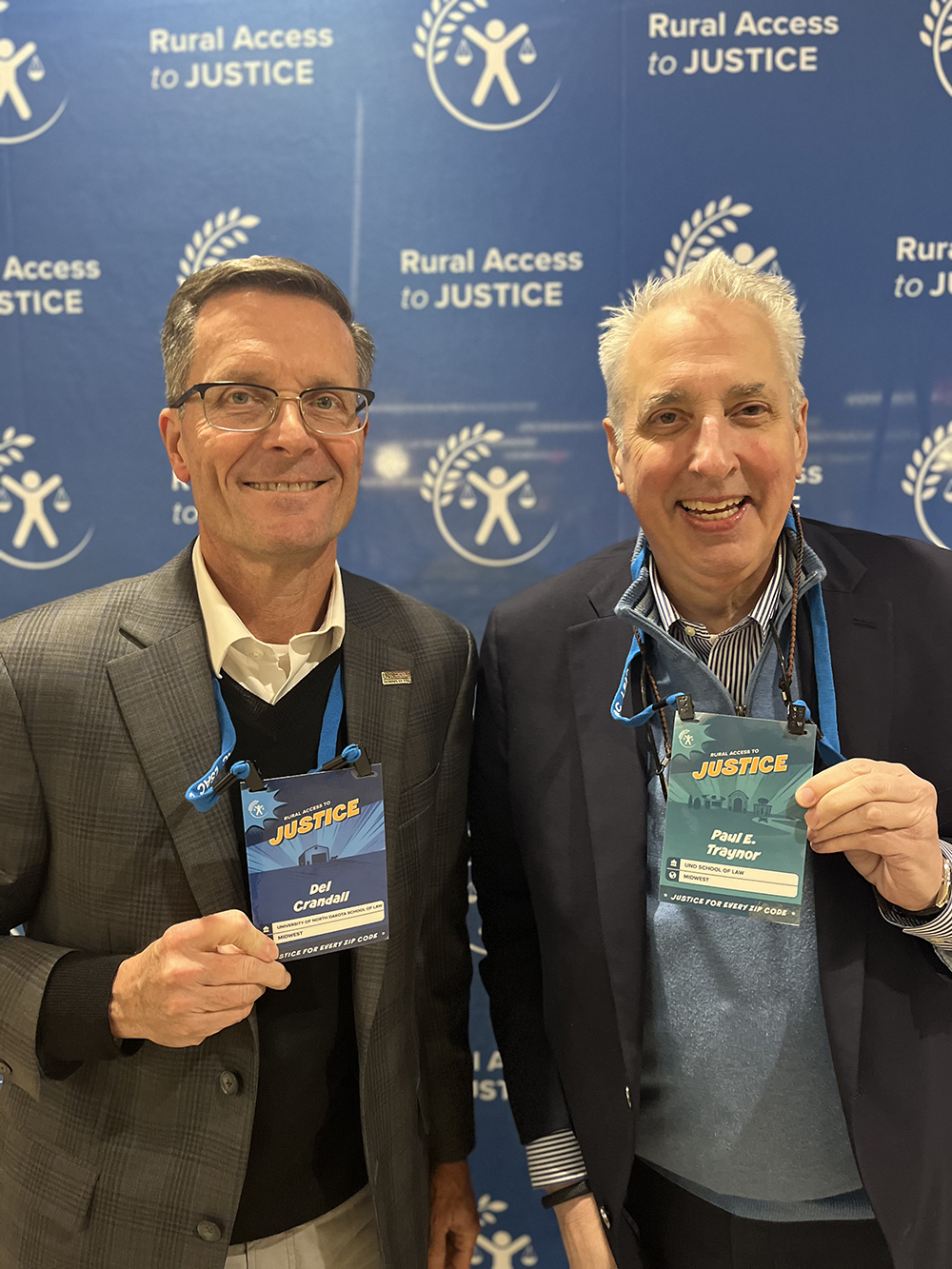
Del Crandall, Dean of the University of North Dakota (UND) School of Law, and Paul Traynor, Assistant Professor of Law, attended the 2026 National Rural Access to Justice Convening, held November 6-7 at the University of Nebraska College of Law in Lincoln, Nebraska. The event brought together more than 160 legal leaders representing 38 states and Canadian provinces to discuss solutions to the growing challenges of providing legal services in rural communities.
Organized by the Law School Admission Council (LSAC) in collaboration with the Association of American Law Schools (AALS), the convening brought together law school leaders, judges, legal aid organizations, bar associations, and other stakeholders to explore ways to strengthen the rural legal workforce, support practicing attorneys, and expand access to legal services.
A Growing Challenge for North Dakota
The need for these conversations is particularly significant in North Dakota. Six of the state’s 53 counties have no attorneys, while another 14 have only one attorney. The American Bar Association (ABA) defines a legal desert as a county with fewer than one lawyer for every 1,000 residents.
The challenge could become even greater in the coming years. According to a 2024 ABA survey, 18% of North Dakota attorneys intend to retire within the next two to five years, while another 8% are considering leaving the profession.
These numbers underscore the importance of developing the next generation of attorneys while supporting those already serving rural communities. Attorney shortages can affect everything from family law and estate planning to the availability of public defenders and court-appointed attorneys.
Collaboration Is Key
Throughout the convening, participants explored strategies to address rural attorney shortages, including creating pathways for students from rural communities to pursue legal careers, providing mentorship and professional support, and expanding direct legal services.
The discussions emphasized that increasing the number of attorneys is only part of the solution. Sustaining rural legal practice also requires strong community connections, professional support, and collaboration among law schools, courts, bar associations, and legal organizations.
As North Dakota’s only law school, UND School of Law has an important role in preparing future attorneys to meet the legal needs of communities throughout the state.
Dean Crandall and Professor Traynor’s participation provided an opportunity to engage with national legal leaders, exchange ideas and explore collaborative approaches to strengthening rural access to justice.
For North Dakota, the state with the fewest lawyers in the nation, this work is especially important. Ensuring access to justice should not depend on where someone lives, and addressing rural legal deserts will require a continued commitment to educating, supporting, and retaining attorneys throughout the state.