UND-led initiative receives funding to take students to Australia
National Science Foundation-funded program’s goal: Establish global center focused on Energy Sovereignty for Indigenous Peoples
The University of North Dakota, in collaboration with Kansas State University, North Dakota State University and the University of Adelaide, Australia, is establishing an International Research Experience for Students (IRES) site as part of a larger initiative to form a global center focused on Energy Sovereignty for Indigenous Peoples (ESIP).
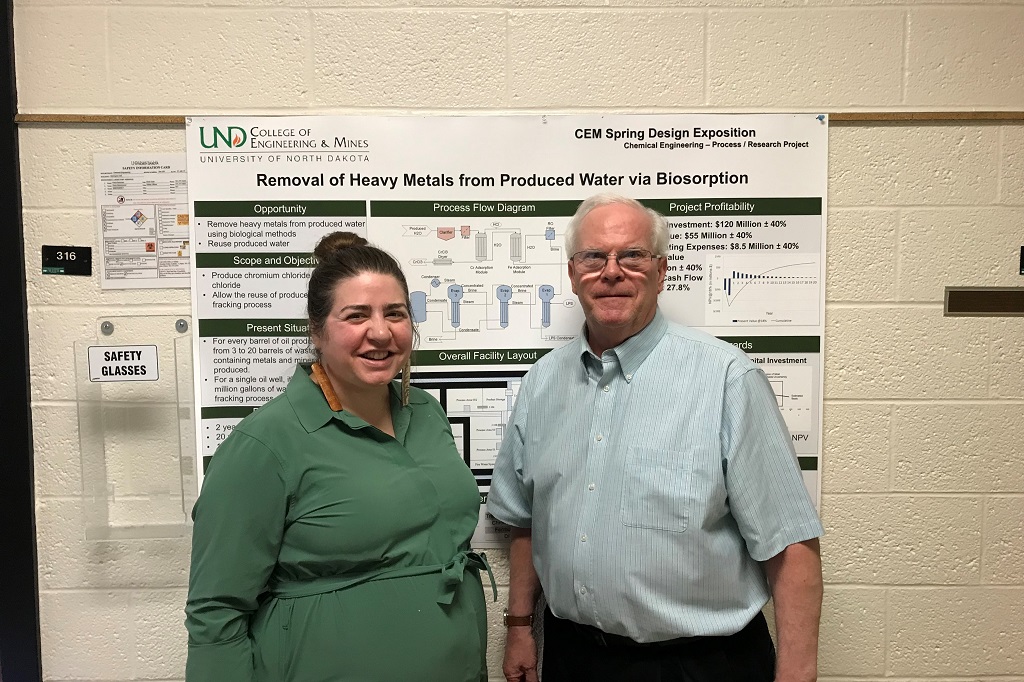
This program will be led by Wayne Seames, UND Chester Fritz Distinguished Professor of Chemical Engineering, as principal investigator. He’ll be assisted at UND by Bethany Klemetsrud, assistant professor of Chemical Engineering, and Haochi Zheng, associate professor of Earth Systems Science and Policy.
Kansas State’s participation is led by Hongyu Wu, professor of Electrical Engineering, while NDSU’s participation lead is Adam Gladen, associate professor of Mechanical Engineering.
The objectives of the ESIP International Research Experience for Students program are to:
- Engage US students who are interested in pursuing research in ESIP technology areas, with an emphasis on engaging Native American and other students from Indigenous backgrounds;
- Conduct preliminary, seed-data-focused research in three ESIP technology areas;
- Establish deep research partnerships between the center’s U.S. researchers and their counterparts the University of Adelaide.
Each year, a cohort of six U.S. students will conduct year-long collaborative research projects that integrate activities from their home institutions with a 10-week summer research experience at the University of Adelaide. The students will be mentored by a team of research advisors from the Australian university and the three U.S. research universities.
In addition to students from UND, Kansas State and NDSU, students are being recruited from tribal colleges and universities plus regional, rural non-doctoral institutions. This will help ensure the inclusion of students from groups that are underrepresented in STEM.
Making a difference for Indigenous communities throughout the world
The student projects are in the following ESIP technology areas:
- Power, heat and fuel generation;
- Power distribution systems;
- Supply resiliency.
“These projects will introduce students to science and engineering research in a collaborative global context, emphasizing the need for cultural and community connections within these fields,” Seames said.
“Involvement in hands-on research experiences at a world-class Australian facility with expert mentorship will enhance participant awareness of the international facets of their STEM disciplines and improve recruitment of U.S. STEM students for graduate studies.”
Making a difference for faculty participants
The program is also designed to develop and foster international research collaborations between the U.S. faculty mentors and their counterparts in Australia to strengthen the global aspects of the Energy Sovereignty for Indigenous Peoples center.
“I see this as an exciting opportunity to form an international partnership with Australian researchers working in similar areas to my own research,” said Klemetsrud. “As a relatively new faculty member, forming these types of connections can help me be a better researcher, mentor and teacher.
“I am also excited to learn about the history and current journeys of the Indigenous peoples of South Australia, and to compare this to my own journey growing up in the White Earth Nation in Minnesota,” Klemetsrud continued.
Making a difference for student participants
The International Research Experience for Students program can help to make significant differences in the career decisions of the participating students. In a 2015-2018 IRES that Seames directed with the University of Leeds in England, 15 of the 17 undergraduate student participants went on to graduate study. One of the students in that first cohort was Ian Foerster, who is now an assistant research professor in UND’s Chemical Engineering department.
“Participating in the IRES changed my career path from getting a master’s degree and then going into industry, to getting a PhD and going into academia,” Foerster said.
— 30 —