Tiny but powerful: UND’s nanofoundry to forge materials for Air Force
North Dakota’s support for national security research at UND made grant possible, scientists say
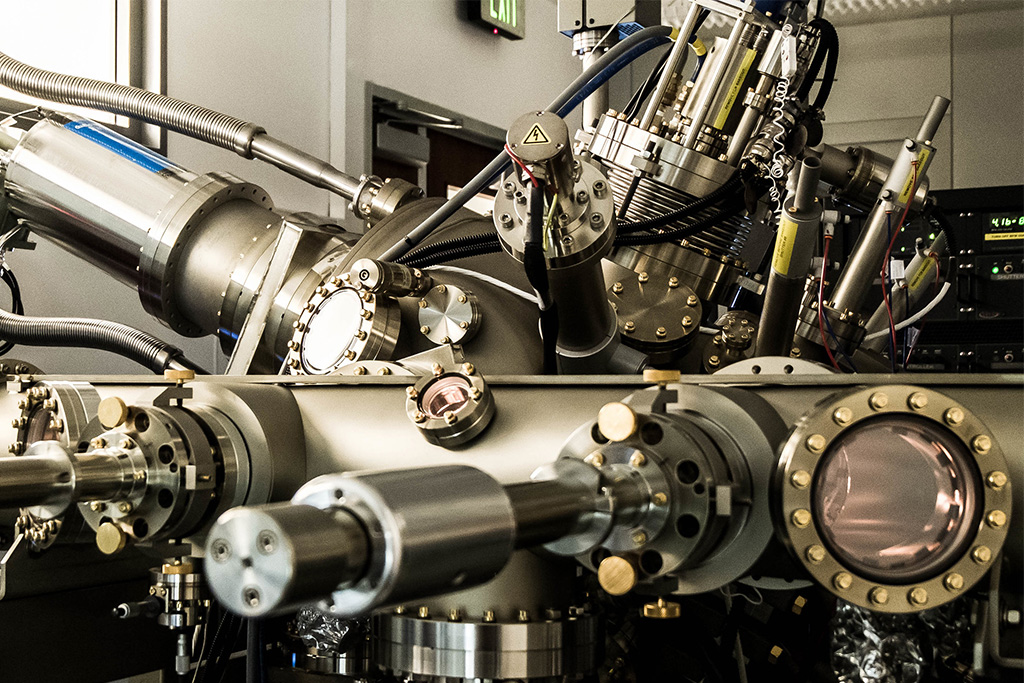
Two UND physics professors have received a grant to research the feasibility of growing a chemical compound with vital links to national security.
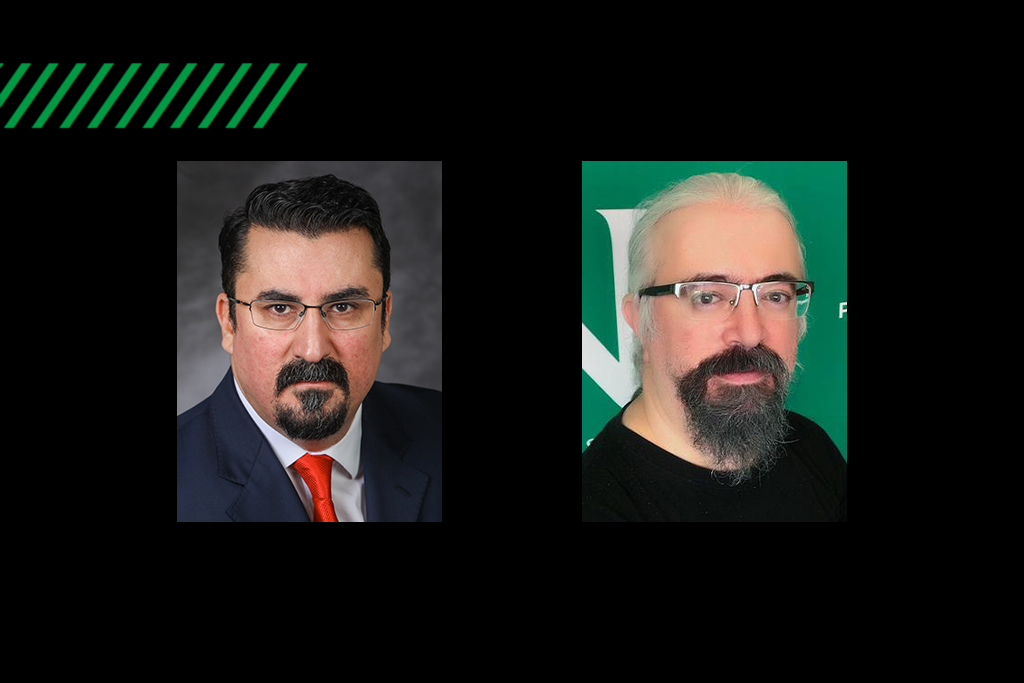
Nuri Oncel, professor of physics and astrophysics, and Deniz Cakir, associate professor of physics and astrophysics, have been awarded the $500,000 grant. The grant covers a period of three years and is being funded by the Air Force Office of Scientific Research.
A component of the larger Air Force Research Laboratory, the AFOSR’s mission is to “discover, shape, champion, and transition high risk basic research to profoundly impact the future Air and Space Force,” according to its website.
The researchers will employ a technique called molecular beam epitaxy. Importantly, they’ll use recently purchased equipment that was paid for by appropriations made by the North Dakota Legislature to the state’s higher education budget.
The researchers plan to grow a thin film of vanadium nitride using molecular beam epitaxy. According to Cakir, transition metal nitrides have numerous applications (including quantum computing), due to their relatively high superconducting transition temperatures. These properties make such materials ideal for various applications critical to national security, such as cryptography, intelligence gathering and secure communications.
The grant’s research activities would not be possible without the support of the Legislature, which appropriated $14 million toward UND’s larger National Security Initiative during its previous session, Oncel added. UND used a portion of these funds to establish a Nanofoundry — a laboratory dedicated to manufacturing nanodevices and characterizing materials.
“There are challenges and unknowns in the field, and we aim to use the equipment in UND’s Nanofoundry, acquired through this national security initiative, to shed light on these systems and their potential applications.” Oncel said. “All of the things we will be doing in the coming years are possible because of state funding for national security related research.
“I am confident that this will not only enhance national security, but also attract significant external funding, further advancing our research endeavors,” Oncel added.
As director of UND’s Nanofoundry, Oncel will use it to carry out the experimental component of the research, while Cakir will be responsible for the computational portion. Oncel said he and Cakir will be in constant collaboration due to the complicated nature of the research.
“We are truly aiming to optimize the growth and study the properties of this material in depth.” Oncel said.
Oncel and Cakir will hire one post-doctoral and one graduate student to assist with the research, which Cakir said will be beneficial for workforce development and “bring a new research topic to UND.”