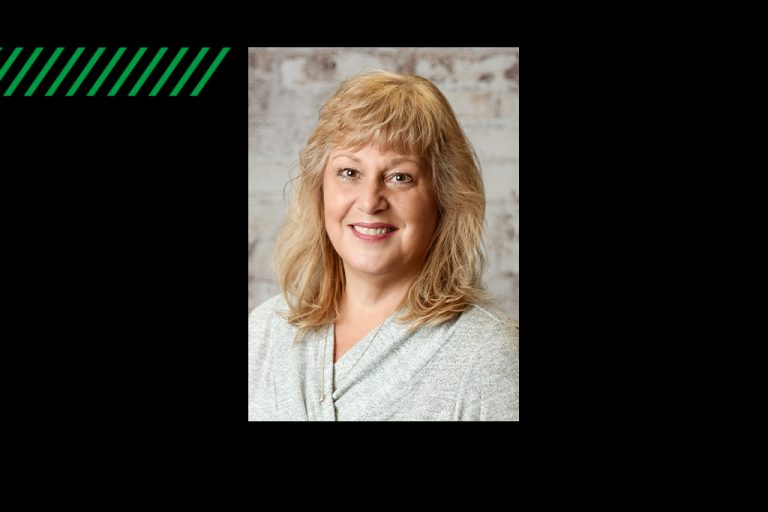
Meet Shelbie Witte, new dean of College of Education & Human Development
Aficionado of movie soundtracks, pop culture trivia also designs custom hats
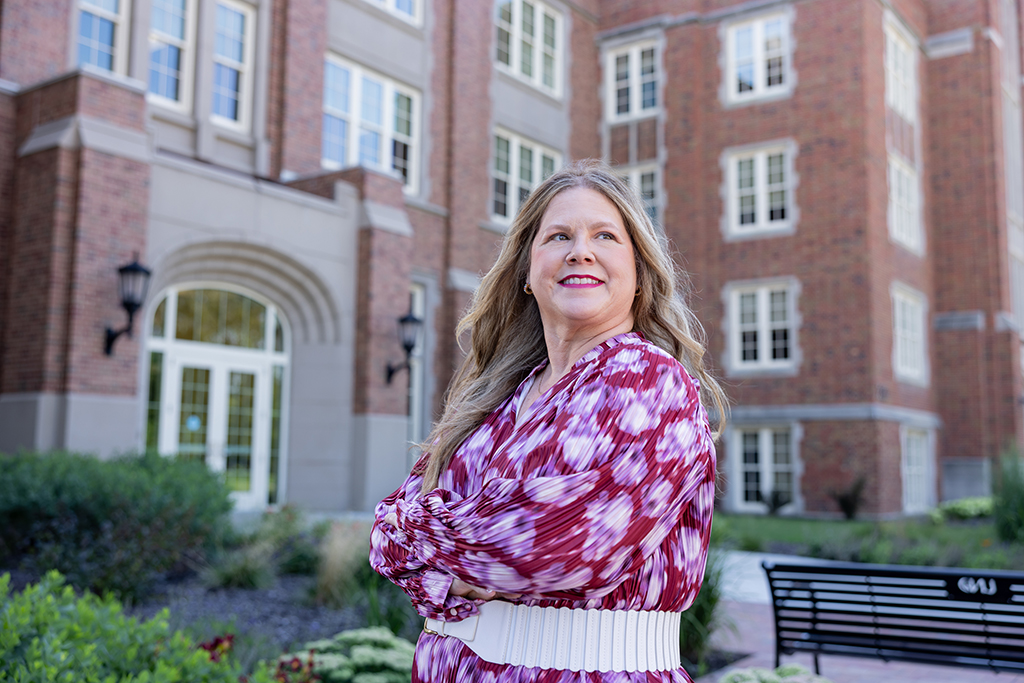
Shelbie Witte is the new dean of UND’s College of Education & Human Development. The nationally board-certified Early Adolescence/English Language Arts teacher and former finalist for Kansas Teacher of the Year has a decades-long membership to the National Council of Teachers of English, where she served many leadership roles. Most recently, she was the Kim and Chuck Watson Endowed Chair in Education and senior director of outreach and teacher education at Oklahoma State University.
UND Today asked Witte to share some of her story in the Q&A that follows:
* * *
Q. Let’s begin by you telling our readers a little bit about your background.
A. I began my teaching career in 1995 as an English Language Arts teacher in a small city in southwest Oklahoma. Since that time, I have taught every level of adolescents and adults — from middle school through doctoral students — in rural, urban and suburban communities. I’ve held tenured faculty positions at Florida State University and Oklahoma State University.
Q. What made you interested in college administration? And why did you choose to come to UND?
A. I want to be “of use,” and I think Marge Piercy’s poem exemplifies why: “The pitcher cries for water to carry … and a person for work that is real.”
Q. You have an interesting background in digital literacy. How does that relate to UND’s College of Education & Human Development? The esports program is in the CEHD, for example. We’re guessing that’s part of the digital literacy focus?
A. Digital literacy has impacts on many of the programs at UND and in CEHD. My approach to digital literacy is based on the definition of literacy in a digital age that I helped write for the National Council of Teachers of English. In a nutshell, digital literacy examines the ways in which people of all ages …
- Participate effectively and critically in a networked world.
- Explore and engage critically, thoughtfully and across a wide variety of inclusive texts and tools/modalities.
- Consume, curate and create actively across contexts.
- Advocate for equitable access to and accessibility of texts, tools and information.
- Build and sustain intentional global and cross-cultural connections and relationships with others so as to pose and solve problems collaboratively and strengthen independent thought.
- Promote culturally sustaining communication and recognize the bias and privilege present in the interactions.
- Examine the rights, responsibilities and ethical implications of the use and creation of information.
- Determine how and to what extent texts and tools amplify one’s own and others’ narratives as well as counter unproductive narratives.
- Recognize and honor the multilingual literacy identities and culture experiences individuals bring to learning environments and provide opportunities to promote, amplify and encourage these differing variations of language (e.g., dialect, jargon, register).
Q. What issues did you encounter (such as teacher shortages) in your previous posts that you’re also expecting to tackle in North Dakota? Any ideas about remedies?
A. Teacher shortages are a nationwide issue, so it is no surprise North Dakota is also experiencing workforce shortages. I have many multifaceted ideas for remedies and just need to have conversations with stakeholders who are willing to think outside the box for the sole purpose of investing in the future of North Dakota.
Q. What kinds of changes are on the horizon for education? Any thoughts about how to maintain public support for public schools?
A. Poverty. Motivation. Educator autonomy. The issues that challenge us now always have been challenges, but the increased focus and attention on dystopian narratives of education take away from the real and tremendous successes happening every day in our classrooms.
Q. How are you learning more about those fields within the CEHD (such as kinesiology) that you might have less experience in?
A. I’m looking forward to auditing courses in the future to learn more about all of our programs in the college. I think it’s important for the leadership to know as much as possible about the needs of faculty, staff and students to be the best advocate for their success.
Q. What are your first impressions of UND and North Dakota? Do they have hot dish in Oklahoma? What has surprised you most?
A. When I first arrived in North Dakota during Super Bowl weekend in February, it was 5 degrees Fahrenheit, and I wondered if I would be able to handle a “real winter” in Grand Forks. But the people here have been incredibly welcoming and gracious with their time and advice — very similar to other college towns we love, such as Manhattan, Kan., and Stillwater, Okla.
As far as hot dish, my first hot dish was at Bernie’s, and it was delicious! We have something similar in Oklahoma (we call it casserole). We’ve also loved being introduced to lavash and other unique foods in the area.
Q. What’s one fun and interesting fact about yourself that our readers wouldn’t know?
A. I’m an aficionado of movie soundtracks and can usually identify the movie a song has played in within a few notes, ala “Name That Tune.” I’m also a popular culture trivia junkie!
Q. Do you have any family notes or news you’d like to share? Any hobbies or other activities you do in your free time?
A. Our family is full of educators and military-connected individuals, so we love to support these areas with our time and energy when we can.
Q. What’s your favorite movie, book or author?
A. I adore Mary Oliver, whose poetry often shows up in my custom hats. I am a huge fan of David Sedaris, most nonfiction. And I’m a Star Wars fan through and through!
>> Learn more about Witte from UND Today’s story announcing her selection as dean.
>> Check out a more complete bio and Witte’s curriculum vitae.