Building an inclusive campus and culture
By ‘reducing barriers to higher education’ — a mandate of the Equity core value — UND hopes to foster education for all, trio of campus experts say
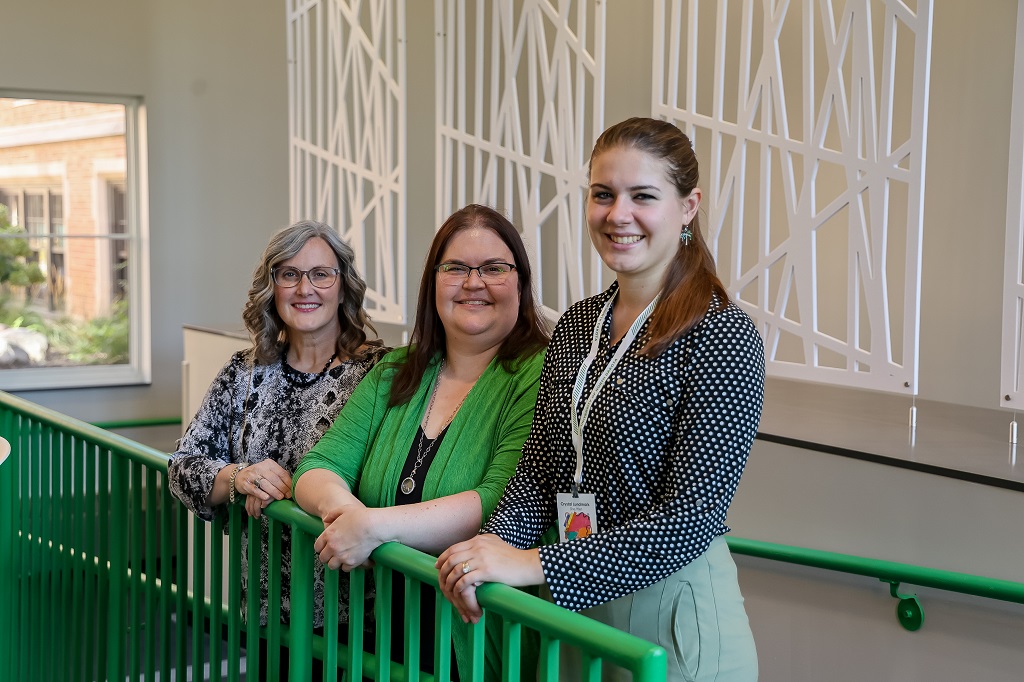
Editor’s note: The following letter, written by Elizabeth Becker, instructional design coordinator for UND’s Teaching Transformation and Development Academy, or TTaDA; Crystal Lundmark, graduate teaching assistant in the UND Counseling Psychology doctoral program; and Lee Ann Rawlins Williams, clinical assistant professor and program director for UND’s Inclusive Rehabilitation Sciences degree program, introduces a special edition of UND Today focused on the “Equity” core value of the UND LEADS Strategic Plan.
As readers may know, UND Today is devoting a special issue on the last Tuesday of each month to the University’s progress on fulfilling the Strategic Plan. The issues consider the plan’s “LEADS” core values — Learning, Equity, Affinity, Discovery and Service — in succession, which means next month’s issue on Nov. 26 will be devoted to Affinity.
Comments or questions? Contact Tom Dennis, UND Today editor, at tom.dennis@UND.edu. Thank you for reading!
* * *
By Elizabeth Becker, Crystal Lundmark and Lee Ann Rawlins Williams
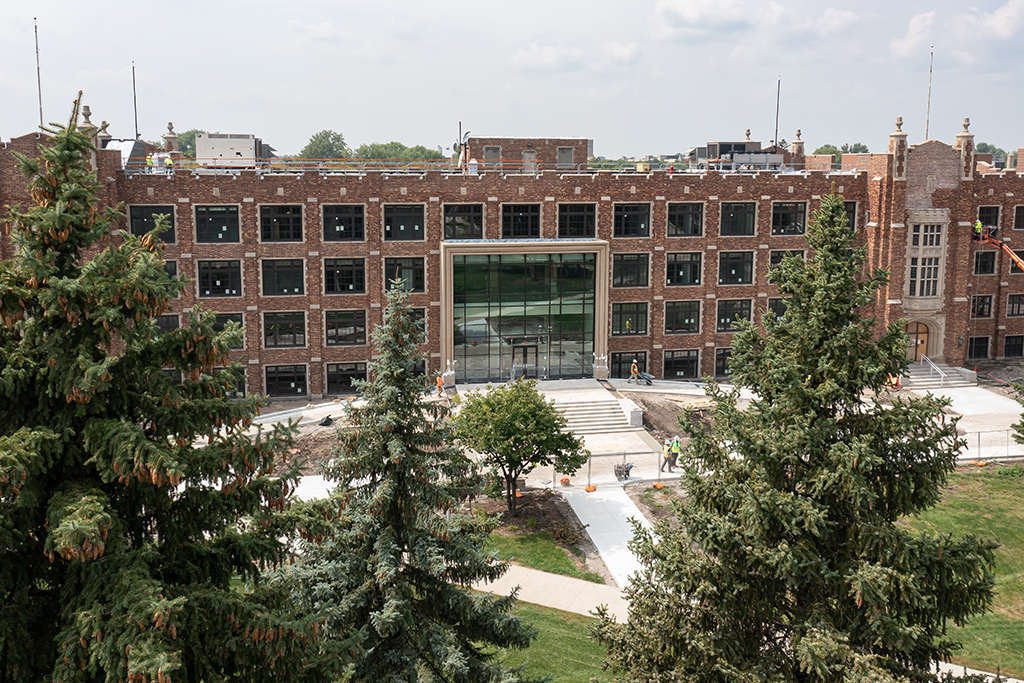
Here’s what visitors can see: On the beautiful Quad at the center of UND’s campus, one of the biggest changes in decades to a historic building is underway. Basically, the entire east side of Merrifield Hall is being transformed, as the 1929-era building now boasts a three-story-tall, glassed-in front entrance, one that’s flanked by swooping Americans with Disabilities Act-compliant ramps. Additionally, there have been other connections made between buildings, such as O’Kelly Hall, Gillette Hall and the College of Education, to aid in transportation accessibility between buildings. All of these building additions have promoted more accessibility for people with disabilities across campus and are promoting inclusivity for all students, faculty, staff and the local community.
Here’s what visitors may not know: That new entrance, building connections and the ramps, in particular, are the UND LEADS Strategic Plan at work.
The UND LEADS Strategic Plan counts Equity as a core value, and high among the University’s Equity concerns is accessibility. Hence, the ramps, which will — for the first time ever — allow access for all to the building through the main entrance.
UND LEADS by building an inclusive culture
With a steadfast commitment to proactive universal design, UND is dedicated to reducing barriers to higher education and cultivating an environment that fosters inclusion for everyone. This mission is especially crucial when addressing the unique challenges faced by individuals with disabilities. The guiding philosophy is clear: Disability is a group that anyone can join at any time, and it does not discriminate.
Accessibility as a core value
As mentioned, a foundational principle of the University’s Strategic Plan is accessibility. This commitment transcends compliance with legal requirements, embodying a core value integral to the University’s ethos. Accessibility encompasses not only physical structures but also the attitudinal barriers that can hinder the academic and social experiences of students with disabilities.
By actively working to dismantle these barriers, UND ensures that every student can thrive, regardless of their circumstances.
Proactive initiatives for inclusivity
To foster this inclusive culture, UND has implemented several key initiatives that exemplify its dedication to accessibility.
One notable initiative is accessibility-focused programming, offered by the Teaching Transformation and Development Academy. In spring 2023, TTaDA sponsored the Academic Ableism book read, which featured a launch panel of faculty, staff and students, small book-group discussions, and a wrap-up event.
“Academic Ableism” by Jay Dolmage confronts the assumptions and biases that can exist within academic settings. This book, along with the book club, raised awareness of the discriminatory practices in academia and helped provide faculty and staff with the insight to foster more inclusive learning environments.
Currently, TTaDA is collaborating on a series of monthly workshops on microaggressions. These insightful and engaging presentations are designed to explore the impact that microaggressions have on marginalized communities. One of the sessions in October focused specifically on disability-related microaggressions. This session offered participants an in-depth understanding of ability-related microaggressions, highlighting how they impact people with varying ability statuses. It also explored effective strategies for recognizing, addressing and reducing these subtle, yet pervasive, forms of bias.
Additionally, TTaDA recently launched the 10 Step Accessibility Challenge, a self-paced course open to any faculty or staff member who would like to learn more about accessibility and improve the accessibility of their digital online resources.
Another significant initiative is the “Just Ask” program, which encourages open dialogue about disability and accessibility. This educational and awareness event brings together experts and peers from across campus to highlight the lived experiences of those individuals navigating inaccessible environments, structures and systems, emphasizing the need for accessibility on campus. In addition, UND’s Disability Awareness Day serves as another platform to celebrate diverse abilities within the University and community. This annual event examines disability and disability awareness from a variety of perspectives and emphasizes educating the broader campus community about the importance of inclusivity and accessibility.
By normalizing conversations about disability, UND cultivates an atmosphere where students feel empowered to advocate for their needs. This proactive approach helps break down the stigma often associated with disabilities, fostering a sense of belonging within the campus community.
Events such as these are essential for dismantling stereotypes and promoting an understanding of the rich diversity that individuals with disabilities bring to the University. All of these programming opportunities were designed to raise awareness and create a more accessible and inclusive campus environment for all.

Addressing physical and attitudinal barriers
While UND has made significant strides in fostering an inclusive environment, the University recognizes that there is always more work to be done. Physical barriers, such as inaccessible buildings and inadequate transportation options, significantly can hinder the academic experience of students with disabilities. Commitment to continuously assessing and improving its physical infrastructure to ensure that all facilities are accessible to everyone is critical in moving forward with access. This commitment goes beyond compliance with ADA standards; it includes proactive measures to anticipate the needs of students with disabilities and others in the campus community.
Equally important are the attitudinal barriers that persist within academic and social settings. Misconceptions about disability can lead to exclusion and discrimination, making it imperative for institutions such as UND to address these issues through education and awareness.
By fostering a culture of empathy and understanding, the University aims to dismantle these barriers and promote a more inclusive community. Training sessions for faculty and staff on disability awareness and inclusivity are vital in this effort, ensuring that everyone understands their role in creating a supportive environment.
Inclusivity’s broader implications
The work that UND is doing not only benefits students with disabilities but also enriches the entire University community. An inclusive culture that values diverse perspectives prepares all students for the realities of the world beyond the campus. Learning in an environment that prioritizes equity and accessibility enables students to gain valuable insights into the importance of collaboration, empathy and understanding. This prepares them for a workforce that increasingly values diversity and inclusivity.
Moreover, fostering an inclusive environment reflects a broader commitment to social justice and equity. This proactive stance transforms the campus landscape, demonstrating that inclusivity is not merely an obligation but a shared responsibility.
Conclusion: A call to action
As the University of North Dakota continues to build an inclusive culture that recognizes diverse perspectives and promotes equitable opportunities, it serves as an example of what can be achieved when a community unites to prioritize accessibility and inclusion. The University’s initiatives — Academic Ableism, Just Ask and Disability Awareness Day— are essential steps in dismantling both physical and attitudinal barriers, ensuring that all students can thrive.
In closing, let us commit to being proactive in our efforts to promote inclusivity, recognizing that disability can affect anyone at any time. As we move forward, let’s embrace the challenge of fostering an environment where every voice is heard, every perspective valued and every opportunity accessible.
The future of higher education lies in our collective ability to build a truly inclusive culture.
>> Do you have questions or comments about the UND LEADS Strategic Plan? Your thoughts are welcome! Please contact Mike Wozniak, coordinator of Leadership & Programming, and/or Ryan Zerr, associate vice president for Strategy & Implementation, the co-chairs of the UND LEADS Implementation Committee. You also may offer your thoughts by visiting the UND LEADS Strategic Plan home page and clicking on the “Provide your feedback” link. Thank you for your support of the UND LEADS Strategic Plan!
>> Do you want to read more UND Today stories? Just hit the link or go to our home page to subscribe to our twice-weekly newsletter.