Reactive to proactive: A new focus on digital accessibility
Rule changes to Americans with Disabilities Act prompt broad digital changes at UND

In 1990, a new piece of civil rights legislation became law — the Americans with Disabilities Act.
Its role in prohibiting discrimination against people with disabilities touched nearly all areas of public life. Among other stipulations, it required reasonable accommodation and equal opportunity.
But while we’re on the subject of that era and the ADA, think back to 1990.
The internet was in its infancy. Home computing was on its way to being commonplace, but its uses were minuscule compared to today’s digitally driven world. The ADA enforced effective communication, but its focus was physical: using a landline phone or visiting an office to engage with public services.
In 2024, the U.S. Department of Justice published new ADA rules to better meet the generational tide of digital, screen-based interaction that has become central to services offered by state and local institutions such as the University of North Dakota.
With UND’s position as a state entity, under Title II of the ADA, the University will be required by this federal law to meet new digital accessibility standards by April 2026.
More specifically, UND’s public-facing web and social media content will need to meet the Web Content Accessibility Guidelines, Version 2.1 Level AA, as set forth by the World Wide Web Consortium.
What does this mean for digital accessibility at UND?
And just as the original ADA has altered UND’s physical landscape from 1990 onward, the Act’s new rules will bring about significant changes to UND’s digital realms.
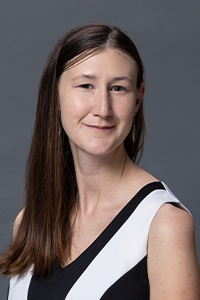
“Equal access is about making sure that all of the ways in which people access our programs and activities, all of the ways in which we interact and provide services and communicate with the public, are accessible,” said Beth Valentine, equity compliance and education manager and deputy ADA coordinator for UND’s Equal Opportunity & Title IX office.
The breadth of such a charge applies to websites, web-hosted documents, blogs, digitally accessed course content and even external websites and platforms with which UND is contractually partnered. In other words, nearly every facet of UND’s digital presence is under scrutiny, with the exception of content used only between employees or archived for historical purposes.
Another way to frame it: UND is shifting its treatment of digital accessibility from reactive to proactive.
More than one in four adults in the country have a disability, according to recent data from the Centers for Disease Control & Prevention. At UND, the spring 2024 semester had more than 280 accommodation requests approved for more than 690 courses.
“So, instead of accessibility as only an accommodation, or as an afterthought, the goal is to make documents and webpages accessible from the beginning — to take an approach where accessibility is baked into the process by default,” Valentine remarked.
Indeed, it’s a massive shift, but it’s one that meets the call of the UND LEADS Strategic Plan, aligning with its pillars of Equity and Affinity, she said.
To that end, following initial meetings and briefings on the subject in 2024, UND President Andrew Armacost recently issued a charge for a University Committee for Title II Digital Accessibility to lead and coordinate efforts across the institution to meet the new regulations.
Defining digital accessibility
Much of UND’s early strategy involves promoting existing resources and training opportunities to help the campus community understand the ways in which WCAG 2.1 Level AA applies to their work.
For example, Equal Opportunity & Title IX’s website has a digital accessibility landing page linking to information available for documents (i.e. PDFs, Microsoft Office), course content and website content.
The Teaching Transformation & Development Academy offers several workshops and training sessions, both live and through recordings, pertaining to best practices and instructional design. Faculty who have reviewed resources and need further assistance with accessibility for academic software and tools can submit a Faculty Accessibility Assistance ticket.
The University is also planning to offer an on-demand training resource through Deque University, a world-class digital accessibility platform with an expansive library of topics at introductory and advanced levels, Valentine said.
“They have an ‘Accessibility 101’ series that I would recommend to everyone,” Valentine said. “It’s a series of very short videos that covers specific things you can do to make your PowerPoints, documents and web presence more accessible.”
More information on Deque University’s availability will soon be shared with the campus community, Valentine said.
The U.S. Department of Education’s Office of Civil Rights defines accessibility as meaning “when a person with a disability is afforded the opportunity to acquire the same information, engage in the same interactions, and enjoy the same services as a person without a disability in an equally integrated and equally effective manner, with substantially equivalent ease of use.”
These principles apply to practices such as adding alternative text and descriptions to images posted on the web — screen readers use the text to inform those who can’t observe the image in its original, visual context. Another example is captioning video content. Valentine strongly suggests video creators use Yuja, which can generate text from audio that can be edited and refined for closed captioning.
“Accessibility checking is going to be the new spell checking,” Valentine remarked. “You wouldn’t post something without making sure those red squiggly lines are addressed.”
UND’s web platform, Modern Campus Omni CMS, is equipped with an accessibility check button that can quickly scan a webpage, similar to a spellcheck. The same can be found on software such as Microsoft Word.
“I click that button every time I do a website update,” Valentine said. “It can’t do everything, and things can slip through, but it’s a great tool.”
In the months to come, UND Today will report on other examples of how changes will be implemented, showing how certain forms of content will be portrayed more accessibly under the new rules.
‘The right thing to do’
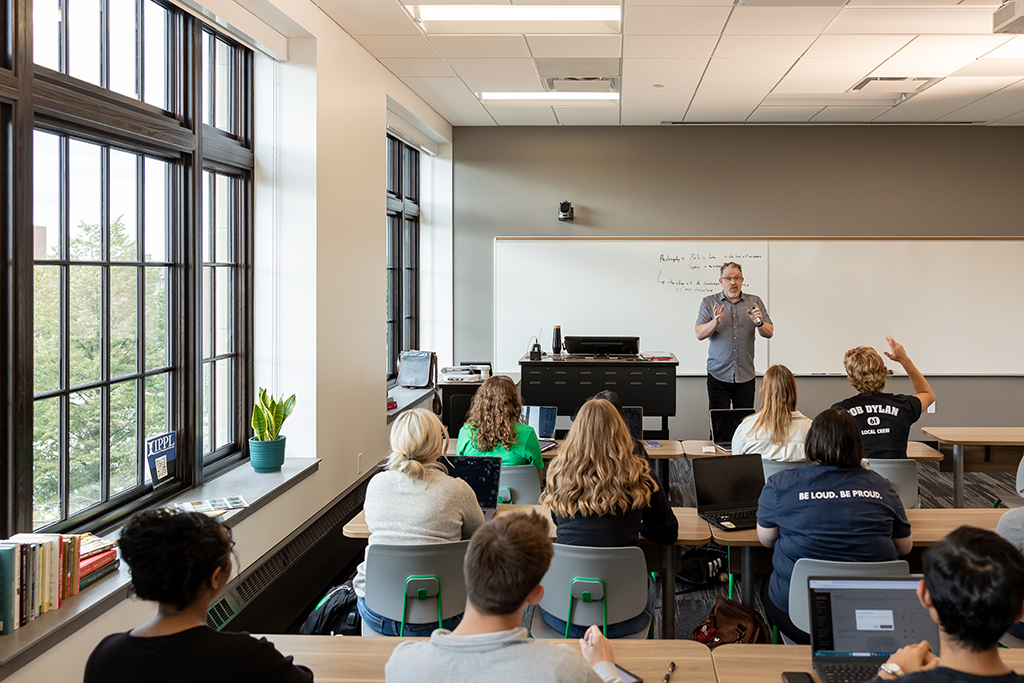
Leading up to the April 2026 deadline, the University is also launching an initiative to help faculty meet standards as well as the University’s commitment to an inclusive and accessible learning environment for all students.

“UND: Strive for 85” will focus on the measurement of course content accessibility in Blackboard by using the site’s Ally tool. Blackboard Ally, among other features, scans and scores a course and its content on a percentage basis, comprising an accessibility rating.
Hence, the goal is for all courses on Blackboard to reach an 85% or greater Ally score by spring 2026 — a strong foundation from which to further improve the accessibility of content available to students through Blackboard.
UND Today reached out to Lee Ann Williams, clinical assistant professor of Education, Health & Behavior Studies, to learn how she is addressing these upcoming goals and changes.
Williams represents the University Senate on the Digital Accessibility Steering Committee and is also a member of the committee’s working group.
Q: As a faculty member, how does the change in requirements affect your work?
A: It’s made me more intentional. I’m revisiting how I design and deliver content, making sure my materials are perceivable, operable, understandable, and robust — not just because it’s required, but because it’s the right thing to do.
It has also encouraged more collaboration between faculty, UIT and student services. That kind of cross-campus connection has been energizing. We’re sharing tools and strategies that benefit each of us.
Q: As UND works to meet digital accessibility regulations, where are you seeing the benefits for students? How does this help UND meet its strategic plan aspirations?
A: We’re already seeing how accessible digital environments empower students to engage more fully with their learning. Accessibility isn’t just about meeting legal requirements; it’s about ensuring all students have the tools they need to succeed.
When we design materials that are easy to navigate, compatible with assistive technologies and consider different learning needs, we’re not just helping students with disabilities, we’re improving the learning experience for all students. UND’s Strategic Plan calls for inclusive excellence and student success. Accessibility is at the heart of that mission. It’s one more way we’re making sure every student has the chance to thrive.
Q: What is your approach to learning more about this and adopting best practices in your teaching materials? What advice do you have for others?
A: My approach is ongoing, and it primarily involves being curious. I treat accessibility like any evolving area of scholarship. I’ve found great support in UND’s Teaching Transformation & Development Academy, and I regularly test my course content with tools like Ally.
My advice? Start small and stay open. Don’t wait for perfection — just begin. Whether it’s captioning a video, adding alternative text or simplifying document layout, all changes matter no matter big or small.