Research showcase tackles Ozempic, arthritis, patient falls and other topics
Presentations at College of Nursing & Professional Disciplines’ annual event wrestle with real-world issues

At this year’s CNPD Research and Scholarship Day, students from the College of Nursing & Professional Disciplines presented studies that tackled patient safety, awareness of wildly popular medications and the role of diet in chronic disease management.
Held in late April, the annual event brings together undergraduate and graduate students from nursing, dietetics and nutrition and social work programs. At this year’s event, each group shared the results of evidence-based research projects that they’d developed over the semester.
For many students, the event marked a kind of capstone for their final year of study. As important, it also gave the students a chance to reflect on how research and work in the classroom can give them professional insight and eventually translate to meaningful, real-world change.
Hourly rounding may help reduce patient falls
One example of students researching a real-world issue was a group of BSN students who examined a common problem in hospitals: patient falls.
The group — Michaela Nelson-Salander, Miranda Vanderwal, Mckenzie Watson, Lauren Lundquist, David Hayes and Lake Mastro — chose to research whether routine checks on patients, also called rounds, could reduce falls in acute care units.
“Falls are the second most common cause of accidental death in the world,” Hayes said.
In addition, Hayes noted that the financial impact can become a burden because Medicare and Medicaid often do not cover care when patients are injured after falling in the hospital. The students limited their research to acute care settings, where nurses typically manage a more consistent patient load and hourly rounding is more feasible.
Their review of existing literature found that structured rounding did, in fact, reduce fall risk. Importantly, rounding was more effective when nurses put an emphasis on strong communication when visiting patients.
Patients, they said, responded better when nurses clearly stated when they would return and addressed immediate needs before leaving.
“It’s about building trust,” Hayes added. “Establishing that routine communication helps prevent patients from trying to do something risky on their own, because they know they’ll have someone around to help them.”
All six students will graduate together this spring, and they said that the combination of classwork, sim labs and hands-on experience required by the program have prepared them well to enter the field.
“We’ve had a lot of opportunities with patient care, working in hospitals, learning from nurses,” Hayes said. “You can only feel so prepared, but I feel like the program has done a good job of giving us practice.”
How Ozempic may impact anesthesia safety
Rachel Bickert, a graduate student in the nurse anesthesia program, focused her research on a class of medications that has gained popularity in recent years: GLP-1 receptor agonists, such as Ozempic and Wegovy. Originally approved for diabetes, the drugs have become very popular as weight loss medications.
The problem, Bickert said, is that these drugs can change the digestion process and lead to complications for surgery.
“These medications delay gastric emptying, which means patients can present for surgery with full stomachs,” Bickert said. That’s a serious concern for anesthesiologists, she added, as it can increase the patient’s risk of aspirating while under anesthesia.
As part of their project, Bickert and her group developed an educational module for health care professions which included a pre-test and post-test to measure knowledge retention. The results showed an increase in both confidence and awareness among providers.
“We found throughout our research that not all hospitals knew that patients should hold off on their dose,” Bickert explained. “That’s kind of where that education piece came in.”
Although the American Society of Anesthesiologists released formal guidelines in 2023, not all hospitals have adopted them. Even her professors had noticed a rise in the use of GLP-1 medications, which inspired them to pursue the topic, Bickert added. And this noticeable rise made her team’s research, aimed at closing the gap in knowledge and practice, even more pressing.
Bickert says that she anticipates an August graduation, and looks forward to becoming a practicing nurse anesthetist.
“I kind of knew this was the path I wanted to go down after I graduated from nursing school,” she said. “I like the autonomy it gives me, especially in North Dakota. I get to use everything I’ve learned to get a full picture of patients and make sure they’re safe.”
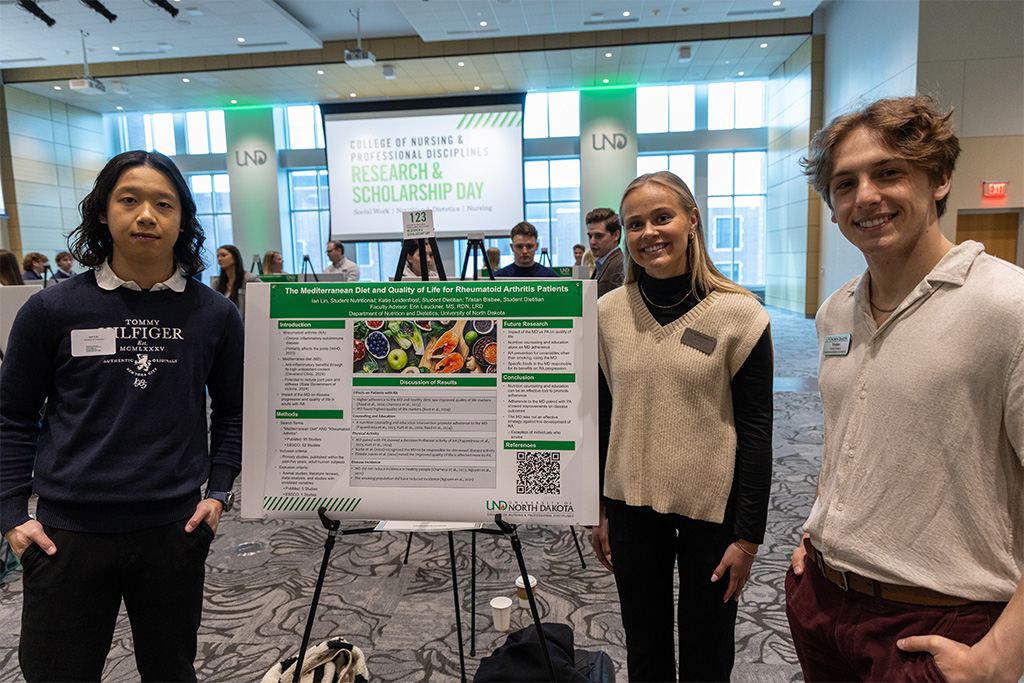
Mediterranean diet may improve symptoms of rheumatoid arthritis
A group of undergraduate nutrition and dietetics students tackled another trendy topic: the popular Mediterranean diet.
Students Katie Leidenfrost, Ian Lin and Tristan Bisbee reviewed six studies to see whether the diet could improve symptoms of patients with rheumatoid arthritis.
The team found that patients who followed the Mediterranean diet, which prioritizes eating vegetables, healthy fats and lean protein, did indeed report improvement in their symptoms. This, the students said, was likely due to the anti-inflammatory and antioxidant properties of foods containing things like omega-3 fatty acids, which the diet is rich in.
Additionally, one study suggested a potential reduction in disease activity when the diet was combined with physical activity, though results are varied. But though the literature looks promising, the students were careful not to overstate the results of the diet.
While the Mediterranean diet may help reduce symptoms, the students said that it did not appear to prevent people from developing arthritis. An interesting exception was found in smoking populations, where the diet showed some promise as a preventative strategy.
And, each of the students had a connection to their chosen topic. Leidenfrost, for example, has friends and family members affected by arthritis. Lin, who came to nutrition after starting in aviation, said that their research resonated with the ideas that brought him to nutrition in the first place.
“I went into premed after aviation and nutrition seemed interesting,” Lin said. “I wanted to learn how to prevent diseases with food, learn how we can take food as medicine before I eventually treat disease with medicine. It’s just a more holistic approach, in my view.”
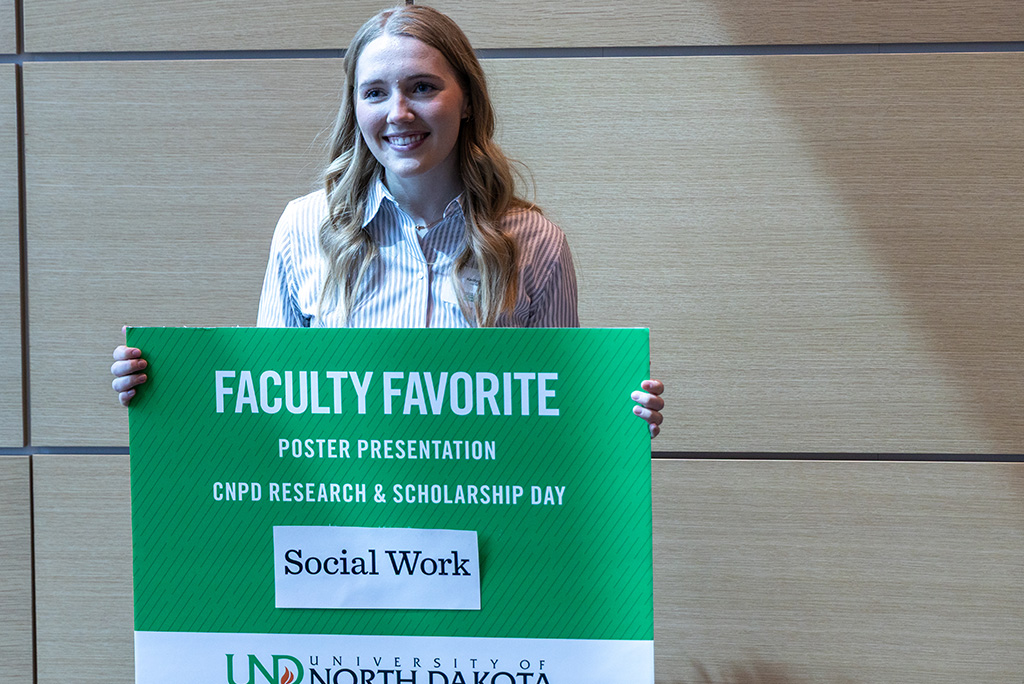
Research and Scholarship Day awards
At the end of the poster and presentation session, the students and faculty of CNPD gathered for lunch and a small awards ceremony. The awards, voted on by faculty and attendees, reflected the best student research the College has to offer.
The winners are listed below.
Faculty Favorites
“Effects of Delayed Cord Clamping on Iron Levels in Neonates” presented by Kendra Warnke, Alex Feldner, Jerred Fergel, Riley Martin, Alyssa Pierce and Averie Simon
“The Mediterranean Diet and Quality of Life for Rheumatoid Arthritis Patients,” presented by Katie Leidenfrost, Tristan Bisbee and Ian Lin
“Resilience and Integration: Assessing the Impact of Resettlement Experiences on Refugee Well-being in North Dakota,” presented by Kaitlyn Berg
Crowd Favorite Winners
“Preprocedural Ultrasound for Epidural Placement,” presented by Michelle Ahmeti, Shania Elder and Nicholas Houge
“The Impact of Omega 3 Fatty Acids on the Progression of Parkinson’s Disease,” presented by Jenna Torborg, Olivia Rossland and Anna Bernhardt
“The Role of Spirituality in the Mental Health and Well-Being of Elderly Residents in Long-Term Care Facilities,” presented by Minh Duc Le
Faculty Research & Scholarship Contribution Award
Nathaniel Johnson, Assistant Professor in the Department of Nutrition & Dietetics