SpaceX rocket carries UND satellites into orbit
First-ever satellites commissioned in North Dakota will be operated remotely from UND’s Odegard Hall
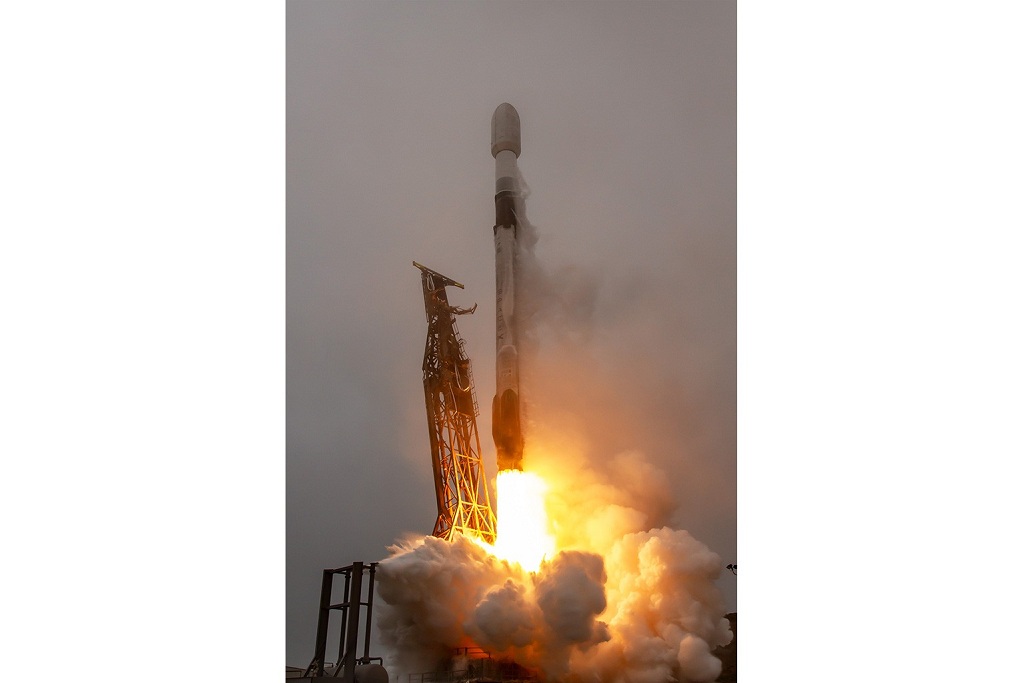
Editor’s note: In the UND LEADS Strategic Plan, the Discovery core value calls on the University to “enhance and deepen UND’s Grand Challenge areas,” including National Security and Space. This story reports on one of the University’s most exciting initiatives in that regard: the launch into orbit on Monday of two UND-commissioned satellites.
####
After a few days of waiting due to adverse weather conditions, UND has launched the first-ever satellites commissioned in North Dakota.
A component of UND’s Rendezvous & Operations for Autonomous Docking and Servicing or ROADS mission, the pair of satellites – named ROADS One and Two – were launched into orbit on Monday via SpaceX’s Falcon 9 rocket at Vandenberg Space Force Base in Santa Barbara County, Calif.
The satellites were developed in collaboration with AVS USA, an engineering firm headquartered in both upstate New York and Spain. They are low Earth orbit satellites – denoting an altitude of less than 1,200 miles above Earth’s surface – and are currently being operated from AVS.
Pablo de Leon, professor and chair of UND’s Space Studies department, had positive news to report on Tuesday. ROADS One and Two have made their first orbital passes and established telemetry – that is, mission control has received critical data from the satellites. He said this is a critical step in assessing the satellites’ health and viability.
“What is important is that you communicate with the satellites, and that they are alive,” de Leon said. “The nightmare of every satellite designer, is that after so much work, waiting and investment, they are unresponsive once in space for whatever reason. The fact that they are transmitting data is great.”
Once the satellites are determined to be in good operational health — typically after a period of a few weeks — full control will be transferred to UND, where they will be operated from Odegard Hall.
According to Ron Fevig, associate professor of Space Studies and the project’s technical leader, a major goal of this mission is to develop UND’s operational capacity in the field.
“The Odegard School conducts lots of operations, whether that’s pilots, UAS or air traffic control,” he said. “We are now trying to develop our satellite operations capabilities.”
De Leon concurred, stating that a successful ROADS mission could open many new doors.
“If we are successful, it will open another chapter for the future of our space systems,” he said. “If we can find another satellite in space and dock with it, chances are that we may be able to either bring it more fuel, or have a propulsion module to increase the time in orbit.”
De Leon added that ROADS’ experiential learning component — with students working directly on the mission’s operations — as increased interest among those planning a career in satellite design and testing.
“When they graduate, these students will be able to say ‘I was working in the guidance and control of satellites,’ and that’s a plus when you are applying for a job,” he said.
####
>> Questions or comments about the UND LEADS Strategic Plan? Your thoughts are welcome! Please contact Ryan Zerr, associate vice president for Strategy & Implementation, or Anna Marie Kinney, coordinator of the University Writing Program, the co-chairs of the UND LEADS Implementation Committee. You also may offer your thoughts by visiting the UND LEADS Strategic Plan home page and clicking on the “Provide your feedback” link.
Thank you for your support of the UND LEADS Strategic Plan!