New-look refresh for My UND app puts accessibility first
Enhancements to UND’s official mobile app go hand-in-hand with University’s digital accessibility goals
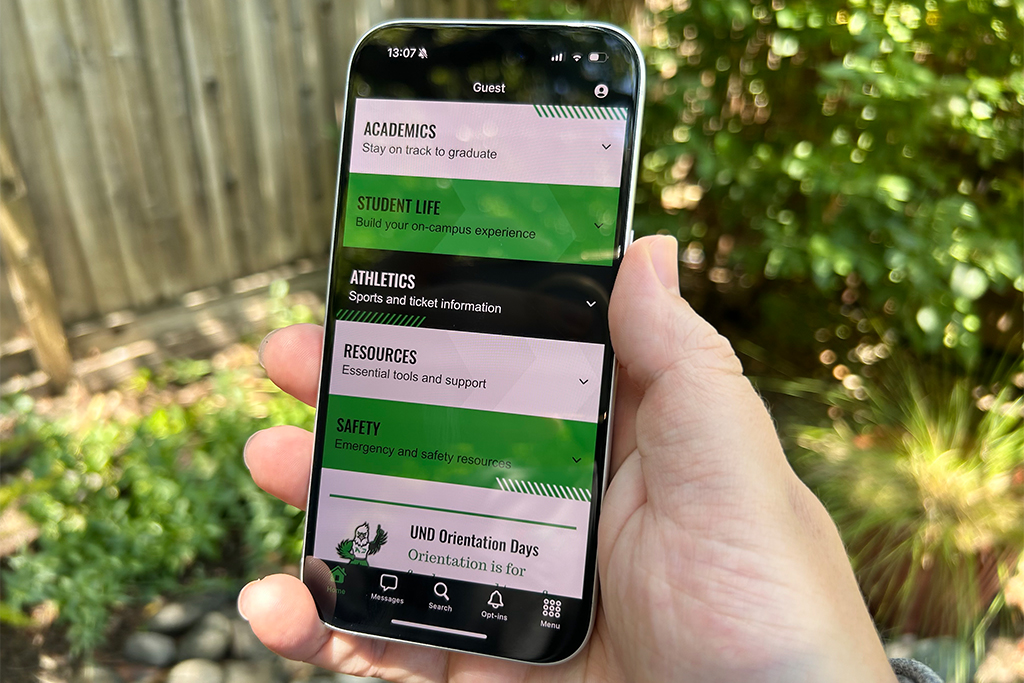
As students return to campus in the next month, they’re likely to notice a new look to UND’s official mobile app.
They’ll also find that it’s faster, more responsive, more accessible and open for direct feedback.
My UND, first launched in 2022, has gone through a rebuild over the past year that paves the way to better functionality and room to grow in its service to students and the campus community.
And as the University works on its initiatives around digital accessibility, this new take on the app strives to fit the bill in comparison to past versions – aligning with upcoming requirements in the Americans with Disabilities Act.
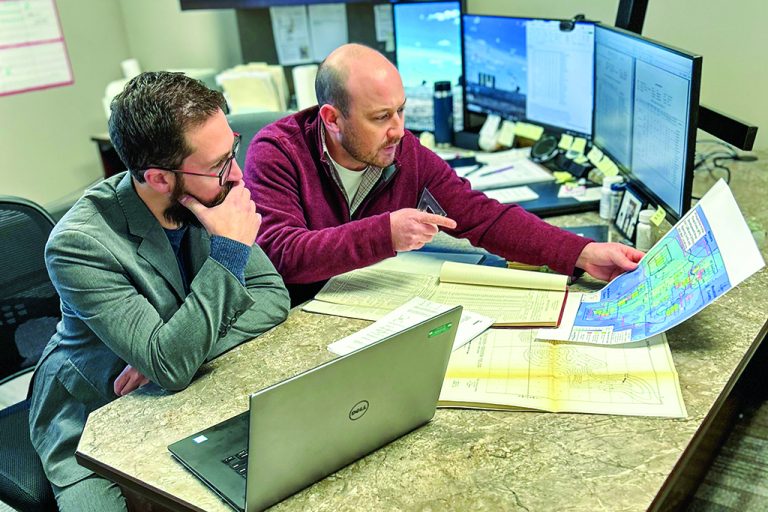
For Jessica Brooke, application administrator for University IT, the refresh is not the finish line. While she has done much of the legwork in bringing its latest version to fruition — ensuring the app offers its prior suite of information and resources — the sky is the limit for My UND.
“When I took this position six or so months ago, our goal was to upgrade My UND on the back end to keep it functional,” Brooke said. “Doing so gave us an opportunity to rebuild parts that needed more fine-tuning from an accessibility standpoint, and that’s an ongoing goal.”
Leading up to the new academic year, she’s brimming with ideas for new features and tie-ins with campus life made possible by the app’s new architecture, including a consistent pursuit for enhanced accessibility.
“I’m looking forward to students using it to keep up with their courses and find events and activities at UND, but I’m also hoping students themselves will want to get involved in building the app for how they want to use it,” Brooke said. “We have a great foundation laid down, but it would be really fun to get more perspectives from the people who use it or perhaps rely on it.”
Brighter, cleaner, quicker
Those returning to the app will find familiar sections dedicated to academics, student life, athletics and safety. Each section serves several functions, including streamlined access to platforms such as Campus Connection, Blackboard and Hawk Central under “Academics” and housing, dining and Wellness Center info under “Student Life,” among other resources and topics.
Notably, safety is more front-and-center through the app’s refresh, making it easier to use SafeCampus and contact UND’s police department or report a crime on campus.
As Brooke got deeper into the project, addressing the roots of navigating the software, she started learning more about the standards of Web Content Accessibility Guidelines, most often referred to as WCAG. Her early research led to some key updates that can be seen on the app today:
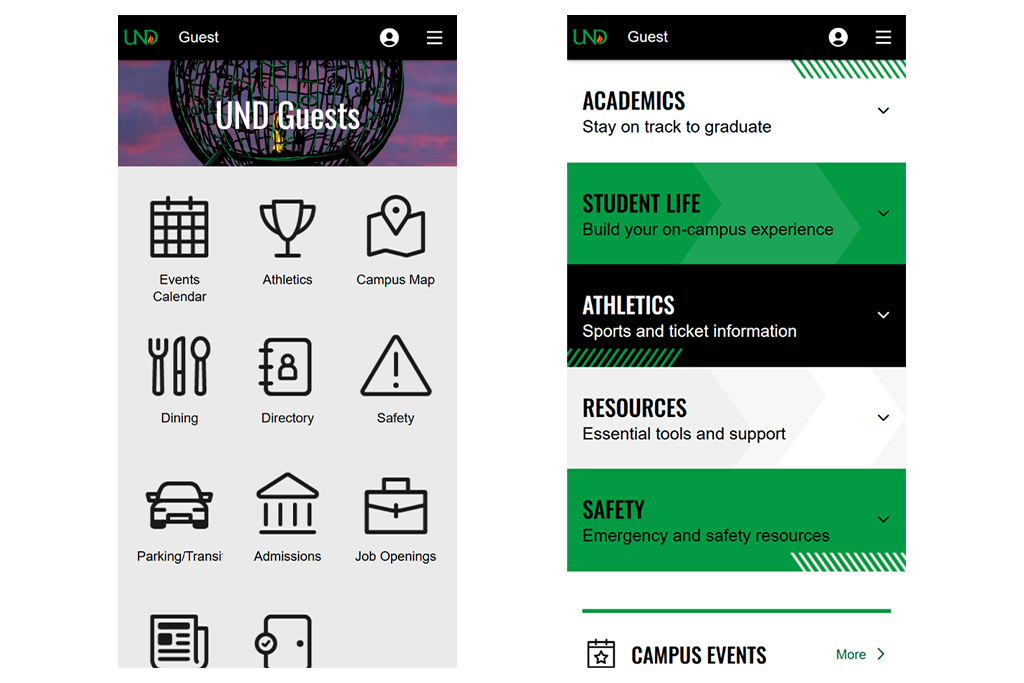
- To meet visibility requirements, color contrast and brightness were improved throughout the app.
- Navigation was simplified, as shown in the image below, by implementing collapsible grids to reduce cognitive load.
- Removed redundant screen titles and broken links to streamline functionality.
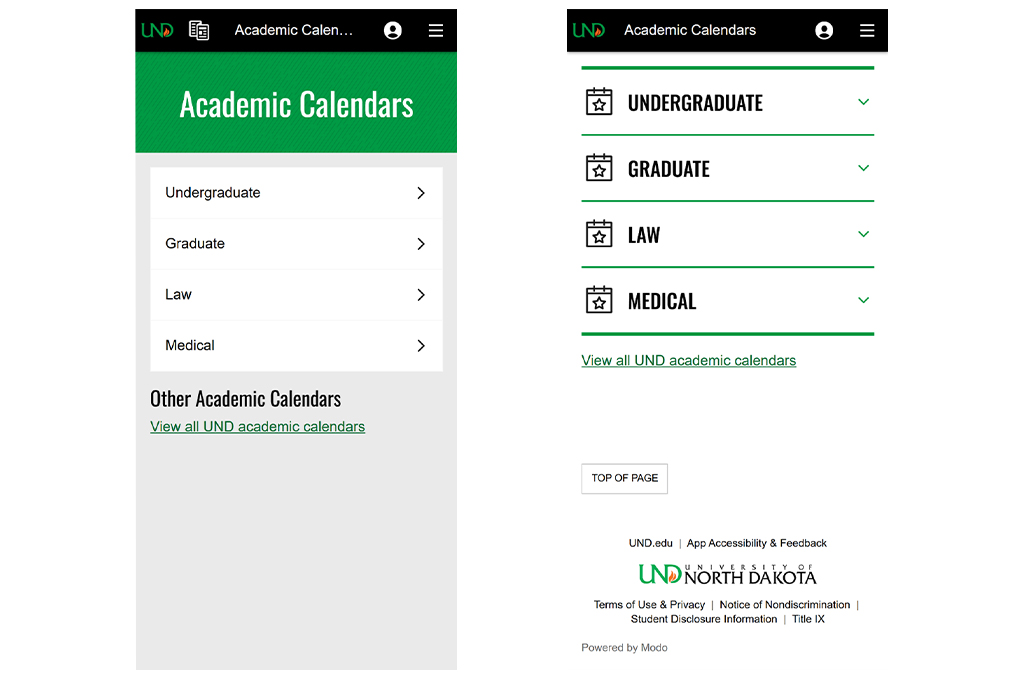
- Ensured compatibility with screen readers and assistive technologies.
- Added a feedback form and quick polls to gather user input for future improvements.
To test accessibility in the app, the development team took advantage of tools such as WAVE by WebAIM and AccessibilityChecker.org while also referring to WCAG 2.1 guidelines — the ruleset UND will be expected to meet starting in April 2026.
“I already knew through my personal experiences that I really value accessible apps and websites,” Brooke said. “Going into this, I always had in the back of my mind, ‘Is this functional? Does this make sense and is it easy to use?’
“I was thinking about how we could incorporate those things into our UND brand and into the app to make this a good product.”
And as the last bullet indicated, future improvements are where Brooke’s sights are set as more people engage with My UND and its new layout.
“As I’m learning through this process and in this role, we do have some really good guidelines out there,” she continued. “Now having access to something like Deque University, I’m going to further my training that way and pair that with peoples’ real-life experiences with My UND.”
Cutting the curb
Holding accessibility at the forefront of UND offerings such as its official mobile app can lead to what is often referred to as the “curb-cut effect”: changes made for the sake of accessibility that end up benefitting all users, regardless of ability.
Curb cuts, of course, are the sloped sections of sidewalk that allow for wheelchair access. But as a generation of pedestrians has discovered, the change also makes the sidewalk more accessible in general, especially for people using walkers or pushing strollers.
“Accessibility improvements can enhance the experience for everyone,” as Brooke phrased it. In the app, “clear navigation and better contrast, along with making the app load and run smoother and faster, makes it feel more intuitive, which will hopefully help everyone.”
The team developing My UND is keen to work with students, campus groups and other offices on campus to regularly update the app. In Brooke’s office, there is a whiteboard filling with features that are top-of-mind, many of which would bolster My UND as a one-tap solution for things on campus such as laundry, dining and activities requiring U Card credentials. Also under consideration are upgrades to wayfinding and transit, such as indoor maps of buildings and live tracking of buses serving campus.
And while some Colleges already have their own landing pages on the app, connecting to specific services and resources (think Aerospace linking to flight accounts), Brooke is hoping to have all 13 represented in the future.
Along the way, improvements to accessibility features will go hand-in-hand with updates. The team is in the midst of ensuring full compatibility with keyboards and combing the app’s imagery for alternative text.
“I would love for people to use anything we can provide as a University to help themselves have a great education here,” Brooke said. “Any way I can help with that, I’d be happy to. All of these changes are important going forward, and I hope that these things allow our students — or anyone, really — to have an easier time on campus.”
Editor’s note: For those looking to get up to speed on digital accessibility and how it affects your work on campus, visit UND’s digital accessibility landing page. That page provides information on upcoming requirements for UND’s web content as well as links to available training resources, including Deque University’s expansive selection of digital accessibility training modules. Please contact the Equal Opportunity & Title IX Office for further information.