How UND strives to be a premier institution for Indigenous Studies
Extensive programs, outreach and support services show a University that has made the above a priority goal, writers say
A strong foundation of Indigenous support
Another of us, Makaila Martin, is an indigenous student pursuing her doctor of Physical Therapy degree. “I carry the responsibility and honor to represent the communities I come from,” Martin says.
“The primary goal is to help improve health care accessibility within our indigenous populations. My experiences within indigenous communities have shaped my aspirations to become a health care professional, ideally one who’ll provide adequate health care services to tribal members.
“This journey lets me become a clinician who can practice cultural humility and emphasize the importance of our values – traits that can influence treatment decisions.
“I believe strong collaboration and sharing experiences are crucial to making this process successful,” Martin continues. “We must be engaged with Indigenous educators and community members to receive appropriate guidance to develop health care models that combine scientific findings and traditional healings.”
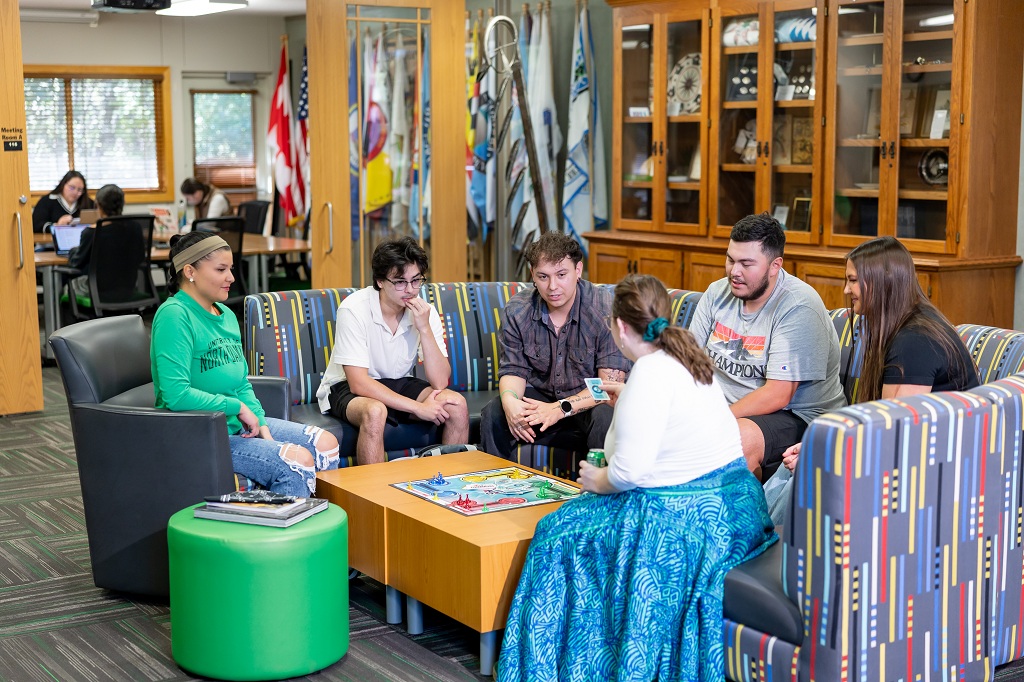
UND was an easy choice because of its strong foundation of indigenous support, Martin says. “In our culture, there is high value in community support, so finding an environment that cultivates a family-like atmosphere has been essential for my success.
“The INMED program and Indigenous Student Center guided me through many of my achievements, while helping me stay connected to my culture during my time at UND. This support not only advanced my professional development, but also deepened my commitment to advocating for adequate health care within indigenous communities.
In addition, being a part of this physical therapy program lets Martin be a role model for future indigenous students.
“Coming from a rural community with many barriers, I know that the path to higher education is challenging, especially because so many navigate this process alone and with little guidance and confidence,” she says.
“In fact, even with UND’s Indigenous support system, I still experienced moments of culture shock during my first year in Grand Forks.
“As indigenous people, we must use the strength from our ancestorial history of resilience and perseverance. Overall, it’s vital that we continue to build relationships, collaborate across communities and work toward restorative justice, knowing that through these efforts, we can inspire the next generation of indigenous students to pursue higher education.”
Another slice of wiisagidesijigan, please
Let’s give the floor now to the third of us: Jeremy Kingsbury, teaching assistant professor of History & American Indian Studies at UND. Supporting language revitalization is essential to achieving the UND LEADS plan’s cooperative relationships goals, Kingsbury says.
“Two years ago, I began hosting an Ojibwe Language table at the Indigenous Student Center,” he says. “All are welcome to attend and participate.
“When we gather every Thursday at 6:30 p.m., we focus on one or two different ways of conjugating verbs, then practice conversational speaking (via pre-scripted dialogues) using the new words or themes of the night,” he continues. “We also take turns reading Ojibwe stories from first language speakers and identify dialect and cultural differences.
“Occasionally, we’ve written original stories that play out like a mix of incredible acts of decolonization paired with a bizarre mad libs game.”
Thanks to the support of UND and Keith Malaterre, director of the Indigenous Student Center, the table now has pizza, aka wiisagidesijigan. “This literally translates to ‘thing that hurts your tongue,’” Kingsbury notes.
“In the coming months, we’ll have Charles Grolla (Bois Forte Ojibwe, and a UND graduate student) take over language table to lead us all in a round of makizinataagewin (moccasin game). I am also planning to have some more Indigenous language viewing parties, on a smaller scale than the screening Keith organized at the Memorial Union Staircase last year for ‘Anangong Miigaading,’ the Ojibwe Language dub of ‘Star Wars.’
“So come join us for wiisagidesijigan and some fun exploring Ojibwe language on Thursday nights at the Indigenous Student Center,” Kingsbury says.
Besides hosting the language table, Kingsbury also teaches Ojibwe language classes. It’s the first time Ojibwe has been taught at UND, and the first Indigenous language class in more than a decade, he notes.
“Our first class had more than a dozen students from many different majors and backgrounds, and it felt like an absolute triumph,” he says.
“Ojibwe is an endangered language,” Kingsbury continues. “This means every time a student or community member at UND learns a new phrase, speaks at Ojibwe class or attends the language table, it helps to make sure that Ojibwemowin does not go extinct.
“I’ll be offering Ojibwe 1 again in the Fall of 2026,” he says. “Mii Gwech igo! Apegish waabaminan iwidi Ojibwemowin Adoopiwin miinawaa Agindaasowin! Or in English, thanks! I hope to see you at the Ojibwe Language table or class!”
Of course, there are many other examples on campus of UND faculty members and programs that have built collaborative relationships with tribal communities and tribal people. These include Robert Newman, professor and chair of Biology; INMED; INPSYDE; RAIN; and the new Department of Indigenous Health doctoral program.
These examples, like the other policies and practices described above, show how UND is committed to moving ever closer to becoming a premier institution for Indigenous Studies.
About the authors:
****
>> Questions or comments about the UND LEADS Strategic Plan? Your thoughts are welcome! Please contact Ryan Zerr, associate vice president for Strategy & Implementation, or Anna Marie Kinney, coordinator of the University Writing Program, the co-chairs of the UND LEADS Implementation Committee. You also may offer your thoughts by visiting the UND LEADS Strategic Plan home page and clicking on the “Provide your feedback” link.
Thank you for your support of the UND LEADS Strategic Plan!