New book on the Bakken brings home burden of oil booms
Published by the Digital Press of UND, book by Iowa State professor assesses boom’s impacts — and asks, were they worth it?
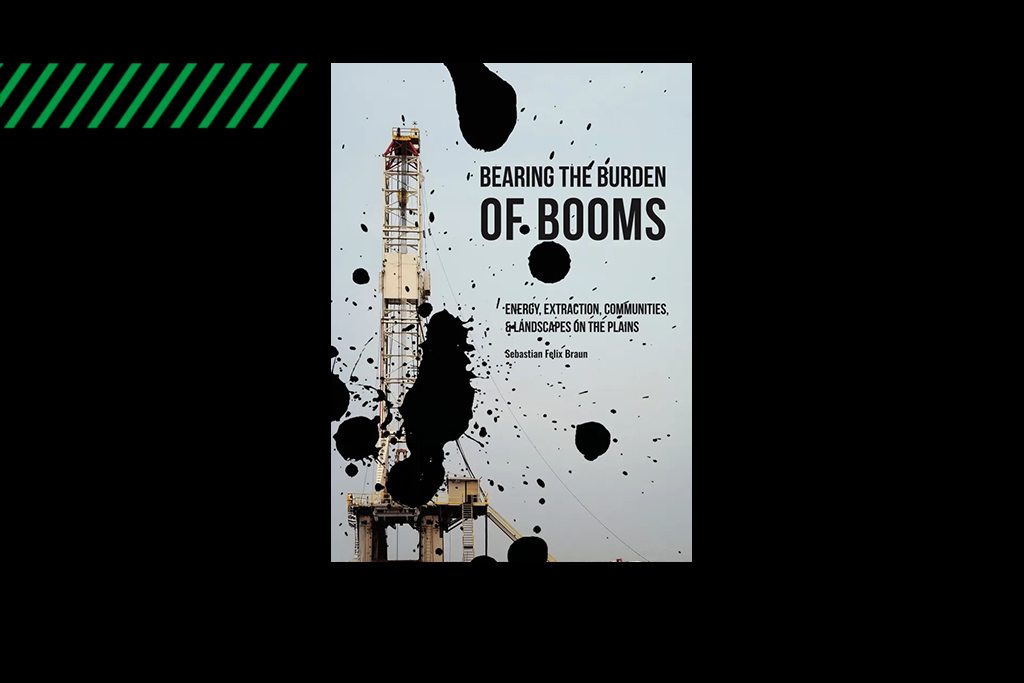
The Bakken oil boom may well be a fading memory to the national media, but it continues to impact residents of western North Dakota. Sebastian Felix Braun’s new book, “Bearing the Burden of Booms: Energy, Extraction, Communities and Landscapes on the Plains,” reflects years of field work in the Bakken oil patch and extracts crucial lessons from those who experienced the boom.
Braun is director of American Indian Studies and professor of Political Science at Iowa State University.
Based on 15 years of fieldwork and archival research and published by The Digital Press at the University of North Dakota, “Bearing the Burden of Booms” takes a comprehensive and multidisciplinary look at resource extraction and its impacts on landscapes and communities. Taking the Bakken oil boom as its prime example, this book describes the cultural, social, and environmental disruptions, analyzes the political messaging that supports natural resource extraction, puts the Bakken boom in a historical and contemporary comparative context, and examines water usage and pollution.
Combining this research with the economics of hydraulic fracturing allowed Braun to ask the question of whether the cultural, social and ecological disruptions of the boom were and are worth it.
“When I started doing research in the Bakken around 2010, I became interested in a question very few people seemed to ask at the time: what will happen to the communities when the boom is over?” Braun recalls.
“In order to understand this, of course, we have to know what the boom does in the first place. I am not sure the book can deliver an answer to the original question, but it aims to discuss resource extraction booms from a variety of different perspectives, and I hope the reader can find some answers in that.”
“Bearing the Burden of Booms” also considers the impact of oil booms on residents of the Bakken, both in North Dakota and in the Mandan, Hidatsa, and Arikara communities of the Fort Berthold Indian Reservation. The book shows how these communities reacted to the boom, and what local and regional residents and governments can do in response to such overwhelming events.
The diversity of perspectives in “Bearing the Burden of Booms” makes it a unique contribution to the small but significant body of work on the Bakken and resource booms more broadly. This book also stands out because it recognizes the urgency facing communities today as the speed and frequency of resource booms accelerates with improving technology and global connectivity.
For Braun, “this book, and others like it, is important right now because we are facing the most important question perhaps in the history of our societies: should we continue to live in a way that is destructive to landscapes, communities and ourselves in order for some of us to live comfortably and amass wealth, or should we change to another way of life?
“I hope communities can use it to be in a position to make their own decisions.”
This is the third book focusing on the Bakken oil boom published by The Digital Press at the University of North Dakota. Publisher William Caraher remarks: “The Digital Press has established itself the leading publisher on the Bakken and the social impact of oil more broadly. It’s an honor to publish this latest installment alongside my edited volume, “The Bakken Goes Boom,” and Kyle Conway’s “Sixty Years of Boom and Bust.”
Like all books published by The Digital Press, this book will be available as both a free download and a low-cost paperback. For more on this book, visit the book’s page on the website of The Digital Press.