UND hosts National Institute on Aging director for fireside chat
Dr. Richard Hodes joins UND President Andrew Armacost to discuss Alzheimer’s breakthroughs, rural health and future of aging science
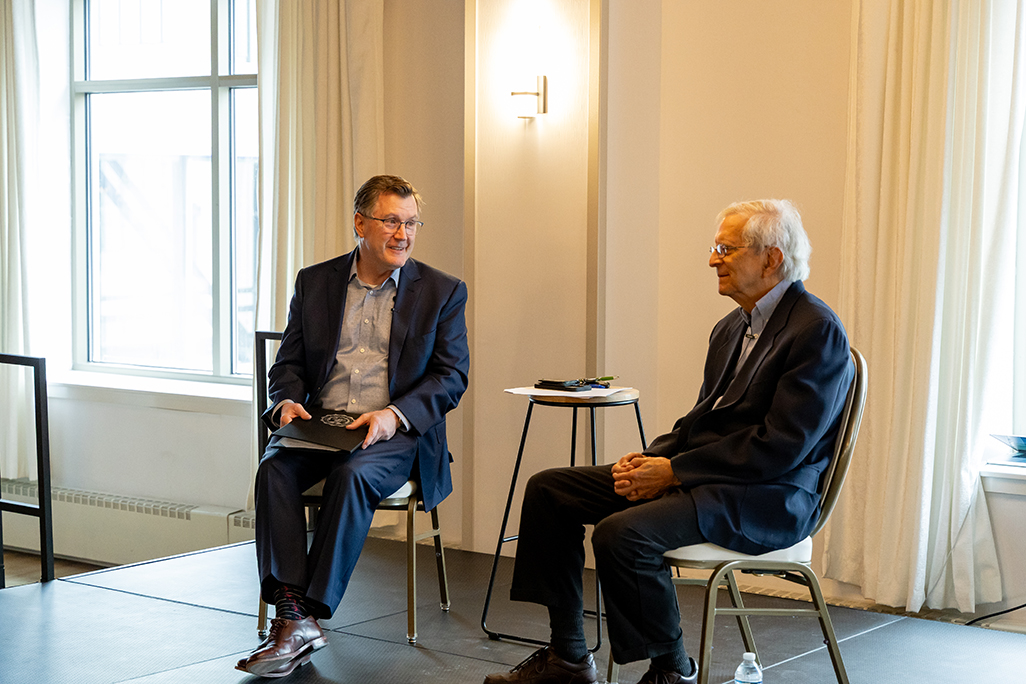
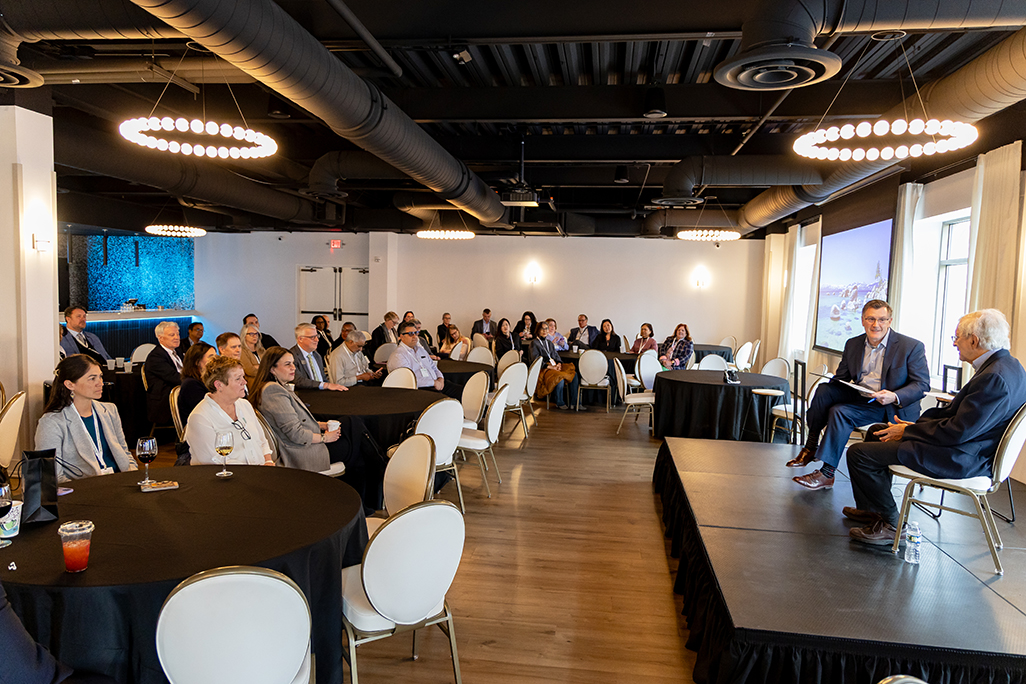
UND President Andrew Armacost recently welcomed Dr. Richard Hodes, director of the National Institute on Aging at the National Institutes of Health, for a wide-ranging fireside chat focused on the future of aging research, Alzheimer’s disease, rural health and the growing role of artificial intelligence in medicine.
Held in the afternoon of Monday, May 4, before UND and NIA researchers, faculty members and others, the conversation highlighted the rapid evolution of aging science during Hodes’ more than three decades leading the NIA.
The fireside chat was held in a ballroom at the Olive Ann Hotel in downtown Grand Forks, and coincided with the NIA Regional Director’s meeting, held on the UND campus from May 4-5.
Hodes reflected on his career path — from growing up on Long Island and driving an ice cream truck in the summers, to studying at Yale and at Harvard Medical School, and eventually joining the NIH as a physician-scientist. He credited mentorship and being open to unexpected opportunities as key influences throughout his career.
During the discussion, Hodes said research on aging has transformed dramatically since he became NIA director in 1993.
“Aging and aging research, not only from a public health standpoint, but from the excitement of the most basic translational biological behavioral sciences, has really become a model,” Hodes said.
Today, he said, aging science has become a leading area of biomedical research, driven by advances in molecular biology, behavioral science and personalized medicine.
Most significant advances
Turning to the rapid evolution of aging science, Armacost asked Hodes what he viewed as the most significant breakthroughs during his 33 years leading the NIA.
A key portion of the conversation focused on Alzheimer’s disease and dementia research. Hodes described major breakthroughs in the ability to detect Alzheimer’s before symptoms appear, including the development of blood-based biomarkers and advanced imaging tools. He also highlighted recently approved treatments that slow progression in early-stage Alzheimer’s patients.
At the same time, Hodes emphasized the complexity of Alzheimer’s disease, noting that most patients experience multiple overlapping brain pathologies rather than a single disease process.
“We have the realistic hope, I think, of identifying more and more targets and — let us pray — more personalized, effective interventions,” he said.
Armacost and Hodes also discussed the importance of research partnerships and supporting institutions in rural states such as North Dakota. Hodes stressed that NIH is committed to expanding research opportunities beyond large coastal institutions and ensuring rural populations are represented in major studies.
“Institutions like the University here in North Dakota and others have no shortage of bright and brilliant scientists,” Hodes said.
He encouraged early-career researchers to engage directly with NIH staff and take advantage of mentorship and training opportunities available through the agency.
As the conversation shifted toward emerging technologies, Armacost asked Hodes about the growing role of artificial intelligence in medicine and research.
“What do you see with AI, and what are the opportunities?” Armacost asked.
Hodes described AI as an increasingly essential tool for scientists and administrators alike.
“Everyone going into research now has to be thinking about AI literacy,” he said.
The discussion concluded with questions from faculty and researchers, the answers to which reinforced the importance of collaboration among federal agencies, universities and health care systems as advances in aging science continue to reshape medicine and public health.