System OVERRIDE: The robotics pipeline to UND’s engineering program
One in four UND engineering students arrives with a competitive robotics background, and the VEX Robotics event is a principal source
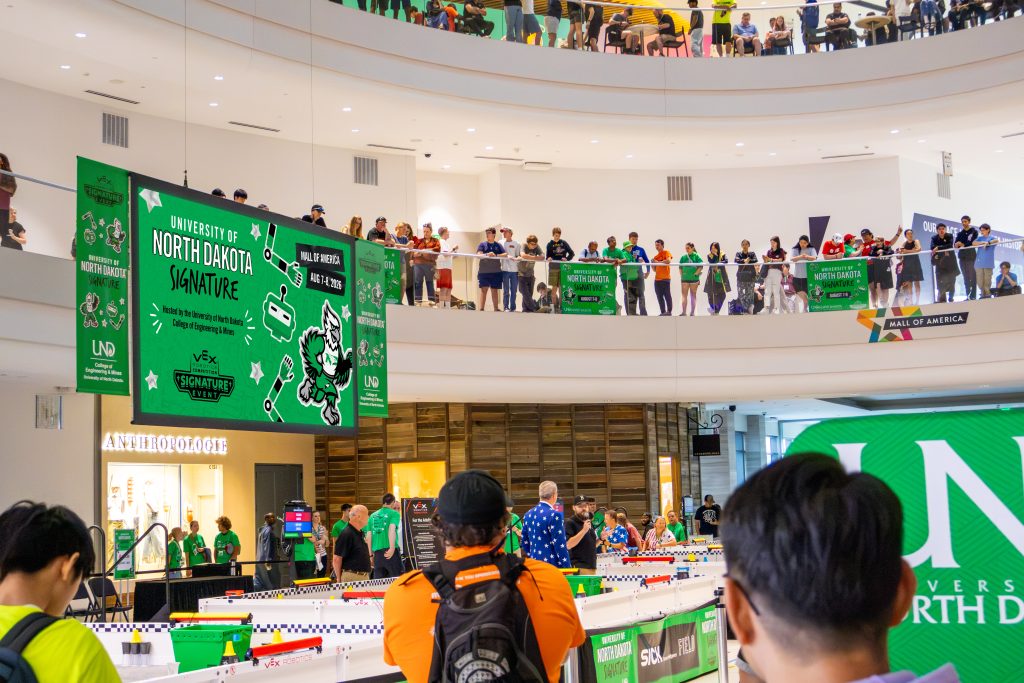
Two minutes. That is all four high school teams have in each match to show off what their robots can do.
This year, 118 teams arrived at the Mall of America vying for a spot at the top. From Maine’s rocky shores to the California coastline, stretching south to the heat of Texas and north to the cold of Calgary, these teams spent their summers refining their robots in preparation for this competition.
Marking five years of VEX Signature Events at the Mall of America, the event launched the 2026-27 VEX season. It was the first Signature Event featuring the new game, OVERRIDE. By the end of the weekend, four teams had secured spots at the 2027 VEX Robotics World Championship.
UND in the field
For UND, the return on hosting can’t be measured in a single weekend. It is seen later when students walk through the engineering building’s doors already familiar with robotics and the engineering process.
“About 25% of UND’s engineering students come with a competitive robotics background,” said Andrew Dahlen, a mechanical engineering lecturer at UND College of Engineering & Mines who helps lead the University’s participation in the event.
“This is a space that is self-selecting,” Dahlen said. “They already know that they want to go into engineering.”
Years spent designing, testing and rebuilding robots have already taught them how to work through the engineering process. They enter college ready to revisit problems they have faced before, challenge their earlier solutions and push their ideas further. That head start is visible in the technology teams now bring to competitions.
“Years ago, we didn’t have vision systems for competitive robots,” Dahlen said. “Now they’re using cameras to recognize where the game objects are and utilizing a lot more coding to control the bots.”
But the technology is only part of what students bring with them. They also understand the pressure to keep improving.
Dahlen puts the larger idea simply: “Competition is the heartbeat of all engineering activities.”
On the competition floor, a robot that doesn’t improve gets left behind. Engineering works the same way. Students are not simply learning how to make something work. They are learning how to constantly make it better.
Organized chaos, by design
Every year, game designers at VEX Robotics build in a new wrinkle meant to keep teams on their toes. This season is all about object orientation. Robots must not only move game pieces but also stack Pins and Cups, set Toggles to the correct color and account for what each decision means for the score.
“There are so many variables that go into this game, and that’s really what we leaned into,” said Bailey Kahl, the VEX Robotics game designer who led this year’s build of OVERRIDE. “One little thing, one detail in a match, can change everything.”
The result looks like chaos from the stands, but it is far from it. For the first 15 seconds of every match, the robots operate autonomously, running a preprogrammed code. Students then take control for the remaining minute and 45 seconds.
“This idea of organized chaos always kind of comes into play,” Kahl said. “It may look like robots are running around like chickens with their heads cut off, but it’s all very strategic.”
Kahl competed in VEX himself as a teenager before working his way up through the company. He draws on that experience when offering students advice or asking them about a new technique he hasn’t seen before.
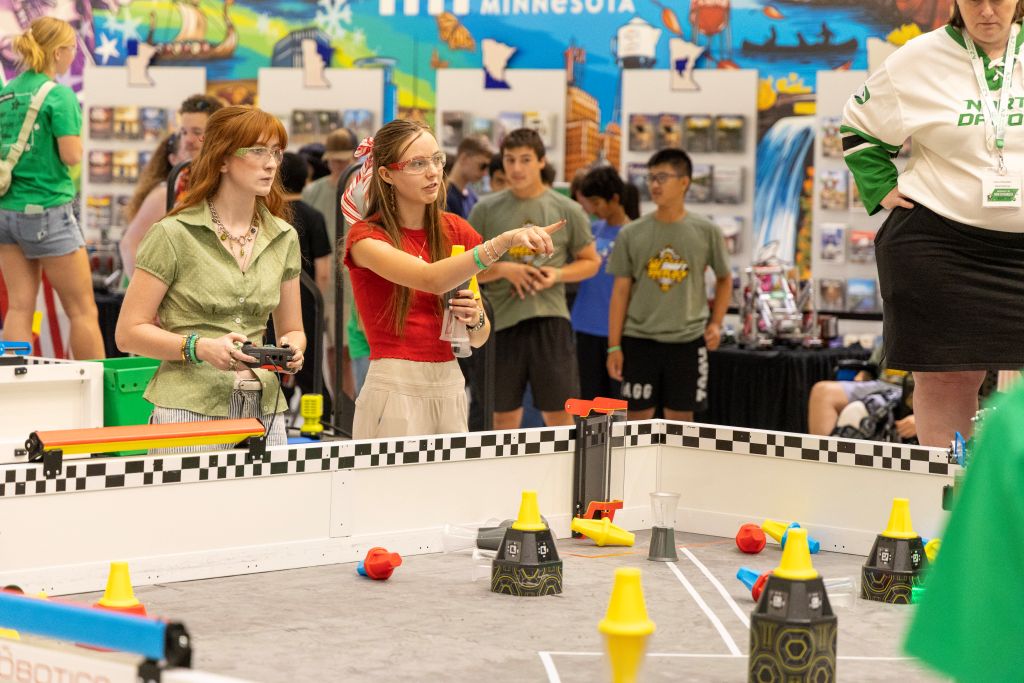
Break the game
The team names are playful, ranging from The SnuggleMuffins and Pink Swirlee Unicorns to Technical Difficulties and Exothermic Burnout. Their preparation is anything but.
The buzz from the field didn’t come only from robots. Around the matches, teams strategized with their alliance partners and against their opponents, their eyes sharp and focused. Pins stacked. Toggles flipped. Cups dropped. Some robots raced across the field. Others stalled as teams discovered rising problems. Some moved steadily toward their goals. Others played defense, blocking their opponents from scoring. Each member had a role.
“Design a game for a year, hand it to 30,000 kids and watch it fall apart in the best way possible,” Kahl said. That is the part of the job he loves most.
“We think we’ve got it all figured out, and just when we’re confident, they figure out things we never could have planned for,” he continued.
Teams don’t just play the game as written. They aim to break it, finding ways to utilize their robots against competition.
“They figure out what’s wrong with it and exploit all the weaknesses,” Kahl said.
By the time the World Championship arrives, the robots on the floor look very different from those at the Mall of America in the early weeks. Kahl said some teams will build 10 to 15 robots over the course of the season, tearing down and rebuilding after nearly every event. Sometimes, they have as little as two weeks to turn a robot around before the next competition.
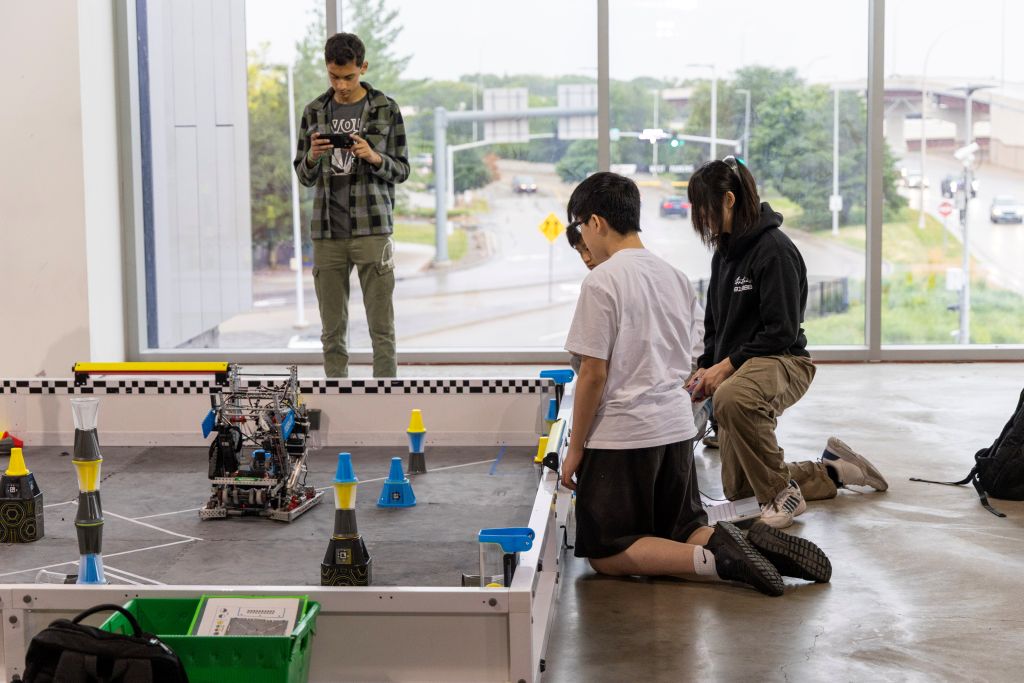
Teams can scrimmage at home, but the back-against-the-wall test of real competition provides information they cannot get anywhere else. Under pressure, students find out whether their strategies work, how their robots perform and what needs to change before the next event.
From the game to the factory floor
That cycle—build, compete, take it apart, rebuild—isn’t so different from what happens on a factory floor.
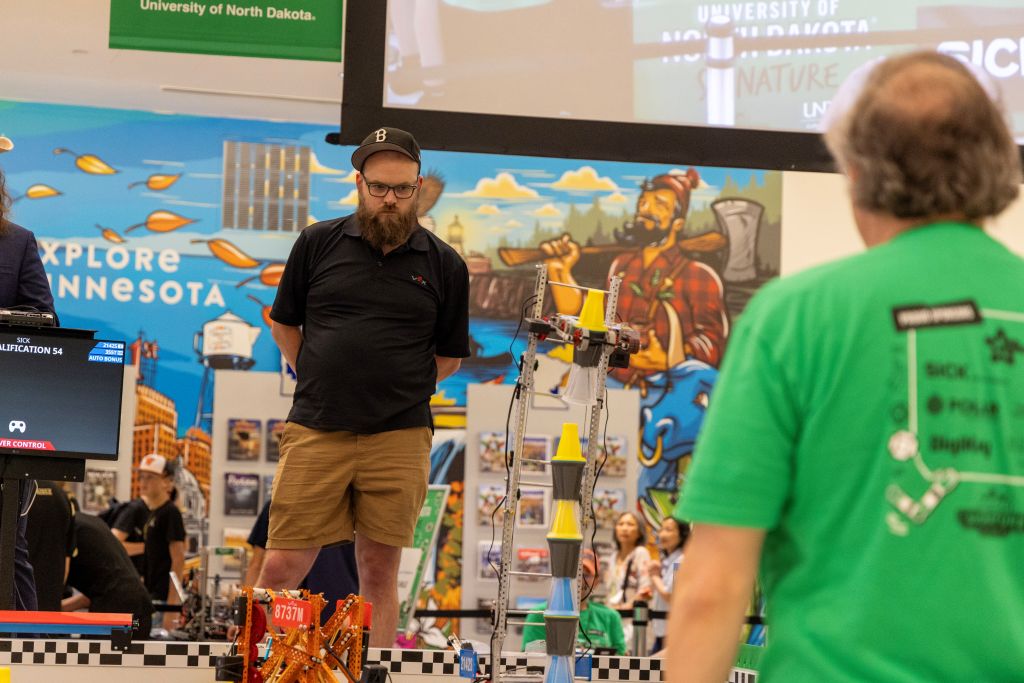
Dan Bruski had another reason for watching the students compete. SICK, the sensor and automation company where he works, wants students to understand how their robots’ tasks relate to the work of robots in modern manufacturing.
“This is what it’s doing,” Bruski said, gesturing toward the competition floor, “except you’re not trying to win a game. You’re trying to find a way to solve what your competitors aren’t.”
Students might be playing a game, but Bruski noted that the tasks their robots perform resemble those completed in today’s manufacturing plants. The difference is the end goal: Students are trying to earn points, while companies are finding ways to save money, solve problems and raise the bar.
For SICK, sponsoring an event like this is a long game. It introduces students to the company and its technology before they enter the engineering field. In hopes that when they need a sensor, they lean on technology they are familiar with.
The similarities extend beyond the robots themselves. VEX competitions offer students hands-on experience with the same design process used by professional engineers. They learn by doing, using new technology and testing their ideas to determine what worked, and what they need to redesign next.
What’s at stake
Beyond bragging rights, this event doubles as a doorway. As a Signature Event, it awarded four qualifying spots directly to the VEX Robotics World Championship:
- Excellence Award: ~Nuisance~, Kaysville, Utah
- Tournament Champion: [Vinci] Corean Khicken, Burlington, Massachusetts
- Tournament Champion: WASHED, Omaha, Nebraska
- Robot Skills Champion: Ctrl Z, Richmond, British Columbia, Canada
For teams that didn’t place, Kahl said the weekend mattered beyond the final standings.
“You can come to this event, lose every match, not do well at all,” he said, “but you are gaining so much information.”
Two minutes may be all they get on the competition floor. But when the clock runs out, the work doesn’t. Teams from more than 20 states and beyond took what they learned home, ready to rebuild for the next event.