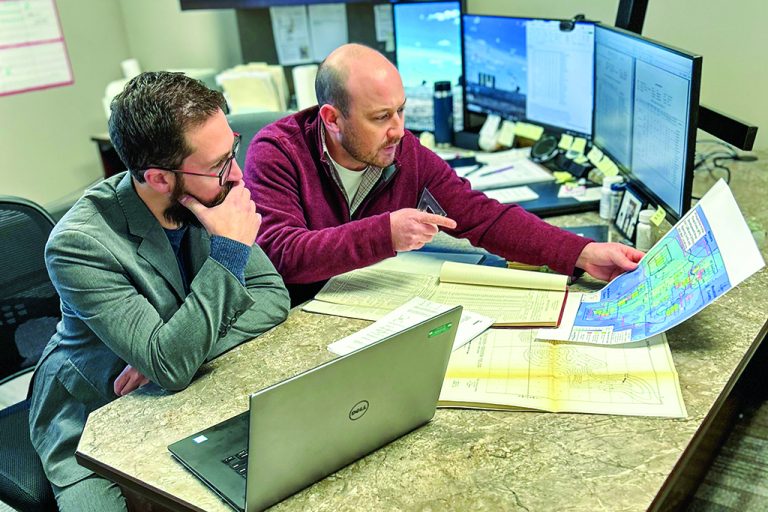
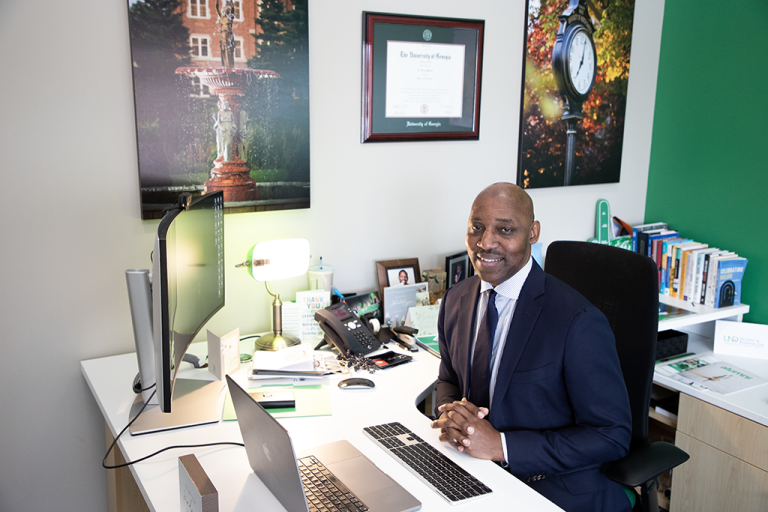
Behind the scenes of ‘Discovery’
A small army of faculty and staff members work hard to help UND students plan and conduct research, authors say
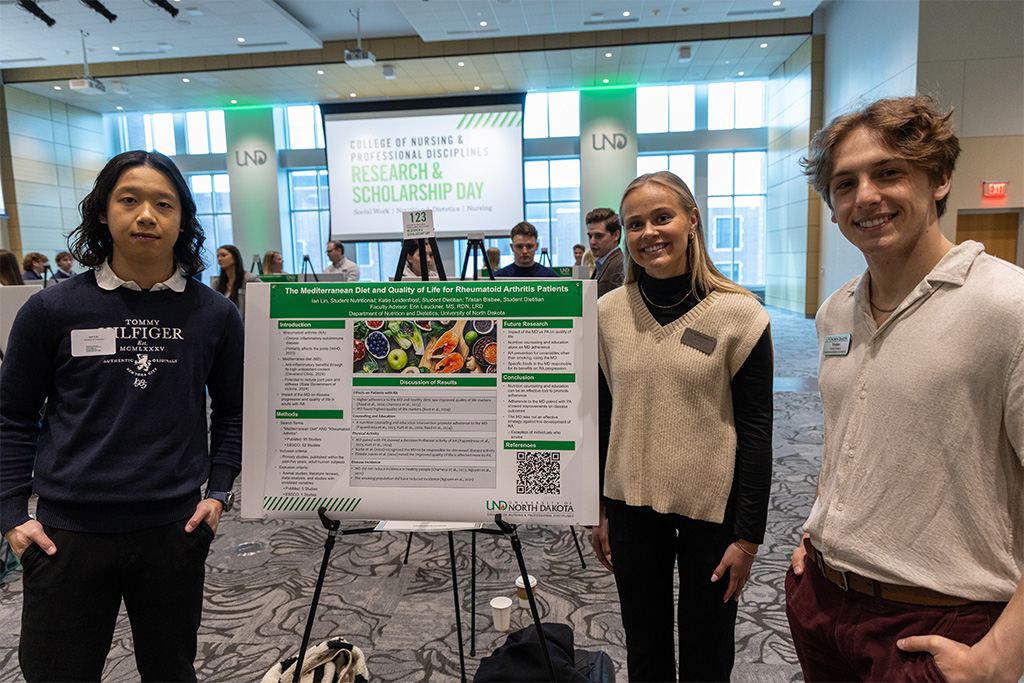
Editor’s note: The following letter, written by Shari Nelson, UND’s Experiential Learning coordinator, and Sarah Sletten, director of Learner Research at the School of Medicine & Health Sciences, introduces a special edition of UND Today devoted to the Discovery core value of the UND LEADS Strategic Plan.
As readers know, UND Today focuses on UND LEADS core values in our issue published on the last Tuesday of each month. This means that each of the stories in today’s issue centers on a UND program or activity that reflects the plan’s core value of Discovery.
To continue the monthly UND Today series, our issue on Feb. 24 will be devoted to the Service core value.
Comments or questions? Contact Tom Dennis, UND Today editor at tom.dennis@UND.edu. Thank you for reading!
* * *
By Shari Nelson and Sarah Sletten
The University of North Dakota upholds Discovery as a core value by providing support for student scholarship from initial placements through communication of findings.
The University has strategically established administrative offices and leadership positions designed to connect students with opportunities and provide continuous support throughout the research lifecycle. By strengthening the service units that provide the resources and support, UND ensures that the infrastructure exists to provide our students with meaningful experiences.
While the public focus is typically on the final presentation of findings, it is this comprehensive, institutional support system that drives the University’s commitment to Discovery.
Here are a few examples.
Helping medical students find research experiences
Research is a long-standing component of medical education. While students often view research as a way to bolster residency applications, its primary value is preparing physicians for an increasingly sophisticated health care landscape.
Clinicians must possess the analytical and critical thinking skills required to apply scientific advancements directly to medical practice. Authentic research experiences are the best method of developing this deep understanding of evidence-based medicine.
As the director of Learner Research, Sarah Sletten plays a central role in placing our medical students into these foundational experiences. As Sletten explains: “Through the Research Experiences for Medical Students elective series, I coordinate immersive research opportunities ranging from basic science benchwork through translational and clinical studies.
“Moving students beyond the classroom to engage in professional application is the most effective way to develop the rigorous inquiry skills they will need as practitioners.
“This level of discovery requires a massive, collaborative effort,” Sletten says. “I work with more than 100 research mentors, managers, faculty and staff across several educational and clinical institutions, all of whom dedicate their expertise to guiding our students through the complexities of medical research.
“Furthermore, the SMHS Office of Research Affairs supports the dissemination of this work. We provide financial assistance for travel to professional meetings and help cover publishing fees to ensure our students’ contributions are shared with the broader scientific community.
“By prioritizing these research activities, we ensure our graduates are innovative thinkers capable of advancing the future of medicine,” Sletten said. “This commitment to applied learning and transformative research positions our students to address the complex health challenges facing our nation.”
Research opportunities for UND undergraduates
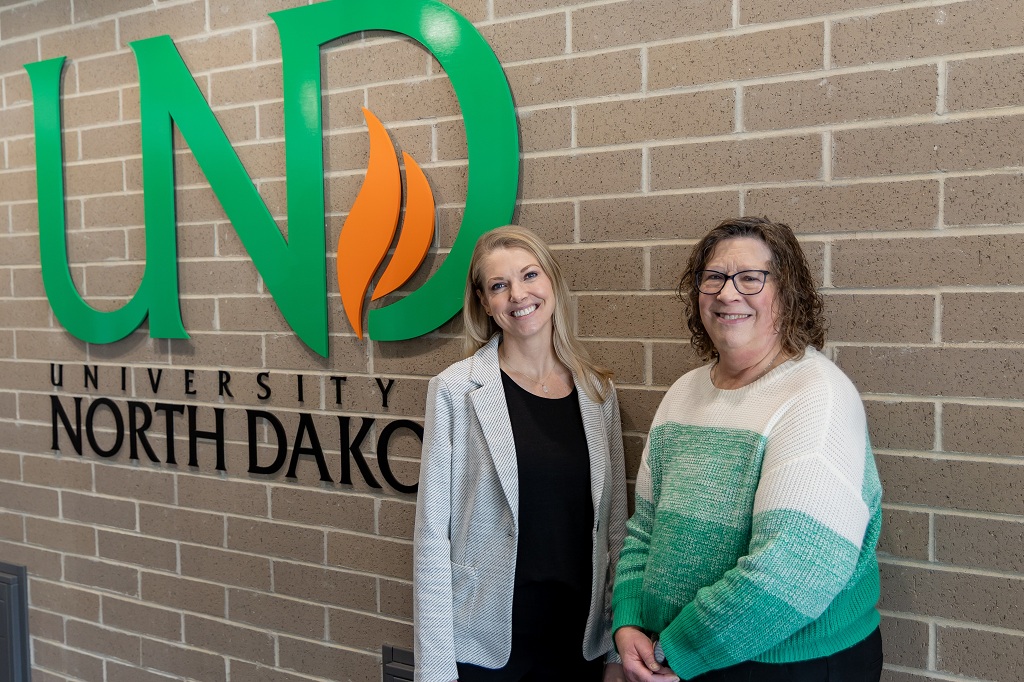
The Experiential Learning Center opened in July 2023 to expand access to career engagement and experiential learning opportunities, including Career Services, internships, co-ops, job shadowing, study abroad and undergraduate research. When the center opened, Shari Nelson stepped into the role of experiential learning coordinator.
“This position builds on my work at UND since 2005 in roles including learning specialist, academic advisor, Starfish administrator and testing services coordinator,” Nelson said.
“After starting this role, I quickly realized that my favorite part of the job is listening to students and seeing how much they grow once they begin research. For many students, discovery starts before there’s a project at all, in these early conversations.
“Students come to me with all kinds of stories: some with clear goals, others still figuring things out, and many unsure whether research is ‘for them,’” Nelson said. “That’s where I see my role beginning. It’s all about listening, asking questions and helping students think through what they’re curious about and want to explore.
“From there, we review potential faculty mentors, and I reach out on the student’s behalf to make initial introductions. I think of it as knocking on the door. I can make the introduction and get things started, but the student has to walk through the door and do the work from there.
“As I reconnect with students after they’ve started research, I see their confidence grow and hear them begin to use research language more comfortably,” Nelson said. “This aligns directly with UND’s Discovery value. Students describe a wide range of experiences; some realize they really enjoy research, others find clarity around a career path or a different direction, and some talk about skills they’re developing through working with a faculty mentor or alongside other students.
“Being part of that process, even in a small, behind-the-scenes way, is what makes this work so meaningful,” Nelson said.
Mark your calendars for April 8
Together, these examples show how Discovery shows up in everyday work at UND. It happens when students are supported early, encouraged to ask questions and given the chance to explore ideas with faculty and mentors.
Much of that comes from relationships, steady support and having space to talk about what they’re learning along the way. One upcoming example of this is the Undergraduate Research & Scholarly Activity Grand Journey event on April 8, where students from across the University will share their work and talk about their research experiences.
We invite everyone to attend, engage with students and see firsthand Discovery in action.
About the authors
Shari Nelson is Experiential Learning coordinator at UND. Sarah Sletten is director of Learner Research at the UND School of Medicine & Health Sciences.
>> Questions or comments about the UND LEADS Strategic Plan? Your thoughts are welcome! Please contact Ryan Zerr, associate vice president for Strategy & Implementation, or Anna Marie Kinney, coordinator of the University Writing Program, the co-chairs of the UND LEADS Implementation Committee. You also may offer your thoughts by visiting the UND LEADS Strategic Plan home page and clicking on the “Provide your feedback” link. Thank you for your support of the UND LEADS Strategic Plan!