CEHD Research In Press: 2024 October
NEWS
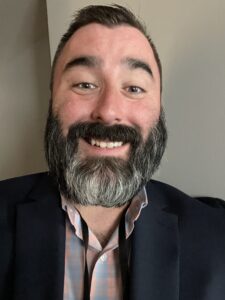 Dr. Ryan Flinn led a UND team to receive a 5-year (2024-2029), $3,889,250 grant from the Substance Abuse and Mental Health Services Administration (SAMHSA), in partnership with the University of Nevada, Reno, to continue operating the Mountain Plains Addiction Technology Transfer Center for the next five years (2024-2029). CEHD faculty, staff, and graduate students included Dr. LaVonne Fox, Kim Miller, Kate McKinney, as well as CNPD faculty Chris Harsell. The Mountain Plains ATTC is one of 10 regional technology transfer centers continuously funded through the ATTC Cooperative Agreements since 1993 to disseminate information about substance use disorder prevention, treatment, and recovery across all U.S. states and territories; it has been co-located at UND and the University of Nevada, Reno, since 2017, first under the direction of Thomasine Heitkamp and subsequently Cindy Juntunen. Ryan Flinn, assistant professor in Education, Health & Behavior Studies, currently supported as the Rose Isabelle Kelly Fischer Professor in CEHD, became Principal Investigator/Project Director in September 2023 and led the application for the 2024-2029 award. We are funded to offer training, consultation, and technical assistance to healthcare providers across HHS Region 8 to facilitate the adoption of evidence-based assessment, diagnosis, treatment, and recovery support services for patients living with substance use disorder and their families. HHS Region 8 covers the states of Colorado, Montana, North Dakota, South Dakota, Utah, and Wyoming; it is one of the largest regions in the ATTC network and focuses on rural/tribal providers.
Dr. Ryan Flinn was also successful in receiving a three-year (2024-2027), $1,300,953 sub-award grant from the American Academy of Addiction Psychiatry, in partnership with the University of Missouri-Kansas City, the University of North Dakota will also continue to operate the SAMHSA-funded State Opioid Response/Tribal Opioid Response Technical Assistance (SOR/TOR-TA) Team, serving Region 8 (SOR) and the Tribal Mountain Plains & Lakes Region (TOR). Established by SAMHSA in 2018, the Opioid Response Network built a coalition of interprofessional health, behavioral health, prevention, harm reduction, recovery, and justice and corrections organizations. Under the direction of Ryan Flinn since September 2023, this CEHD-based team of faculty and staff including Abby Moore and Norman McCloud offer rapid response and consultation services to fulfill requests from members of our region. We link national experts to local requestors to ensure effective dissemination and implementation of best practices in opioid use disorder and stimulant use disorder prevention, treatment, recovery, and harm reduction. Learn more about the Opioid Response Network and submit a request for consultation here: https://opioidresponsenetwork.org/ Read a recent case study about our work in the region here: https://opioidresponsenetwork.org/case-study/working-with-tribal-prevention-programs-to-build-youth-engagement/
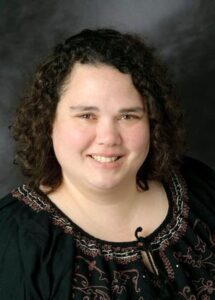 Dr. Rachel Navarro and colleagues were awarded a three-year, $1.5 million grant from the USDA Food and Nutrition Service (FNS) for Substance Use Prevention Education in the Women, Infant, and Children (WIC) Program. Along with College of Nursing and Professional Disciplines Dean Maridee Shogren, this grant/cooperative agreement starts on September 30th. With this project, they will be training Special Supplemental Nutrition Program for WIC staff across the country in the best practices for addressing substance use prevention and making referrals for WIC participants. The grant brings together faculty and staff across both colleges for this important work across the nation to effect change for perinatal women and their children.
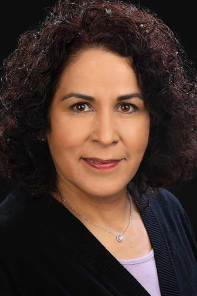 Dr. Navarro and Dr. LaVonne Fox also received a five-year, $500,000 sub-award grant from the Stanford University School of Medicine via the University of Texas at Austin to SAMHSA’s National Center for Mental Health: Dissemination, Implementation, and Sustainment (MHDIS). The partnership will focus on 1) adapting implementation resources that support evidence-based practice to be culturally relevant for indigenous people and 2) delivering targeted and intensive technical assistance that supports diversity, equity, and inclusion in addressing behavioral health inequities.

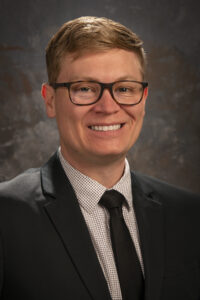 Dr. Karla Fehr has been asked to serve as Co-Chair for the Research Committee of the Society of Developmental and Behavioral Pediatrics and will begin this role in September at the annual meeting.
Dr. Ethan Dahl was quoted in the USA TODAY article in relation to a CDC publication due to hisconnection to the CDC CSP program through ND HOPES.
Dr. Matt Knutson was a guest on The Academic Minute on Monday September 23 discussion his recent piece in The Conversation. The Academic Minute Academic Minute is a segment that airs on 70 radio stations in the US and Canada (mostly public radio).
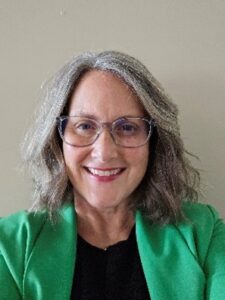 Dr. Lee Ann Williams presenting at 17th annual International Conference of Education, Research and Innovation (ICERI), Seville (Spain), November 2024. Her presentation explored “Navigating the Global Impact of Mental Health: Strategies for Enhancing Well-Being in Educational Environments and Supporting Educators.” Dr. Williams also published a piece in The Conversation entitled, “Young Professionals are Struggling to Socially Adapt in the Workplace – Educators Can Help”

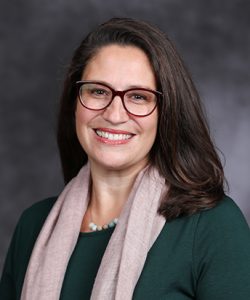 Drs. Laura Link and Diana D’Amico Pawlewicz Diana also had a new article in The Conversation: Trusting and empowering teachers to regularly use effective classroom assessment & grading practices can improve students’ reading outcomes–and limit their risk of being held back.
Randy Perkins, EFR doctoral student, presented at the College Fund/AIHEC TCU Faculty and Student Success Convening in Albuquerque, NM. His talk was entitled, Need a ChatGPT* Policy? Time to Get Up-To-Speed. Randy is currently a faculty member at White Earth Tribal and Community College in northwest Minnesota, interested in the intersection of artificial intelligence, epiphany, and individual and social empowerment. Other interests include online education, open educational resources (OER), and Z-degrees.

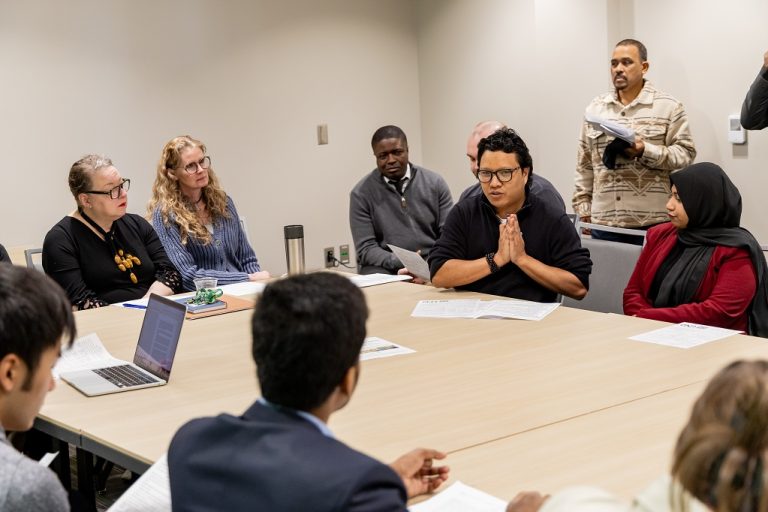
On October 7, CEHD held a professional development session entitled, How do you Start a Grant Proposal? More than 15 online and 15 face-to-face faculty, staff, and doctoral students attended. Robert Monette (CEHD Grant Preparation Officer) led the session and covered topics including developing a grant topic and goals, searching for opportunities, types of grants, and reviewing a “request for proposals” (RFP) document. Robert described the steps of the CEHD grant proposal submission process, including submitting a proposal notification form, and the list of funding search engines on the CEHD Research website.
Our next professional development session will be entitled, What Happens After You Get a Grant? on Tuesday, October 29 from noon to 1:00. The session will be led by Gabriel Salander (CEHD Post Award Officer and Grants Analyst) and will cover topics such as notification of award and set up, managing your budget and expenditures, hiring and managing personnel, annual reports and evaluations, and college post-award support. The session will be available face-to-face in Education Room 12 and online (Zoom: https://und.zoom.us/my/robstupnisky)
SPOTLIGHT
Dr. Jesse Rhoades BiPed Lab

Biomechanics, at its most basic, describes human movement. In Kinesiology, this has traditionally focused on humans participating in sports. At CEHD’s BiPed laboratory, we have attempted to expand this effort outside of sport to aid partners throughout the University community in their work with humans. Our current focus is on providing highly valid and reliable movement quantification to our partners throughout the university community.


 To this end, the BiPed Lab has projects over the past two years working with Space studies on NASA-funded projects with commercial space suit design, as well as one of the first feasibility studies for including astronauts with disabilities. Expanding on our work with NASA, the BiPed lab is currently collaborating with Cankdeska Cikana Community College in the research and development of a lunar boot outsole. This NASA-funded project seeks unique solutions to real-world problems facing our future lunar astronauts.
 Additionally, our lab collaborates with the DREAM lab on campus in the design and creation of a video game titled Native Dancer. This project captures motion from authentic native dancers and allows for an immersive Powwow-like environment. This innovative video gaming experience seeks to bring the traditions of our native American populations to the mainstream with an interactive, immersive video gaming experience. Further evidence of our deeply collaborative ethos is our work with the Missouri University of Science and Technology. Through this collaboration and funding from the US ARMY, researchers in the BiPed lab are contributing to examining the ability to detect drowsiness in soldiers serving on the frontlines. This research can potentially impact our soldiers’ safety and effectiveness significantly.
 Finally, the BiPed lab has placed itself in a research space where we can inform decision-makers regarding critical issues with ambulation on the lunar surface during the Artemis missions. This focus on lunar gait research will form the backbone of research coming from the BiPed lab over the next decade as we seek to become one of the few institutions outside of NASA with expertise in this critical area. Of course, this would not be possible without crucial investment from partners throughout the UND community. Physical Therapy, Aerospace, Biomedical Engineering, and the DREAM lab have been critical to our success and will be critical in the subsequent growth phases.
LATEST SCHOLARSHIP
CEHD faculty are in bold, and CEHD students are underlined.
Grants
Flinn, R. Mountain Plains ATTC (2024-2029). Substance Abuse and Mental Health Services Administration. Total funds awarded (2024-2029): $3,889,250.
Flinn, R. State Opioid Response (SOR)/Tribal Opioid Response (TOR) Technical Assistance – 2024 2027 Subaward. Substance Abuse and Mental Health Services Administration. Total funds awarded (2024-2027): $1,300,953.
Navarro, R. National Center for Mental Health: Dissemination, Implementation, and Sustainment (MHDIS) – Subaward. Substance Abuse and Mental Health Services Administration. Total funds awarded $502,162.00.
Shogren, M, & Navarro, R. Substance Use Prevention Education in the WIC Program. USDA Food and Nutrition Service. Total funds awarded $1,549,869
Votava, K. & Johnson, C. (Co-Principal Investigators). (2024-2025). Early Childhood Special Education Mentor Lab funded through the North Dakota Department of Health and Human Services, Early Childhood Section. $30,000.
Publications
Clinton-Lisell, V., & Litzinger, C. (2024). Is it really a neuromyth? A meta-analysis of the learning styles matching hypothesis. Frontiers in Psychology, 15, https://doi.org/10.3389/fpsyg.2024.1428732
Murphy, M. P., & Hung, W. (2024). Using systems modeling to facilitate undergraduate physiology student learning and retention of difficult concepts. Advances in Physiology Education. DOI: 10.1152/advan.00020.2024
Murphy, M. P., & Hung, W. (2024). Using text mining to elucidate mental models of problem spaces for ill-structured problems. TechTrends. DOI: 10.1007/s11528-024-00951-4
Hung, W. & Archer, L. (2024). Lucas Bailey and Ellie Miller: Addressing Low Pass Rates among Student Pilots. In Ertmer, P., Glazewski, K., Koehler, A., & Stefaniak, J. (Eds.), The ID casebook: Case studies in instructional design (6th ed. pp. 81-93). New York: Routledge.
Fehr, K. & Leraas, B. (2024). Effectiveness of a brief intervention to increase caregivers’ willingness to seek services. Advance online publication. Journal of Rural Mental Health. https://doi.org/10.1037/rmh0000271
Cioffi, C.C., Flinn, R.E., Pasman, E., Gannon, K., Gold, D., McCabe, S.E., Kepner, W., Tilson, M., Colditz, J.B., Smith, D.C., Bohler, R.M., O’Donnell, J., Hildebran, C., Montgomery, B. W., Clingan, S., & Lofaro, R.J. (In press.) Beyond the 5-Year Recovery Mark: Perspectives of Researchers with Lived and Living Expertise on Public Engagement and Discourse. International Journal of Drug Policy.
Budge, S.L., Abreu, R.L., Flinn, R.E., Donahue, K., Estevez, R., Olezeski, C., Bernacki, J., Barr, S., Bettergarcia, J., Sprott, R., & Allen, B.J. (In press). Gender affirming care is evidence-based for transgender youth. Journal of Adolescent Health.
Alghazo, R., & Premuda-Conti, P. (2024). Forgotten victims of war: A rapid review of counseling needs and a proposed intervention model for civilian survivors. Psychiatry International, 5(4), 601-615. https://doi.org/10.3390/psychiatryint5040044
Presentations
Perkins, R. W. (2024, May 21-23). Need a ChatGPT* Policy? Time to Get Up-To-Speed [Conference presentation]. College Fund/AIHEC TCU Faculty and Student Success Convening, Albuquerque, NM, United States. https://collegefund.org/faculty/convening/2024-tcu-faculty-convening/
Votava, K. (2024, August). Smart beginnings day 3 national panel. 2024 National Smart Beginnings Conference. Invited, virtual panel, Washington, DC.
Votava, K. & Johnson, C (2024, August). 325L early childhood collaboration: Resilient early intervention leadership. 2024 National Smart Beginnings Conference. Invited, virtual presentation, Washington, DC.
Johnson, C., & Votava, K (2024, August). Improving reflection and practice: EI competencies. 2024 National Smart Beginnings Conference. Invited, virtual presentation, Washington, DC.
Lee Ann Williams (2024, November) Navigating the Global Impact of Mental Health: Strategies for Enhancing Well-Being in Educational Environments and Supporting Educators. 17th annual International Conference of Education, Research and Innovation (ICERI), Seville (Spain).
Williams, L. A. (2024, October 7-8). Navigating the mental health tsunami: Integrating disability into diversity. University of North Dakota Multicultural Conference, Grand Forks, ND.
Fehr, K. & Kruse, M. (2024, September). Development and feasibility of a brief play-based screening measure for autism spectrum disorder. Poster presented at the Society for Developmental and Behavioral Pediatrics Annual Meeting, Washington DC.
Fehr, K. (2024, June). Application of a cognitive-behavioral play intervention to pediatric populations. Invited speaker at the 1st International Conference on Cognitive Behavioral Play Therapy, Rome.
Public Media
Dr. Ethan Dahl was quoted in the USA TODAY article in relation to a CDC publication due to his connection to the CDC CSP program through ND HOPES.
Dr. Matt Knutson was a guest on The Academic Minute on Monday, September 23 discussing his recent piece in The Conversation. The Academic Minute Academic Minute is a segment that airs on 70 radio stations in the US and Canada (mostly public radio).
Dr. Lee Ann Williams published a piece in The Conversation entitled, “Young Professionals are Struggling to Socially Adapt in the Workplace – Educators Can Help”
Drs. Larua Link and Diana D’Amico Pawlewicz Diana also had a new article in The Conversation: Trusting and empowering teachers to regularly use effective classroom assessment & grading practices can improve students’ reading outcomes–and limit their risk of being held back.

Comments