Best of the best
Five CEM faculty recognized among the world’s most influential researchers in Stanford-Elsevier Top 2% Scientists List
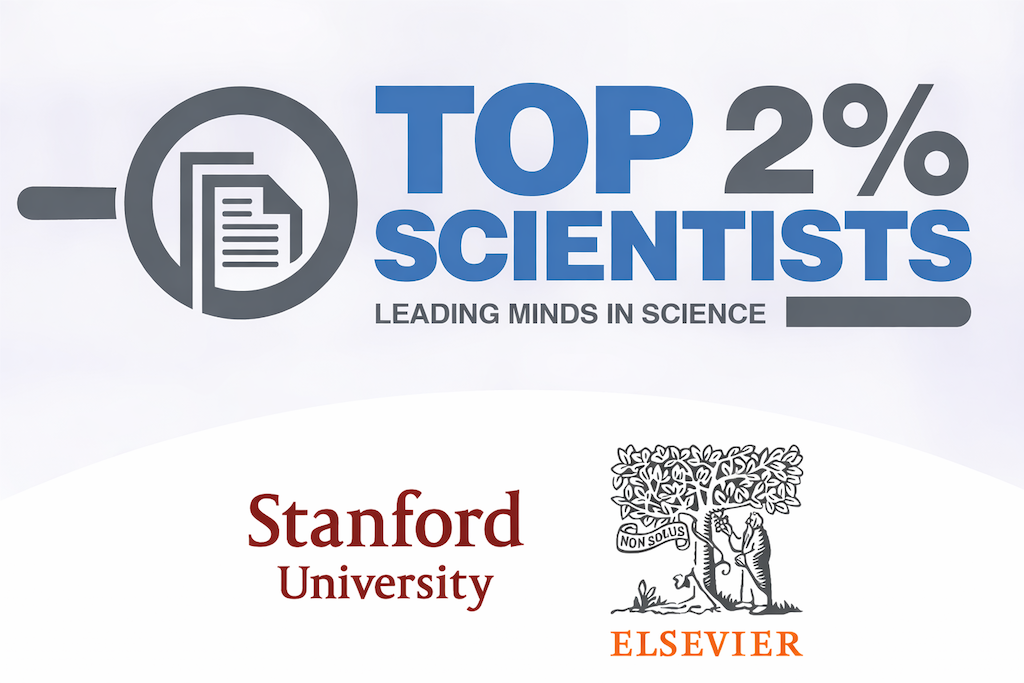
Fifteen faculty members from the University of North Dakota have been recognized among the world’s most influential researchers in the 2025 Stanford-Elsevier Top 2% Scientists List, a widely respected global ranking that highlights scholars whose work has had a significant impact on their fields.
Compiled by a research team led by Stanford University scholar John P. A. Ioannidis in partnership with the scientific publishing company Elsevier, the annual list identifies the world’s most cited scientists using a comprehensive set of bibliometric indicators drawn from Scopus, the largest abstract and citation database of peer-reviewed literature.
The ranking places researchers in the top 2 percent of their respective disciplines based on the influence of their published research.
For UND, the recognition of 15 faculty members reflects the University’s growing international footprint in research and scholarship across multiple disciplines.
“This distinguished group of scholars provides a clear demonstration of the impact of UND’s research worldwide,” said Scott Snyder, vice president for Research & Economic Development at UND.
“Their emphasis on discovery sets new boundaries of knowledge and provides new solutions to society. We are incredibly proud to call them colleagues.”
Measuring global research impact
The Stanford-Elsevier list is built from a large dataset that analyzes millions of scholarly publications and citation records. Scientists are evaluated through a composite citation indicator — often called a “c-score” — that incorporates several widely used metrics, including total citations, the h-index and measures that account for co-authorship and authorship positions.
Researchers are classified across 22 broad scientific fields and more than 170 subfields, allowing scholars to be assessed within the context of their specific discipline.
To be included, scientists must either rank among the top 100,000 researchers worldwide by composite citation score or fall within the top 2 percent of researchers in their subfield.
The database includes both career-long rankings, which measure cumulative research influence over many years, and single-year rankings, which capture impact based on citations received in the most recent year.
A prestigious recognition in academia
Because the rankings are derived from citation data — an indicator of how often other scholars rely on a researcher’s work — the list is widely regarded as a marker of scientific influence and sustained scholarly impact.
Being named to the Stanford-Elsevier Top 2% Scientists List can significantly enhance a researcher’s visibility within the global academic community. Studies and commentary on the rankings note that such recognition can help strengthen a scientist’s professional reputation, expand opportunities for collaboration and support efforts to secure research funding.
For universities, the presence of faculty on the list also highlights the strength of institutional research programs and the global reach of their scholarly contributions.
Advancing UND’s research mission
The recognition of 15 UND faculty members underscores the University’s commitment to research excellence and the pursuit of knowledge that benefits communities locally and globally. Their work spans a wide range of scientific and scholarly areas, contributing new discoveries, advancing technology and helping address complex societal challenges.
As the Stanford-Elsevier rankings continue to track research influence across disciplines, UND’s representation on the list reflects the University’s growing role in the international research landscape — and the dedication of its faculty to producing impactful scholarship.
The 5 CEM faculty members are:
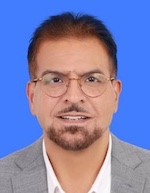
Ali S. Alshami, associate professor, Chemical Engineering
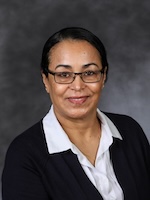
Naima Kaabouch, Chester Fritz Distinguished Professor and director of the Artificial Intelligence Research (AIR) Center, College of Engineering & Mines
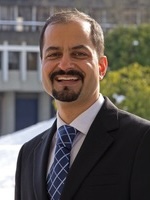
Kouhyar Tavakolian, professor, Biomedical Engineering, and director, BioInnovation Zone, College of Engineering & Mines
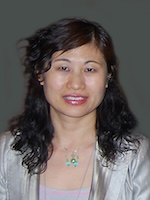
Dongmei Wang, associate professor, Geology & Geological Engineering
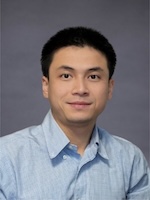
Yachao Wang, assistant professor, Mechanical Engineering
Written by Tom Dennis // UND Today