From Acrobat to Advocate: UND grad Innovates Nutrition Education Through Social Media
For UND alum Tasha Cahill, changing children’s nutrition education means crafting captivating social media content.
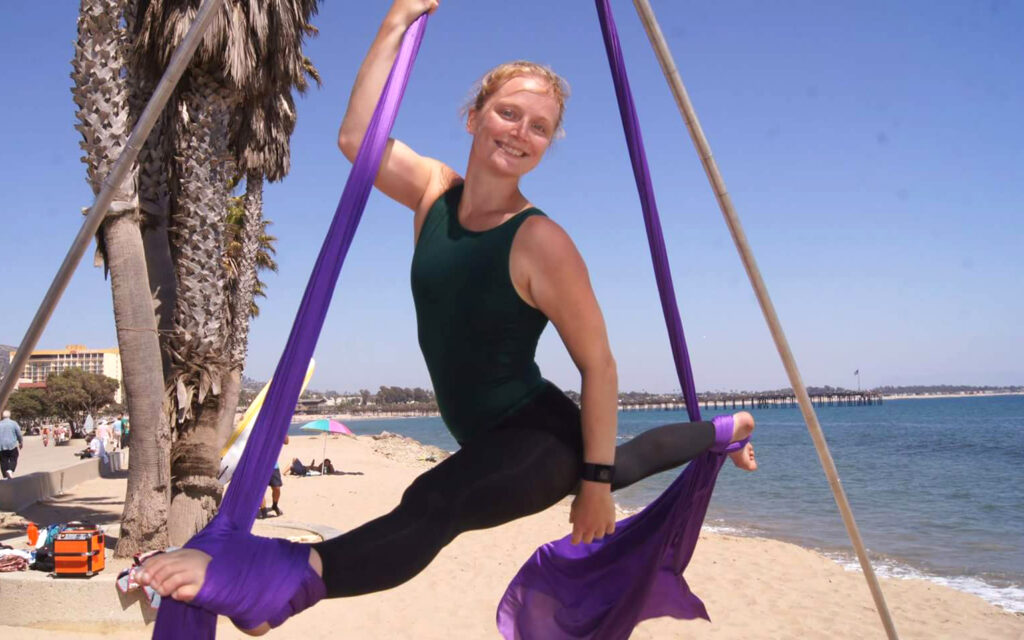
With a background in professional writing, early childhood education, and even aerial acrobatics, Tasha Cahill, a new UND Master of Nutrition Science graduate, brings a unique perspective to the field of nutrition. Her nutrition journey was sparked by a curiosity about the human body and how food affects it. “Before being a mom, I was a professional aerial acrobat: teaching, coaching, and training,” she explains. “The more I learned about the human body, the more I wanted to understand how food actually worked in the body. I had many burning questions that Google searches wouldn’t satisfy.” Cahill’s experience with young children highlighted the need for better nutrition education, solidifying her decision to earn a master’s degree—a lifelong goal.
Choosing UND
For Cahill, UND stood out for several reasons. It offered one of the more affordable master’s nutrition programs that could be completed entirely online, making it an attractive option for someone balancing a business, a family, and professional commitments while also living in California. Additionally, the program’s approval with the National Board for Health and Wellness Coaching (NBHWC) allowed her to sit for the exam.
Despite being an online learner, Cahill felt a sense of belonging at UND. “It felt like I was part of a special group… The support and responses of the teachers and staff were always warm and welcoming.” Having attended seven different schools for higher education, she particularly cherished the learning experience at UND, which she says has stood out as her favorite.
A Passion for Childhood Nutrition
Cahill’s Master’s project at UND was a departure from the traditional research paper. Drawing on her social media experience and her children’s fascination with online videos, she created nutrition lesson plans for elementary school-aged children. “I already had experience doing social media videos for my business, and my children are enamored with YouTube, YouTube Kids, and YouTube Shorts… It just clicked.”

Cahill presented her work in an online submission to the UND College of Nursing & Professional Disciplines Research & Scholarship Day. She expanded on the background research that led to the creation of her lesson plans and social media videos.
She cited that social media has power over children, noting that short-form videos are on the rise as the favored form of entertainment. “These are short-form videos, usually less than a minute long,” Cahill explains. She acknowledged that social media is not going away, and because of that, Nutrition Education needs to change. “A good nutrition education program needs to embrace the immediate environment that children are in today and use that to help engage and educate,” says Cahill.
Dispelling Myths and Stigmas
A significant part of her project is to dispel common misconceptions about nutrition. Cahill emphasizes that there is no right or wrong way to eat healthy and opposes the stigmatization and polarization of food. “There is no good or bad food, no healthy and unhealthy foods either,” she states. “These messages can be very damaging to children.”
Her videos and curriculum are dedicated to helping children develop healthy relationships with food, countering the damaging effects of diet culture that have persisted through generations. “Childhood onset of eating disorders and disordered eating is increasing, and the ages are getting younger,” she explains. “Educating children and parents about how food and the human body works is one approach to helping reduce these issues.”
A New Approach to Nutrition Education
While at UND, Cahill researched the most effective approaches and theories related to nutrition education. “The videos themselves are designed to be the type of engaging, short-form videos that a lot of children find very popular right now,” she says. As part of her project, Cahill created videos and free lesson plans. She has introduced the videos and lesson plans to schools in her area, and her innovative approach has garnered positive feedback.
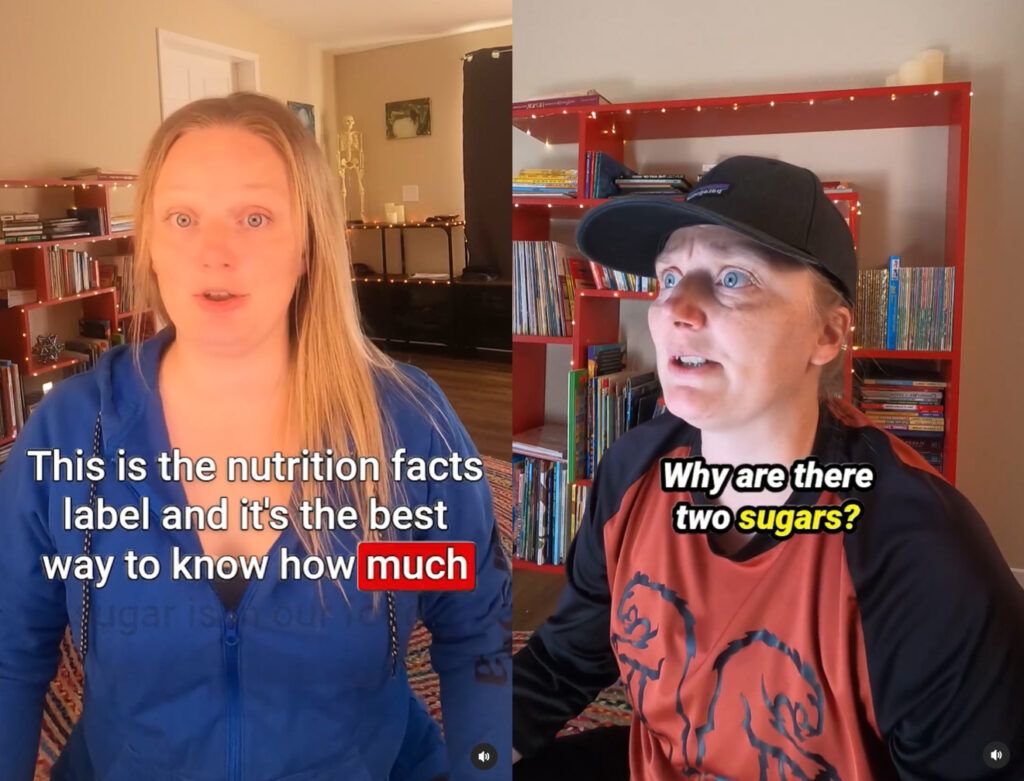
In one of her videos, Cahill describes how to read the nutrition label on a beverage. There is upbeat music as Cahill speaks to the viewer through her camera and explains how to understand the sugar measurements on the back of a beverage label. As she talks, captions appear on the screen. Then, there is a zip sound, and the video is interrupted by another character (also played by Cahill in a baseball cap) who asks a question. “Isn’t sugar the same, no matter where it comes from?” The question and response style between Cahill’s two characters are precisely the beats that young viewers expect in a short-form video. And it is engaging.
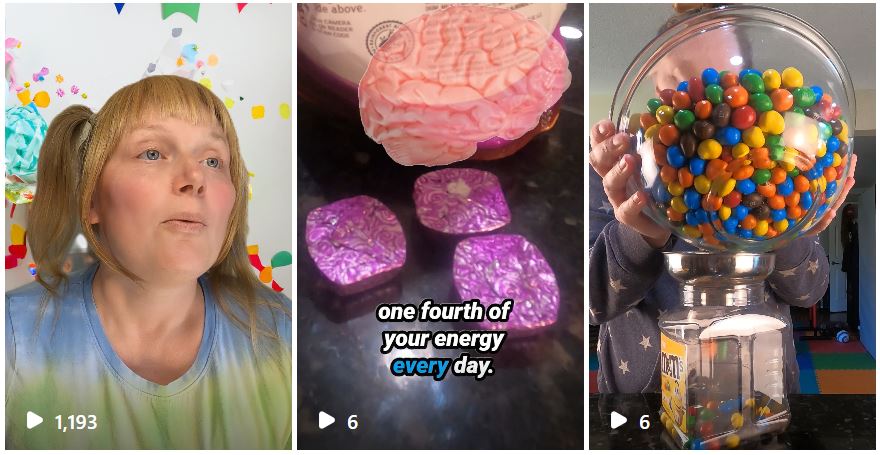
How to Watch Tasha’s Videos
Even though she has completed the project and graduated, Cahill plans to continue her work. “I just finished editing six videos on hydration and will have the curriculum out in early June.”
You can find Cahill on Instagram, Facebook, and YouTube under her username @TangoStarNutrition.