Nurturing the Roots of Nursing: Insights on Professional Identity in Nursing
In the dynamic world of nursing, establishing a robust professional identity is not just a theoretical concept; it’s a cornerstone of effective practice and holistic patient care.
Speaking to a group of students at the UND Sigma Theta Tau Honor Society Induction Ceremony, Dr. Rhoda Owens underscored the role of Professional Identity in shaping the nursing practice for students, many of whom are setting out for the first time for careers in the nursing field. Professional Identity in Nursing is foundational to fostering job satisfaction, ethical practice, and, ultimately, safe patient care. As Owens describes it, it is a journey that begins in nursing school. “We began that process in your education, and you will continue it throughout your career.”
As an Associate Professor in the Graduate Nursing Program at the University of North Dakota’s College of Nursing & Professional Disciplines, Owens also serves as President of the International Society for Professional Identity in Nursing (ISPIN) and frequently speaks to nursing students on the critical importance of their Professional Identity development.

What is Professional Identity in Nursing?
Professional Identity in Nursing is influenced by the nursing discipline’s characteristics, norms, and values and comprises a nurse’s sense of oneself. When speaking to students, Owens emphasized the four pillars of Professional Identity: values and ethics, knowledge, nurse leadership, and professional comportment. These domains encapsulate what it means to think, act, and feel like a nurse—an identity that transcends job duties and eventually becomes a way of life.
The importance of maintaining a Professional Identity within nursing was highlighted through research shared by Owens, who cited the work of Phillips and Priddy. The study surveyed over 700 nurses across the U.S., revealing that a failure to develop a robust Professional Identity can have profound consequences. “It leads to harm for patients and nurses alike,” explained Owens, detailing a range of adverse outcomes stemming from identity confusion and lack of role clarity.
Conversely, nurses with a well-defined Professional Identity contribute to a positive practice environment. According to Owens, they exhibit confidence, role clarity, and a commitment to high-quality care, fostering job satisfaction and patient safety. “That sounds like a great place that you’re going to want to work, right? And this is why you need to model and embrace it.”
The Tree of Impact
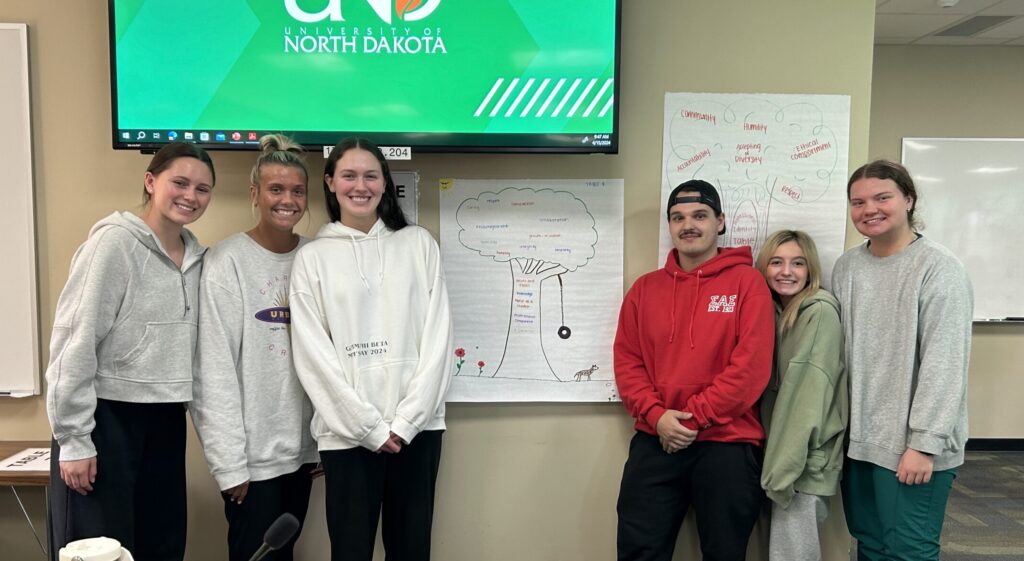
According to ISPIN, Professional Identity in nursing can be compared to a tree. In a nurse’s journey of identity formation—their tree of impact requires nurturing (like soil), growth (through trunk and branches), and a supportive environment (healthy workplace culture). This process is not solitary; it’s cultivated through education, mentorship, and reflective practice.
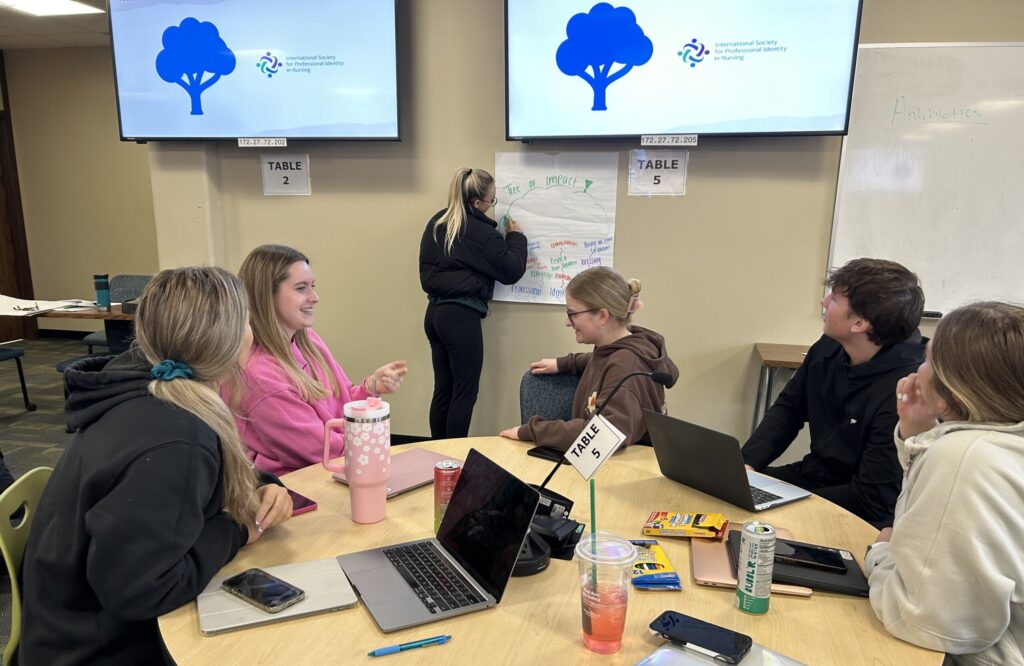
Owens has visited several UND nursing classes to speak on the importance of identity as students prepare for future nursing careers. One learning activity students enjoyed was drawing their own Professional Identity in Nursing Tree of Impact. Students included areas to target for nurturing, such as community, self-care, collaboration, confidence, and patient-centered care. They also identified areas such as maturity, knowledge, accountability, empathy, and other areas that needed to be targeted for their own growth and development. “Nursing students begin forming their Professional Identity in their nursing programs and continue the process as they enter practice after graduation and licensure,” says Owens.
Owens’s insights into Professional Identity in Nursing offer a roadmap for success for nursing students embarking on this journey as new graduates. “Embrace it and model it as you begin your practice,” she urged students. By doing so, she says that students lay a strong foundation for their future roles as nurse leaders and advocates for patient well-being.
As the nursing profession evolves, Professional Identity in Nursing remains a guiding force—a code that defines and sustains the pursuit of nursing excellence.