From Classroom to The Conversation
At the University of North Dakota College of Nursing & Professional Disciplines (CNPD), faculty members don’t just teach, they lead, inform, and engage with the world beyond campus. One way they do that is by writing for The Conversation, a national media platform where academic experts work with journalists to publish articles that help the public understand complex and timely topics.
Thanks to a Creative Commons license, articles published on The Conversation are free to republish and often reach wide audiences through outlets like The Associated Press, The Washington Post, CNN, Scientific American, and thousands more.
We’re proud to highlight three CNPD faculty—Dr. Jeffrey Anvari-Clark (Social Work), Dr. Nathaniel Johnson (Nutrition & Dietetics), and Dr. Christina Erickson (Associate Dean)—who have collectively authored seven articles for The Conversation, sometimes in collaboration with co-authors. Their work exemplifies the college’s commitment to relevance, outreach, and research that makes a difference.
Below, they share what motivated them to write and why connecting academic expertise to everyday conversations matters.
Social Work in the National Conversation
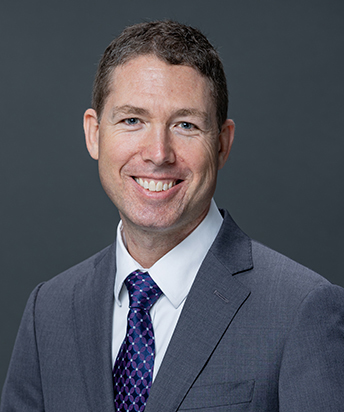
Dr. Jeffrey Anvari-Clark is an Assistant Professor of Social Work.
Articles published for The Conversation: Informal safety nets help many Americans with expenses – people at all income levels benefit from this ‘financial interdependence’, Losing your job is bad for your health, but there are things you can do to minimize thee harm, and How to manage financial stress in uncertain times
Q: What motivated you to write for The Conversation?
My first article (Informal Safety Nets) emerged from research I found genuinely fascinating and thought others would too. However, my second and third articles (Losing your job and How to manage financial stress) were direct responses to the federal employee layoffs this past spring. I realized that one line from my dissertation captured what we were observing: people were experiencing significant trauma not just from job loss itself, but from how they perceived the layoffs and the narratives surrounding them. The subjective experience often mattered more than the objective financial impact—which, while challenging, can often be addressed more systematically. This insight felt too important not to share publicly.
Q: Why do you think topics on financial stress and job loss resonate with the public?
These are deeply emotional issues that are typically discussed only in technical or policy contexts. My article on job loss and health received significant attention because it validated what people intuitively understand but rarely see acknowledged: losing a job affects far more than your bank account. I think readers also appreciate knowing they’re not alone in their struggles, especially when shame often prevents open discussion of these difficulties.
Q: What did you learn from the process of writing for The Conversation, and why do you think it’s important for scholars to share their expertise with a broader public?
I’ve long admired public intellectuals like Howard Zinn and Noam Chomsky for bringing important ideas beyond academic circles. Translating research into actionable insights serves the broader public, so when societal events align with my expertise, I feel obligated to contribute.
The learning curve was real—my first pitch was rejected because I approached it as commentary rather than research-based insight. The Conversation wants “My research shows…” not opinion pieces. It’s also a completely different writing style from academic work. But by my fourth pitch and third published article, the process became much more intuitive.
Q: Have your articles led to broader visibility, connections, or conversations outside of UND?
Absolutely! The reach has been remarkable. I’ve appeared on radio shows from KCBS in San Francisco to Prairie Public Radio, and spent 45 minutes as a guest on a women’s health podcast. The articles have been republished globally across various platforms. A Brazilian journalist contacted me after reading my work, and CNN picked up my second article, which Dr. Sanjay Gupta featured in his newsletter. Perhaps most rewarding were the texts and LinkedIn messages from friends who heard me on NPR’s All Things Considered and Morning Edition, during their commutes. I think I even managed to impress my wife!
Making Nutrition Science Accessible

Dr. Nathaniel Johnson is an Assistant Professor of Nutrition & Dietetics.
Articles published for The Conversation: What you eat could alter your unborn children and grandchildren’s genes and health outcomes, Worried about the health effects of the sugar in your breakfast cereal? Little has changed since the days of ‘Unfrosted,’ the Pop-Tarts movie, and Diet-related diseases are the No. 1 cause of death in the US – yet many doctors receive little to no nutrition education in med school
Q: What motivated you to write for The Conversation?
I have two reasons for writing in The Conversation. First, it is an excellent way to share science with the world. Science by nature is information and information needs to be shared for it to have any impact. Secondly, and related to the first point, writing for more general audiences is fun, and gives me a chance to talk about things such as the world’s first edible mascot, a giant PopTart.
Q: Briefly, can you explain what the process was of working with The Conversation is like—from pitching your idea to seeing your article published?
Having an idea of what to write about is actually the trickiest part. From there things are fairly straightforward. First, authors need to submit a short written pitch about their idea and why it is important. If the editorial staff likes the pitch, they will set up a pitch meeting over the phone. From there, it is a series of drafts coupled with rounds of edits until the work is completed. The writing process is streamlined and easy, whereas coming up with unique research ideas to showcase is challenging.
Q: Why is it important for experts to engage with the public through platforms like this?
This goes back to why I choose to write for The Conversation. In order for science to truly have an impact it needs to be shared. The Conversation is a great avenue for sharing as articles can be reshared by other publications. My articles have been posted in Science Alert, translated into Portuguese, and offered in local newspapers across the world.
Q: Have you seen any national impact or engagement as a result of your pieces?
The impact has not just been national, but international. I have been featured on several radio shows and podcasts including Sirius XM’s Doctor Radio, The San Francisco Experience, and KCBS San Francisco. I also had one of articles translated into Portuguese and published in the Brazilian newspaper, Nexo. In fact, of my over 130,000 readers more than 50,000 are from outside the United States.
Challenging Norms, Protecting Children

Dr. Christina Erickson is Associate Dean and Professor, College of Nursing & Professional Disciplines
Article published for The Conversation: As views on spanking shift worldwide, most US adults support it, and 19 states allow physical punishment in schools
Q: What motivated you to write for The Conversation?
It was important to me to get an article in The Conversation because it has such a far reach to audiences. It is quite hard as an academic and a researcher to find opportunities to share your knowledge and expertise with regular communities. The Conversation reaches beyond our typical academic publishing spaces to provide information to communities we want to reach but struggle to get access to. I am so appreciative of what The Conversation does to link communities and knowledge building that I am very honored to publish with them.
Q: How did writing for a national outlet differ from your usual academic or professional work?
It is so much harder than it looks! It took months for me to move my topic from the first draft to ready to print. My topic, spanking, has a lot of different angles to take, including school paddling, so just starting out we had to make some decisions. The topic can also be quite controversial too. I understand that. Many loving parents will fight hard to assure they can continue to hit their kids, and don’t want to openly consider the long and robust data we have on the poor outcomes of spanking. This makes the writing hard too – as The Conversation carefully links all data and outcomes to the original research that supported that knowledge. So, the author not only writes the article, but assures that their claims are based in fact by connecting the claim to the research that supports it. These extra efforts are worth it though as it builds trust between the publisher and the readership, and assures we are not participating in misinformation.
Q: Why is it important for researchers and faculty to translate their expertise for the public?
One of the most important reasons is that as researchers we love what we study, and we almost always study it because we know it can help people. Getting that information out to people is challenging. As a PhD student, I was taught to write using a specific framework (problem statement, literature review, question, methodology, results, implications.) I was encouraged to share what I learned in my research with other researchers so they can build on that knowledge. Translating those findings to everyday audiences is a welcome change and a wonderful opportunity.
I wrote my book on spanking as a way to offer my research to any reader. Through a longer book I can delineate specific beliefs and patterns in hitting children and interrogate our understanding of spanking. That kind of writing is really challenging. I hired a writing coach to help me write in ways that are more engaging to general audiences. That’s how hard it is to shake that PhD framework! The Conversation helped me do that too. Their editors are wonderful at bridging the chasm between research language and writing that appeals to many groups of people.
Q: What kind of reach or response has your article received since publication?
I love that the article has been shared on social media by UND, I really appreciate that. In addition, I got emails from folks who have felt quite lonely in their efforts to end school paddling, or people who have grave concerns about the impact of child abuse. People have sent me stories about how the spankings in their family became brutal and abusive. That’s the beauty of The Conversation; it opens up avenues for real conversations that shape individuals and all of society. The Conversation is such a valuable publication – it does exactly what it sets out to do.
Why It Matters
When UND faculty publish on national platforms like The Conversation, they elevate public understanding and demonstrate the real-world impact of the teaching, research, and service happening every day here at UND.