Professor Williams Shares UND Teaching Innovations with New Legal Writing Faculty
National Legal Writing Institute training highlights innovative approaches to assessment, citation, and teaching in the age of generative AI
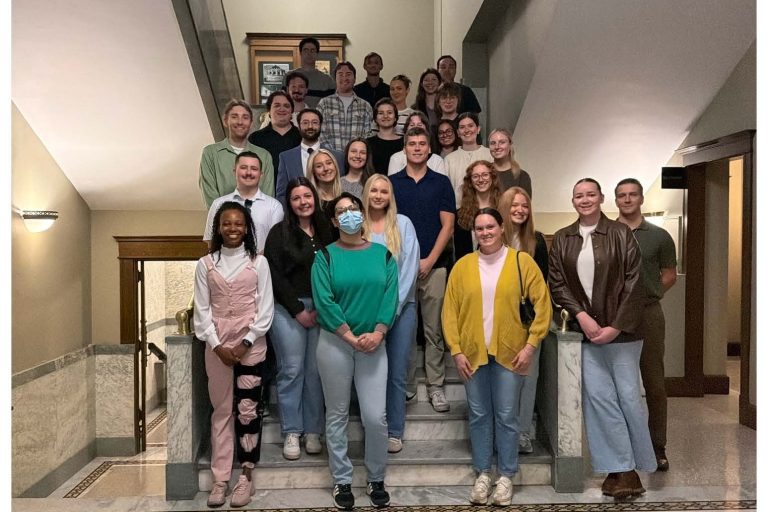
University of North Dakota School of Law Professor Carolyn V. Williams presented twice at the Legal Writing Institute’s 2026 New Teacher Training Bootcamp, a national program designed to prepare professors in their first few years of teaching first-year legal research and writing. LWI offers the Bootcamp each summer to help new faculty prepare for the fall semester through interactive workshops led by experienced legal writing professors on topics including course and problem design, classroom teaching, assessment and grading, and technology.
Williams’s first presentation, “Assessing Student Learning in First-Year Legal Writing Beyond Traditional Drafts,” focused on how generative artificial intelligence is changing the way law professors can assess whether students have mastered foundational legal research, analysis, and writing skills. Williams explained that because generative AI can now produce increasingly sophisticated legal documents—and because there is no reliable way to determine whether a student used AI—professors can no longer assume that one or two papers written outside of class accurately demonstrate a student’s individual skills.
Williams shared the assessment model she has developed at UND, which uses a combination of quizzes, research projects, Team-Based Learning, in-class assessments, and assignments requiring students to critique and improve existing legal writing. In particular, she demonstrated an assignment in which students evaluate and grade a memorandum rather than draft one from scratch. The exercise requires students to identify problems, explain why they are problems, and recommend specific improvements. The approach is designed both to respond to generative AI and to develop the editing, revising, critical-reading, and professional-judgment skills increasingly emphasized by the NextGen bar exam and modern legal practice.
In her second presentation, “Teaching: The Rhetorical Place of Citations First,” Williams shared her approach to teaching legal citation by emphasizing its communicative and analytical functions before requiring students to master detailed citation mechanics. Rather than beginning with the mechanics of constructing case citations, Williams teaches first-semester students to understand why legal writers cite, the hierarchy of authority, citation signals, quotations and plagiarism, and pinpoint citations.
Williams explained that the approach encourages students to think about citation from the reader’s perspective and to understand what a citation communicates about the authority and support underlying a legal writer’s analysis. Students don’t learn full citation mechanics until the spring semester, after developing the foundational analytical skills necessary to understand the purpose behind those rules.
The Legal Writing Institute, which hosts the Bootcamp, is a national organization of nearly 3,000 legal writing faculty and professionals dedicated to advancing the teaching of legal writing through training, scholarship, and mentorship.