UND selected for inaugural U.S. Department of Energy Genesis Mission project
The University of North Dakota has been selected for the inaugural cohort of projects supported by the U.S. Department of Energy’s Genesis Mission, making UND the only institution in North Dakota chosen to participate in the national initiative.
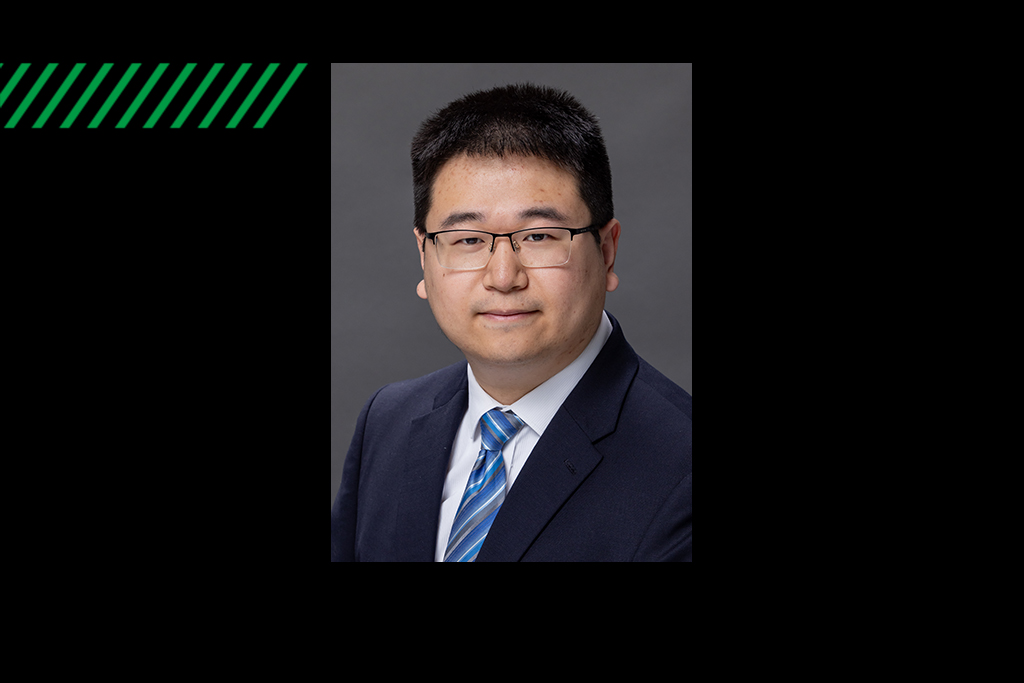
The project, led by Jielun Zhang, assistant professor in the College of Engineering & Mines’ School of Electrical Engineering and Computer Science, will develop new methods to improve the security and reliability of artificial intelligence models used in battery management systems and other energy science applications. Jueming Hu, assistant professor of mechanical engineering at UND, serves as co-principal investigator.
The Genesis Mission is a historic national initiative led by the U.S. Department of Energy that is building the world’s most powerful integrated science discovery platform. By uniting government, industry, academia and philanthropy, it is accelerating breakthroughs in energy, scientific discovery and national security through a new platform that combines artificial intelligence, supercomputing, quantum systems and advanced scientific instruments.
“Our researchers are tackling complex challenges that have the potential to improve lives and strengthen critical infrastructure,” said Vice President for Research and Economic Development Scott Snyder. “Selection for the inaugural Genesis Mission reflects the quality of research taking place at UND and our commitment to advancing discoveries that serve our state and the nation.”
The project, titled “Adversarial Robustness Framework for AI Models in Battery Management and Energy Science Workflows,” addresses an increasingly important challenge as artificial intelligence becomes more widely used to monitor and manage lithium-ion batteries that power electric vehicles, support the electric grid and provide backup power for critical facilities.
AI models help estimate battery health, monitor operating conditions and identify potential problems before failures occur. However, those models can be vulnerable to manipulated data or cyberattacks that could cause them to overlook battery degradation, misidentify unsafe operating conditions or make incorrect recommendations.
To address those risks, Zhang and his collaborators will develop a framework for evaluating and improving the resilience of AI models used in battery management and related energy science applications. The research team will create standardized methods for testing AI systems against realistic attacks, develop techniques to detect compromised data and strengthen AI models so they can continue operating reliably in challenging environments.
“Artificial intelligence is becoming an essential tool for managing increasingly complex energy systems,” Zhang said. “Our goal is to develop practical methods that help ensure these models remain secure, reliable and trustworthy so they can safely support critical energy infrastructure.”
The project also includes collaborators from La Sierra University, the University of Wisconsin-Madison and Clean Republic SODO LLC.
The research builds on UND’s growing leadership in artificial intelligence, advanced computing and energy systems research, bringing together expertise from multiple engineering disciplines to address challenges at the intersection of cybersecurity, AI and critical energy infrastructure.
The goal of the Genesis Mission Phase I awards is to identify promising pathways toward transformative scientific capabilities and establish a foundation for future investment and scale. Project teams will design and demonstrate research workflows that integrate AI with scientific investigation while evaluating whether those approaches can accelerate discovery, improve predictive capabilities, enhance experimentation or generate new scientific insights.
Researchers expect the project to produce new evaluation methods, software tools and model-hardening techniques that will help scientists, utilities, technology developers and energy system operators assess and improve the resilience of AI systems used in energy applications. The work could contribute to safer battery technologies, more reliable distributed energy resources and more secure deployment of artificial intelligence across critical energy and scientific workflows.
Representatives from UND joined researchers from across the country at the Genesis Mission Summit on July 22 in Washington, where the inaugural cohort of projects was announced.
The project is supported by the U.S. Department of Energy.