Faculty member talks about missing and murdered Indigenous people
Safety for Indigenous people has come a long way, says UND’s Wendelin Hume — but hard work remains
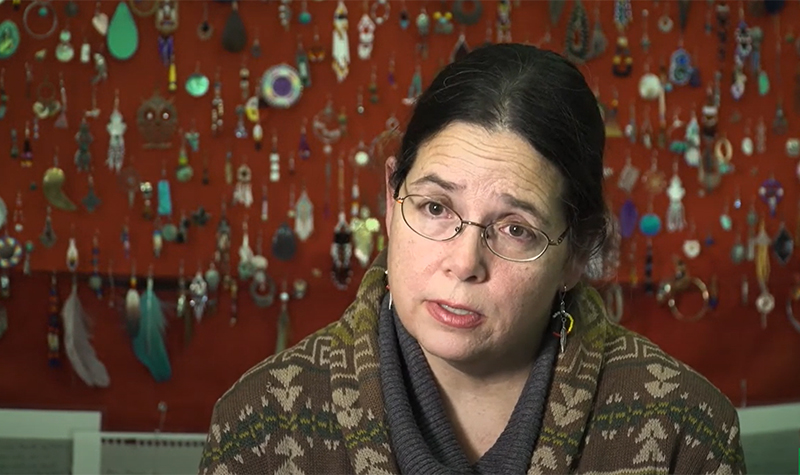
In November 2021, Wendelin Hume, associate professor of criminal justice at UND, wrote a column for The Conversation with the headline “Spotty data and media bias delay justice for missing and murdered Indigenous people.” For more than 30 years, Hume has maintained a broad focus in her University work – studying and teaching in matters of women and gender studies, victimology, public opinion and tribal justice, among other criminal justice topics.
Her Conversation article developed at the intersection of her research into tribal justice and victimization. In it, Hume points to unreliable fact-finding, historic abuses and contemporary disregard as factors contributing to high numbers of missing and murdered Indigenous people.
As she writes early on in the piece, Native American women are murdered at a rate three times higher than that of white American women. “But crimes against Native individuals often go unreported, and with American Indian and Alaskan Native cases, race is sometimes ignored or misclassified as white,” Hume’s column continues.
We encourage readers to read the column, as this Q&A with Hume often refers to its contents. In recognition of Women’s History Month, as well as UND’s 50th anniversary of the Time Out Wacipi powwow, UND Today spoke with Hume to learn more about her views on the past and future of Indigenous communities in North America.
This Q&A has been edited for brevity and clarity.
March was Women’s History Month, and the column you wrote in November for The Conversation calls attention to many issues that Indigenous communities – women especially – face between the United States’ and Tribal legal systems. We’re going to provide a link to that article for our readers, but what led you to write that piece?
A large part is that it was a good fit. It’s my background, and it’s research that I’ve worked on. But some of it has to do with timing, right? It seemed appropriate and there was interest. It came out in November, which is Indigenous Awareness Month.
So, there was interest in the media about this topic and about Indigenous people at that time. Also, I think some of it was opportunity. We want to get that awareness out there, and this can help, so you have to be willing to step up and do that. It was a time when media was paying attention to missing persons, because of famous cases going on that caught a lot of public attention.
And not only did it fit with my research, but writing the article also tied back to service. The goal of many of the organizations that I work with, or have helped over the years, is to raise awareness of this issue. We need to push for public attention, push for public awareness and push for understanding as much as possible. I don’t think it’s that people don’t care; it’s that they just don’t know. At that time, I was in a position that I could help further that goal.
What are the biggest gaps or disparities in the dangers that Indigenous women face, as opposed to people living outside of reservations and tribal communities? And how do those disparities later affect justice?
When we look at Indigenous people, we often focus on life in a reservation community. That’s usually what people think about when they think of Indigenous people. But there’s also a large number, in fact an actually bigger percentage, of Indigenous people who live off-reservation.
There are some similarities and differences between those two groups. I would say one of the differences, if you are trying to live, work and learn like our Indigenous students off-reservation, is that you probably come across a bit more discrimination than you would if you were isolated among your own people in a reservation community.
We often think of discrimination in relation to other minority groups, and people don’t realize what happens to Indigenous people. Sometimes it’s subtle. It’s little micro-aggressions. It’s comments under people’s breath. It’s people pulling you over because you have tribal plates. You can tell that you’re being targeted or not treated fairly.
On the other hand, there’s a lot of similarities whether you’re on-reservation or off. Overall, Indigenous people face very high rates of poverty, unemployment and low educational achievement, for example.
One common issue is historical trauma. You could think of it as a kind of intergenerational trauma. The trauma initially may have happened a long time ago, when a number of people were annihilated, pushed off their original lands, moved to reservations and so on. But that has an impact on the culture, on the language, on the tribal oral history stories and on your relatives.
Then when another generation is taken away to boarding schools, that disrupts the culture and how people raise their children in that culture. You feel that ripple effect through the generations, even to now, and that is a lot for young people to deal with as they’re growing up and trying to find a way in the world.
I would say that Indigenous people are clearly very resilient. Together, we’re very strong. But it is a difficult situation and we face a lot of hurdles. And sometimes when you’re feeling desperate, like nothing’s going to change, nothing’s going to get better, there aren’t opportunities for you – you’re willing to take risks. They maybe aren’t smart risks, but you’re feeling desperate, and you take them.
And that ties in with some of these problems regarding missing and murdered Indigenous people – how they can fall through the cracks. It’s not just that we have this overarching justice system that doesn’t dovetail well with any tribal, on-reservation justice system. It’s that when people come up missing, often the officials’ first thought is, “Oh, they’re just trying to escape. They’re just running away. They’re just trying to look for something better. They’ll come back, just give it time.”
But, we know in any missing-person case that it’s those first few days that are crucial to finding leads to finding the person while they’re still alive. You don’t just say, “Wait and see if they come back.” You need to take it seriously and act on it quickly.
For both tribal and other authorities, I think that’s one of the biggest problems. We should take those cases seriously, from the very moment they’re reported.
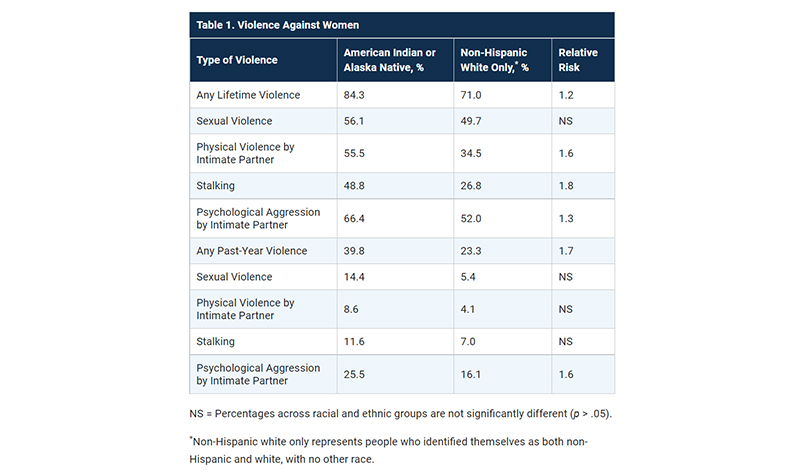
From a historical perspective, what are the factors that created this environment for tribal communities? How do we still have such unreliable data on missing and murdered Indigenous people in the age of smartphones and social media?
Think back before colonization. We don’t have an accurate count of how many Indigenous people were on this part of our continent, but estimates are upwards of 18 million. And then there was a point where entire tribes were annihilated, so the numbers went way down.
Our way of life, in addition to the number of people, took a very big hit. The interactions with the dominant culture were just problematic. They were violent and dangerous. The members of that culture were not to be trusted, and there was a lot of harm in the past.
From the other side, I think there’s a tendency to almost forget that Indigenous people exist, because they’re not all around. They’re not in your face; they’re away on a reservation, or you don’t notice them where they are.
There’s an idea that many natives feel invisible. I mean, we are here, we’re still a people. There’s just not much attention drawn to these issues.
Regarding violence at the hands of law enforcement, we hear about it in terms of Black Lives Matter, for example, and those are important movements to consider. But from the numbers that we have, the rates of police violence against Native Americans is as high or higher – but, you don’t hear about that, right?
And when it comes to missing and murdered, if you don’t follow up, and you don’t follow the reports, then there’s not even an accurate accounting of how many are missing, how many came back, how many were killed or that there’s even a problem.
For example, an article came out just the other day that reported on a study of the missing people database. Often when bodies are found, there isn’t much of an effort to identify their race. Sometimes we can’t identify who the people are, but at least if we could track what their race was, we could have a little bit of better data to find out how often this occurs among Indigenous people.
The article concluded that we can’t say, in proportion to the general population, how much more of a problem is missing and murdered Indigenous people compared to any other people, because we’re not keeping accurate records. That’s at the heart of the issue.
Now, you might think, people are whipping out their smartphones. If you see violence against a person, record that. You’re getting pulled over, and you think it’s unfair, record that. Share it on your social media, get the word out there. In that way, we do start to learn and have some awareness raising around this issue.
But the problem is that it seems like a lot of people just don’t care when it’s Indigenous people. The news doesn’t go viral. It doesn’t catch media attention. It’s not on the “Today” show for weeks on end.
It doesn’t capture the imagination and attention of the audience as it does sometimes for other people. So we have that technology, but it’s not being used in a way that it could be.
As you wrote in your article, it’s not just the legal systems that shape the criminal justice process, but the media too. You cited the recent case of Gabby Petito as something that held national attention for weeks.
In your research, how have you come to understand the impact that this dynamic has on Indigenous communities?
When we look at the history of Indigenous people, and you can categorize it by eras or movements, there are some common elements. There was a point in time, where, with colonization, it was thought the easiest thing to do would be to simply terminate Indigenous people. And I think that notion – that it’s easier to just let them die off or kill them off instead of dealing with it – may carry over a little bit.
Then there was an effort to remove Indigenous people from their lands because those lands were wanted by others. Then, there was a movement for assimilation, instead of removal – put them in a boarding school, make them be white. Maybe that will stop their resistance.
I told you, we’re a resilient people.
We’re at a point now, I think, where the relations are a little bit more nation-to-nation, you know, respecting the place of Indigenous people and respecting tribal authority and government. So, now might be a good time for the media and the public and others to start paying attention, because we are making some progress. If we keep raising that awareness and pushing this, I think we can make some headway.
Collective concern and public pressure can help not only the Indigenous youth feel wanted and valued and more promising about their life ahead of them, but I think it makes lawmakers and authority figures more careful about what they say and do. They can be more thoughtful about the programs that they’re putting forward.
Through that, I think we can start to see some of those changes. We’re not there yet, as there’s still a lot of that invisibility going on.
I have a student group right now, who is working on their own idea for a project. They’re calling it “BE SEENN 22,” for anyone who wants to join them on their Facebook page. But they’re trying to empower Native nations by raising awareness of some of the current issues, of the resiliency of the people. They have facts and information about a people who are right here in our midst, who do still exist and who simply want to be acknowledged.
And the moment we start doing that, criminals can’t get away with inflicting violence and harm, because those people aren’t invisible anymore. I think that can make a big difference. So, it’s not that people don’t care, they just didn’t realize it. That type of shift can bring about progress.
Can you describe some of the movements in North America that have confronted these issues in recent years? Historically, do you see any kind of turning point developing in how our collective systems treat Indigenous women?
A lot of the initial movement was really grassroots. It was “missing sisters” looking out for each other, which became the whole Missing and Murdered Indigenous Women movement.
That’s an Indigenous movement to draw attention to this phenomenon. Now, it’s usually referred to as Missing and Murdered Indigenous People. We want women to be included; women were at the grassroots and drew the attention. But as we’re starting to get a little bit more data on this, we’re finding that the issue is impacting men just as much as women.
I think, in addition to the activity of those groups, we’re starting to see some government programs or policies in place, like Operation Lady Justice, which was created specifically to draw attention to this issue of violence against Native American women, and missing and murdered Indigenous women. That movement has tried to not only put some agencies in place and improve data collection efforts, but also have open hearings bringing those issues to the fore. That is starting to gain some traction.
Our new Secretary of Interior, Deb Haaland, is an Indigenous woman. Not only has she improved policies and started a taskforce on missing and murdered Indigenous people, she’s also improving data collection and getting multiple voices to the table to hear what the concerns are, to see what collective actions we can take to improve the situation for everyone.
There’s this idea of nation-to-nation relationships – of respecting Indigenous sovereignty and talking to Indigenous people, “How can we be your allies? How can we help you?” It’s not that outside people need to come solve the problem, but we do need their support. We do need their attention. We do need resources.
If we all tackle this together, we’re going to make a lot more headway than just grassroots movements, by themselves, struggling uphill to draw attention.
With respect to the span of your career, in understanding and studying criminal justice, have you seen a change? You talked about it as a matter of progress, not necessarily a turning point or two. I’m curious how you’ve perceived that over your career.
In the past, even just getting access to some of the data – as faulty and full of gaps as it is – was nearly impossible. There’s been a small improvement in that now you can get some data, and you can point out that there’s problems with the data.
Each way, along the way, there are steps.
I remember hosting an exhibit at one of our Red River Valley Women’s Studies conferences. We invited one of the grassroots movements that was trying to draw attention to missing and murdered Indigenous people. This was probably 15 years ago. And they did it through the use of earrings. They would just hang a solitary earring on a display. And you would notice and think, what good are earrings if you don’t have both of them?
That was the idea, to just recognize that part of us is missing. We’re more beautiful when we’re together.
We set up in the Union, and maybe five people came. We tried to reach out, but people weren’t open to it. They weren’t aware of it, or they weren’t ready for it.
So, you keep pushing. You move forward and you do it the next year, and a few more people come. You do it the next year, the American Indian Center helps host it, and a lot of people come; then, a few years later, television crews come.
Granted, it can be slow. But, the more people you reach, the more those people tell other people, and it can start to snowball into broader awareness.
What remains to be done in remediation? Where do you see the future of these movements in support of missing and murdered Indigenous people?
It is up to the Indigenous people. It is up to Native nations. They have to lead us in terms of what they need and what they want.
It’s not our job to come in and tell them how it ought to be. But I think when they come forward with those needs and wants, we need to listen. We need to be in a place where we ask, we listen and then we follow through.
So much of history has been full of empty promises. Or, “Sure, you guys can do that. But there’s no funding to accomplish it.” Well, that’s the same as saying, “You’re not going to be allowed to do that.”
So we need to listen, and we need to give them opportunities. There needs to be some financial support or funding to support whatever progress we’re going to make.
And while it’s nice to have acknowledgements, such as land acknowledgements that signify occupation on other peoples’ land or ancestral home, actually making progress and moving ahead calls for us to look to the youth.
There was a tribal summit just a couple months ago, the Presidential Tribal Summit. They allowed the Native Youth Congress leaders to speak. And out of all the speakers – including the president and other leaders – the youth were just so impassioned, so forward-looking, so thoughtful in recognizing what is needed as we move forward.
And one of the things they mentioned is, what can we do about education? What is our current educational system teaching the youth of America about history, in relation to Indigenous people?
I’ve really liked their idea that we need to revamp – for all youth – some of our education about Indigenous people, so we’re not invisible anymore.
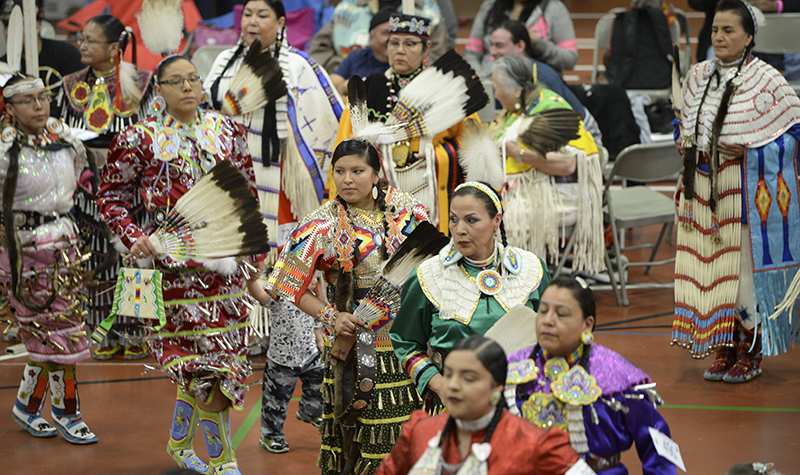
Supporting culture is also important in making progress. For instance, I will put a plug in for the 50th anniversary of the Time Out Wacipi, which will be happening right here on campus. It’s going to be Friday and Saturday, April 8 and 9.
Go! Learn about the customs, go to the dancing, hear the drumming and listen to the beautiful songs. Embracing that culture will let Native Americans know that they’re not just doing this for themselves. They’re doing it to share their culture.
It’s a lot of work to dance around in that regalia. Trust me, it is a workout and a half. But, they are going out of their way – sweating and putting forth the effort – to try to share their beautiful culture with everybody else. Walk over to the arena. It’s free. Please go and support.
Based on what we’ve covered, is there anything else that you’d like to add?
As much as we’re seeing a movement nationally, with some federal programs and things that are picking up speed to help Indigenous people, even here on our campus, of late, I’ve seen some really forward-looking steps toward diversity, equity and inclusion.
Whether it’s trainings, meetings or book readings, they all help bring us together to celebrate and draw on our strengths and our similarities, instead of pointing out how different we are. That’s really important to make a strong campus community.
Hopefully we continue this for our Indigenous students that are on campus. I mean, they may not be a long way away from home in terms of miles, but it is such a different culture and different environment that they encounter here. They are so brave to have made that trek to come here to learn.
I would like to see our campus do everything it can to make them feel welcome and supported, and let them know that they’re valued.