Konnichiwa from Kanuma
UND’s Red River Trio spreads universal language of music in Japan
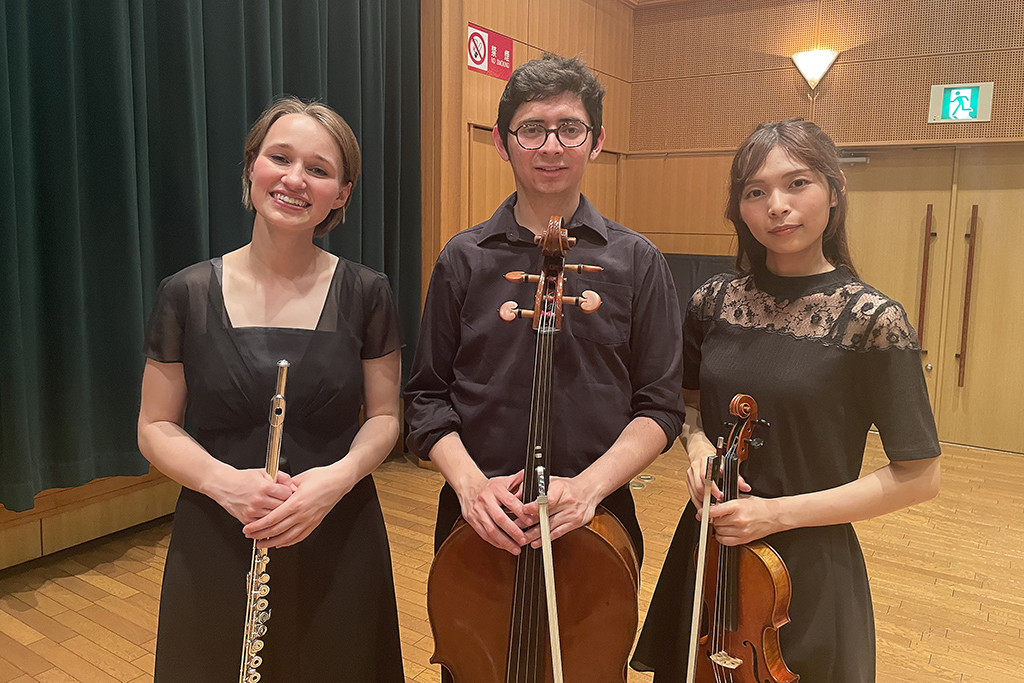
Three UND students recently returned from a lifechanging, monthlong visit to Japan, having honed their musicianship while being immersed in a culture radically different from their own.
Each year, a different group of UND students participates in the Red River Trio, a select ensemble under the direction of Simona Barbu, UND’s Burgum Endowed Chair of cello, and Nariaki Sugiura, associate professor of music. The trio studies, rehearses and performs throughout the Upper Midwest for an academic year, leading up to its final project: a month in Japan, highlighted by a weeklong performance residency in Kanuma, Japan.
Pianist Jose Costa Silva of Brazil, cellist Eduardo Garcia Ramirez from Mexico and flutist Maren Schettler from Bismarck form this year’s edition of the trio.
The trio performed at 10 different schools in the Kanuma area, for students of all ages, Schettler said. The group also performed with the Kanuma-based In Tempo String Orchestra – currently conducted by Red River Trio alum Fernando Vargas.
Garcia Ramirez said the group’s performances were well-received, attributing the reception to its reputation for excellence gained through years of visiting Kanuma.
“This is a yearly event, and from what I understood, this is pretty much expected by people over there,” he said. “They were very excited at the schools, but I was not expecting the level of excitement I noticed at the main concert in Kanuma with the string orchestra.”
“All the students were really excited – even having foreigners in their schools is not really typical,” Schettler added. “Sometimes they had a song prepared to sing for us as a thank you, or bouquets of flowers. It was very sweet.”
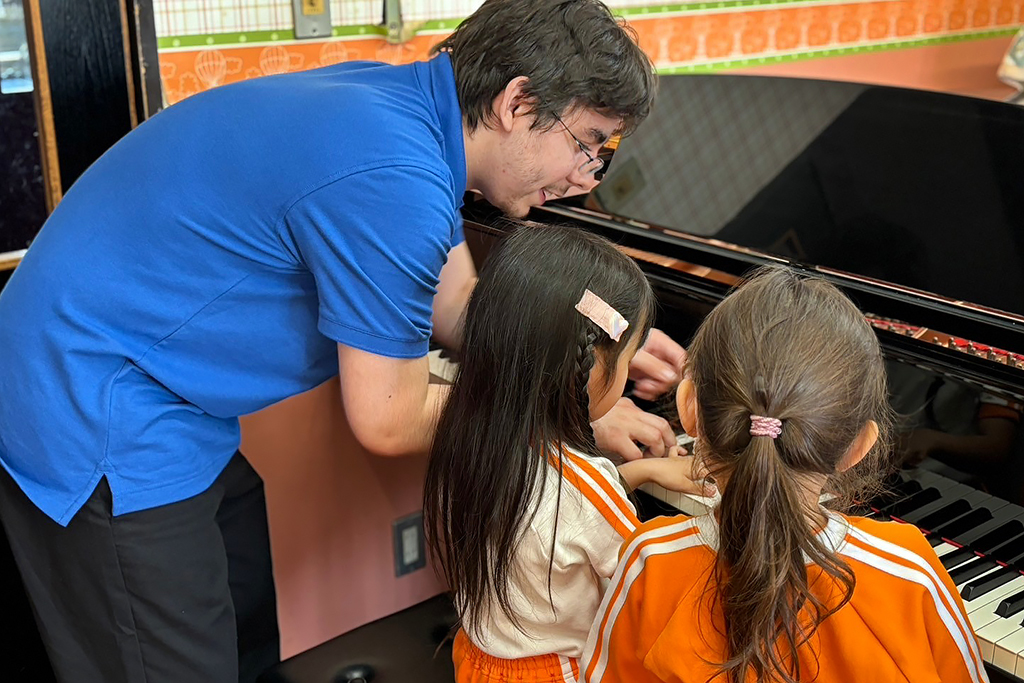
Garcia Ramirez expressed admiration for the level of discipline and musicianship exhibited by the students the trio worked with.
“We helped coach a youth orchestra, and I was amazed,” he said. “They were performing “Scheherazade” by (Russian composer Nikolai) Rimsky-Korsakov, which is a big one – that’s professional repertoire. As a string player, I was amazed by the intonation, phrasing and sound, and all the work the conductor completed before we arrived.”
Despite none of the trio’s members being able to speak Japanese, Schettler said the language of music is truly universal.
“I think the cool thing I got to witness across the trip was how we were still able to communicate musical ideas despite the language barrier,” she said. “There would be some translations; Dr. Sugiura would help with that. But in rehearsals, if you use your emotions and body language, you can still communicate how you want the music to sound as a group. As someone who was born and raised in the United States, I’m not often on the side of people having no idea what I’m saying to them and needing to figure out other ways to communicate. It was good to experience the other side of that.”
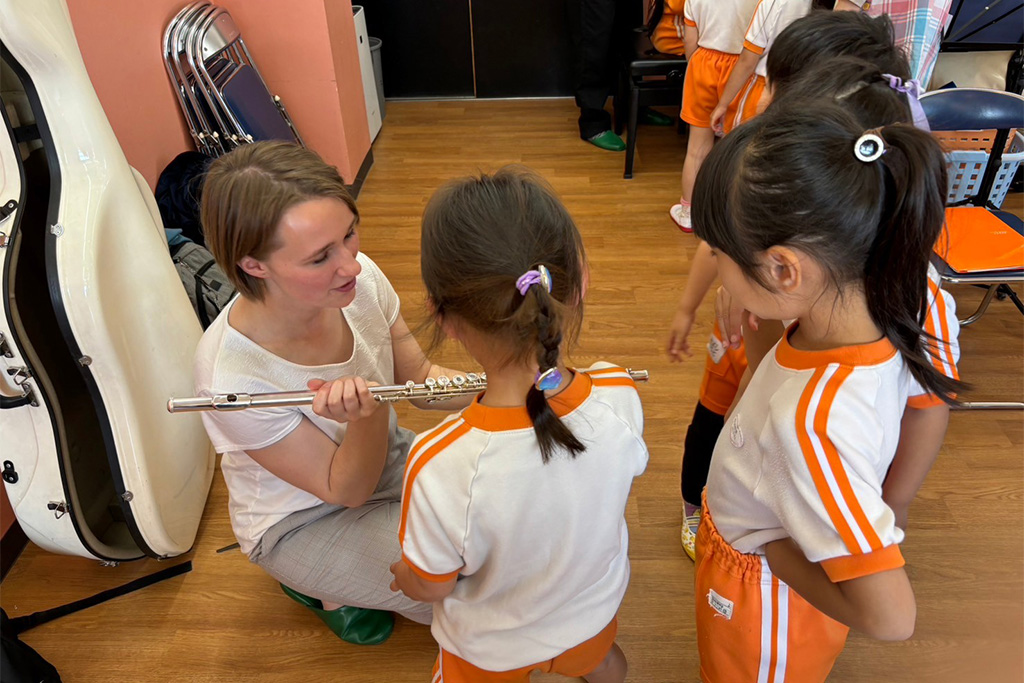
Although the trio’s performance schedule kept them busy, the trip afforded some opportunities for sightseeing, and for experiencing Japanese culture and cuisine.
“We saw a lot of impressive landscapes — rice fields, mountains — the weather is amazing,” said Garcia Ramirez. “The cities are really clean. They barely have any trash cans, but there is no garbage on the streets or in public places.”
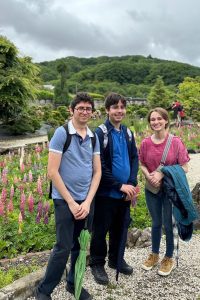
Schettler and Garcia Ramirez agreed that the food — which varies significantly by region in Japan — was a highlight of the trip and completely unlike the cuisine marketed as Japanese in the U.S.
“The food was incredibly healthy – I’ve never tried food as healthy as that in my life,” said Garcia Ramirez. “I would say that before you go, you must be willing to try different things. If you are expecting to try the same foods you are used to, you are not going to enjoy it.”
Schettler agreed. “Even if you have ramen in one place, the next place you go to will be completely different,” she added. “The way Dr. Sugiura explained it to us, each place has its own specialty and wants to do something different from everyone else. Honestly, out of everything that I tried there, there were only two or three things I didn’t like. I was amazed at how much I liked the food, when I was expecting to not like it very much and be starving the whole trip.”
The trio stayed with host families throughout their time in Japan, which Schettler said provided an extra level of cultural immersion.
“Most of the culture I took in came from staying with the host families, and living the life that they live,” she said. “Like not wearing shoes in the house, or guest slippers in the schools we visited. It’s totally different from the way we do things here in the states.”
Despite the success of the trip, there were a few challenges — such as when Costa Silva was unable to perform for approximately one week due to illness and was replaced by Sugiura. However, both Schettler and Garcia-Ramirez said the trip’s demanding nature helped them step out of their comfort zones and grow both musically and personally.
“To future trio members I would say, it’s not a vacation — you’re there to work and perform,” Schettler said. “Your brain is always working. You are not only mentally on for the performances, but also mentally aware of cultural differences. You want to be respectful to them in the way that they’ve shown such incredible hospitality to you. Be open minded and excited to experience a culture that is completely unlike the one you grew up in.”