The many pursuits of Sydney Menne
UND’s first Marshall Scholar is on her way to the University of Cambridge, where she’ll pursue a master’s in Nuclear Engineering
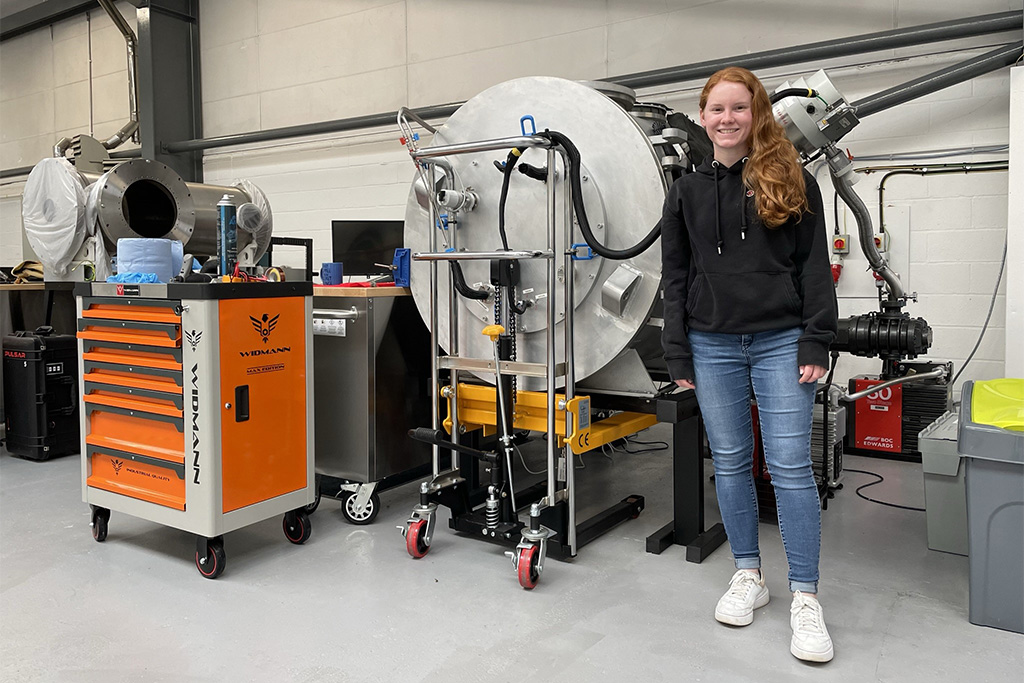
As she completes her first year of graduate studies at the University of Southampton, UND’s first Marshall Scholarship recipient Sydney Menne spoke with UND Today about her studies, experiences living in the United Kingdom and future plans.
The scholarship — established in 1953 — was named in honor of former U.S. Secretary of State George C. Marshall and funds graduate study for up to 50 American students a year at universities across the UK. Marshall’s diplomacy spearheaded the Marshall Plan, an initiative that provided billions in economic assistance to Western European nations in the aftermath of World War II.
Menne was one of just 40 students from a pool of 951 applicants selected for the prestigious award. Among the scholarship’s roughly 2,000 alumni are U.S. Supreme Court justices Stephen Breyer and Neil Gorsuch, Nobel Laureates and governors.
A native of Shoreview, Minn., Menne began pursuing a Master of Science in space systems engineering last September at Southampton, after initially studying Propulsion & Engine Systems Engineering.
How has your first year at Southampton gone? What led you to switch programs?
I’ve loved my time at Southampton! After starting in the Propulsion & Engine Systems Engineering program, my advisor here recommended switching to their Space Systems Engineering program. All of the classes are space focused, whereas the other one was more general engineering. The classes have been really interesting. They’re all focused on spacecraft, rockets, space operations and the engineering and physics behind it all. The program is also a lot smaller, so the cohort is close, and I’ve really enjoyed learning from them as well.

How is the program structured in terms of classroom time versus lab activities?
We do two semesters of classes with four classes each semester, and then we have the summer to do our Master’s thesis research. There were a few labs, and they’re planning on offering more in the future. I’ll be doing a lot of experimental work in the lab over the summer for my thesis.
Have you found any differences in the academic environment between the UK and US?
It’s hard to say since it depends so much on the university, but it seems like the examination and marking process is much more formal. Another difference is that my class sizes at UND were much smaller, but that’s also because of how small my program was at UND.
What are your plans for the upcoming academic year?
I’ll be doing a second master’s in Nuclear Engineering at the University of Cambridge. Talking with the program director, it seems like a good fit because it allows for a combination of classes exploring engineering, policy, and how nuclear fits in with other areas of study. I’m looking forward to being at Cambridge with many other Marshall scholars; it’s a very beautiful university!
What are some extracurricular activities you’ve pursued?
I’m thinking about doing rowing next year in Cambridge, because it’s popular in the college I’ll be in, but I would also love to be on the riding team. In Southampton, I’ve been doing horseback riding, and I’m in the spaceflight society where we’re building a rocket for a competition in Scotland. I’m also in the gliding club, which is a nice way to see the country.
Have you been able to explore more of the UK/Europe?
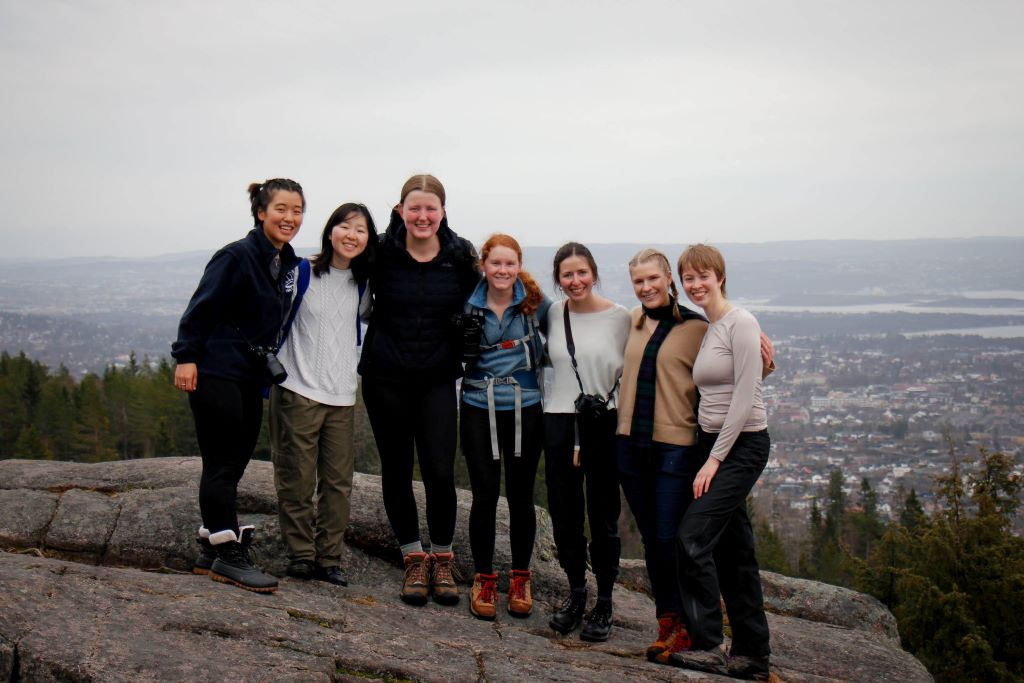
Yes, and I’ve enjoyed it a lot. I really liked Italy, both all the history in the cities and the beautiful mountains in the North. I’ve also been able to visit all four countries in the UK. My first week here before classes started, I went up to Edinburgh, Scotland and explored the area with some of the other Marshall scholars as well.
What are your plans once you complete your next master’s degree?
I plan on moving back to the U.S. to work towards a PhD. I would like to work on nuclear propulsion, which is gaining more momentum now, including a NASA project for nuclear thermal propulsion. Currently, I’m working for a UK company called Pulsar Fusion. They work on in-space propulsion as well.
What advice would you give to students considering applying for awards such as the Marshall or Fulbright programs?
Apply and give it your best — you never know where it might take you. Keep your mind open, because I think no one really knows for sure what they want or what is going to happen. Being open to new experiences can lead to a lot of good.