How UND supports students’ mental health
Faculty training, departmental psychologists and the Green Bandana Project are among the ways UND supports students in mental health crises
Students in higher education often face unique stressors and life changes that can increase the risk of mental health issues. The American Foundation for Suicide Prevention estimates that about 24,000 college students attempt suicide each year.
September is Suicide Prevention Month, and in recognition of this, UND Today spoke with Carolyn Broden, a licensed counselor at UND’s University Counseling Center to learn how the University is doing its best to help.
UCC Prepares faculty and staff to support students

“We realized that staff and faculty often don’t have the tools to navigate a situation where a student is in distress,” she said. “When students come to you in moments of extreme distress, it can be really intense and scary.”
Faculty and staff members are usually the first to see changes in student behavior, Broden said, so it’s important to know what to look for. Frequent absences, social withdrawal from class discussions and drastic shifts in behavior can all be signs that a student is struggling.
“It’s not something as visible as a broken leg,” Broden explained. “Mental health issues don’t always present in clear, physical ways, so we’re focused on educating faculty to notice subtle signs and recognize when a student might need help.”
The UCC wanted to raise awareness of support services around campus to help faculty and staff better support students, Broden said.
“We started by just making sure staff knew who to call and where to refer students,” she said. “But we realized that if a professor just calls the Counseling Center without first engaging with the student, that might deter the student from getting the help they need.
“We had to get staff more comfortable with the conversation.”
In recent years, counselors have recognized a need for more intensive training for faculty and staff. In collaboration with the Teaching Transformation and Development Academy (TTaDA), UCC started offering Suicide Awareness Training to inform faculty and staff of the best ways to address mental health issues when they see them.
“We train people to recognize mental health symptoms they may otherwise overlook,” Broden noted. “It’s about helping them become aware of the signs and equipping them with the language to support students.”
Faculty and staff can request the workshop for groups of 20 or more and find more information on UCC’s webpage.
Department of Aviation takes proactive measures
The University has also been identifying specific student populations that may need additional support. Departments on campus for students with specialized needs have been proactive in addressing particularly vulnerable populations, Broden said.
UND’s Department of Aviation, for example, recently hired its own psychologist so that students have easier access to mental health help.

“Aviation students are often afraid that seeking mental health support could jeopardize their careers,” said Sky Overbo, embedded psychologist for the Department of Aviation. “There’s been a lot of fear and stigma around talking about mental health, but the Uplift program is working to break down those barriers.”
Aviation students face unique pressures, not least maintaining their medical certification from the FAA, Overbo said. Until recently, mental health diagnoses had the potential to derail careers.
And even though the FAA updated its mental health policies in 2024, students are still apprehensive about seeking help.
This hurdle is why the John D. Odegaard School of Aviation Sciences was the first aviation school in the country to adopt Uplift, a peer support service specifically tailored to that student demographic.
Through UpLift, aviation students and certified flight instructors receive training on how to offer support to classmates who may be experiencing stress, anxiety or other challenges.
“Pilots are much more likely to talk to peers about what they’re going through,” Overbo said. “It’s about creating a space where students feel comfortable reaching out for help and know they aren’t alone. UpLift is helping to break down some of those barriers when it comes to talking about mental health.”
Although it has no access to chat logs or specific demographics, the Odegard School has seen a steady growth in students using the app to get support from their peers, Overbo said.
Peer support at UND
The same can be said about the campus at large. Students are often the first line of defense in identifying and helping peers in mental health crises; and that’s why the University has implemented Green Bandana training.
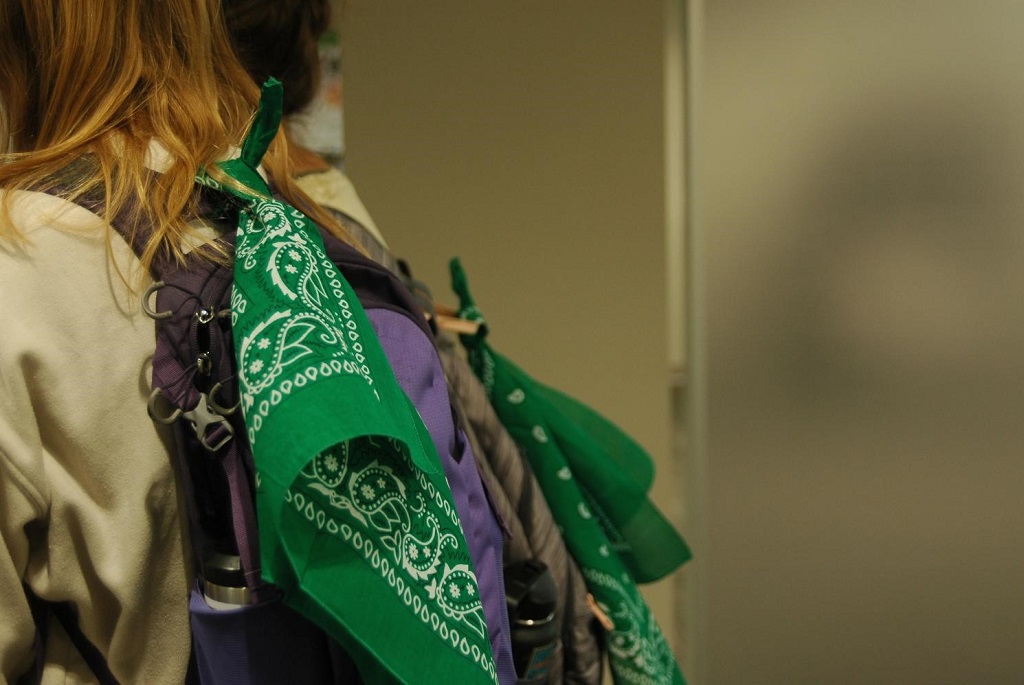
Green Bandana, a national suicide prevention program at higher education institutions, trains students using a mix of informational sessions and interactive experiences to help them navigate mental health dilemmas. Students who complete the program get a green bandana to tie to their backpacks, to signal their ability to help to other students.
“It’s about being a resource for your peers,” said Ella Nelson, public relations coordinator for UND Student Government. “You put the bandana on your backpack, and people know you’re someone they can approach if they need to talk. It’s a way to be there for someone before a problem turns into a crisis.”
Broden said that Green Bandana is essential to creating a safe campus environment because it emphasizes peer connections.
“What I like about Green Bandana is that it’s specifically designed for students,” Broden said. “It recognizes that the conversations students have with each other are going to be different from those they have with a professor.”
The training also covers how to refer peers to the right resources, which can range from an immediate call to 911 to a walk to an RA or a visit to the UCC for a crisis session
And, while the program is becoming a pillar of the University’s suicide prevention efforts, Nelson said that many students don’t know about it.
“It’s well-known in some circles, including Greek life, but I think it could definitely be more recognized across campus,” Nelson said. “I’ve had people ask me about the bandana, which shows there’s still work to be done in terms of getting the word out.”
.
Asking the tough questions
Broden said that UCC is continuing its outreach efforts. Year-round, UCC can regularly be found at Memorial Union and other high-traffic areas and events, where staff hand out fliers listing mental health services, crisis helplines such as 988 and 211 and specialized hotlines for military and LGBTQ+ students.
Such hotlines like 211 and 988 are good go-to resources when someone is experiencing a mental health crisis, Broden said. The 211 resource also offers a text option.
“What’s great about 211 is that you can text them, which makes it more accessible,” Carolyn said. “They even do follow-up calls because of our contract with FirstLink, which answers calls from 211 and 988. This helps us continue support for students who use that resource.”
Ultimately, Broden says that the best thing one can do if one sees someone struggling is to listen to them and ask the hard questions.
“Sometimes, people hesitate to ask a question like, ‘Are you thinking about killing yourself?’ because they fear it might trigger suicidal thoughts,” Broden said. “But that’s a myth. Asking doesn’t give someone the idea; it opens up the conversations that can save lives.”
“It’s not about solving their problems,” she added. “It’s about recognizing the risk and connecting them with the right support.”
>>For more information on Green Bandana, Uplift, Suicide Prevention Training and suicide hotline numbers, visit the University’s new SafeUND webpage.