FAA to UND: ‘What can’t you do at this school?’
Federal Aviation Administration leaders learn about research, education on high-level visit to UND
On Oct. 7, a trio of Federal Aviation Administration leaders visited UND and got an earful — but in a very good way.
Katie Thomson, an FAA deputy administrator, and her senior advisors Suzanne Hersh and Julia Makiejus, visited UND to meet with Aerospace leaders and faculty members, and to learn about the different educational programs and research activities happening in the John D. Odegard School of Aerospace Sciences. The administrators were in Grand Forks to attend the 2024 UAS Summit & Expo, where Thomson was the invited guest of Sen. John Hoeven, R-N.D.
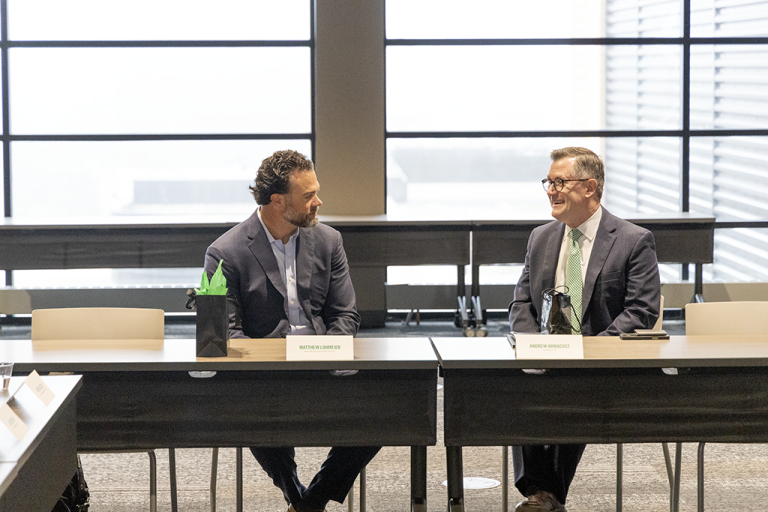
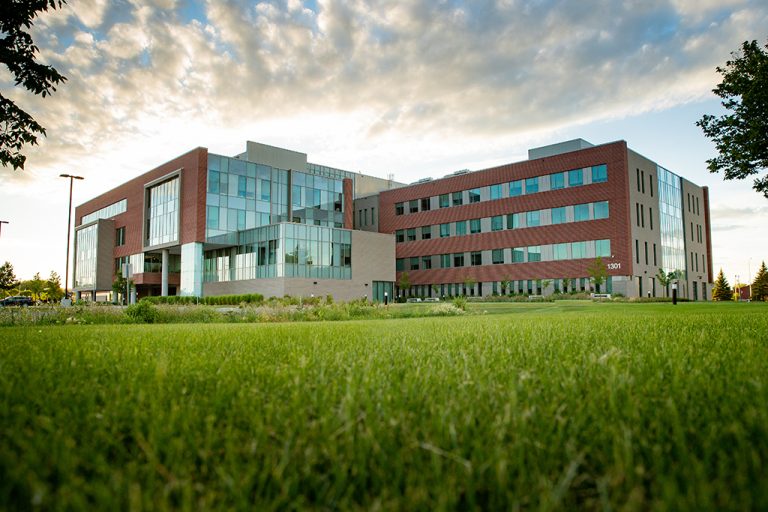
They had a lot to talk about, and UND facilities to tour, not to mention the UAS Summit to prepare for. So, Robert Kraus, dean of Aerospace, didn’t waste a minute once people sat down in a meeting room in Odegard Hall.
“Just talk,” he said to Leslie Martin, with a smile.
Martin, associate professor of Aviation, spoke about a $500,000 FAA workforce grant for K-12 teachers, which taught the teachers how to incorporate different ideas about aviation into their classes, whether those be science, history or otherwise.
Martin and Paul Snyder, director of the UAS program, brought teachers to UND from across North Dakota, South Dakota and Minnesota for a workshop. They engaged with the teachers to help them understand how to incorporate ideas about aviation into their classes and to give the teachers hands-on experience flying drones. The idea? Get students interested in needed careers in aerospace.
“Our main goal was just to share aviation throughout the region, to get to the teachers, the administrators, the counselors and eventually the students,” Martin said.
Up next was Jason Evans, assistant professor of Aviation, who spoke about the Vets 2 Wings program, a $2.5 million cooperative agreement with the FAA to fund veteran flight students.
Evans said there are nearly 50 veteran students involved in the program at present, with another 20 already having graduated from it. Those students — who put in thousands of hours of flight time — have above-average scores on FAA written exams and work collaboratively to achieve the various ratings and certificates needed for an aerospace career. They also regularly meet with representatives from several airlines to learn about pathway programs for employment.
Evans said faculty members at UND are more than willing to help other flight schools in the country adopt the Vets 2 Wings model.
The extensive nature of the program, and its early successes, drew an appreciative comment from Thomson.
“It sounds like a great program, and I love the partnership with industry and collaboration with other schools, too,” she said.
Snyder, who assisted Kraus with taking the administrators on a comprehensive tour of the labs and simulators, spoke about the uncrewed aircraft systems side of aviation. He talked as well about participating in the FAA’s Center of Excellence for UAS Research program, and conducting drone training for first responders.
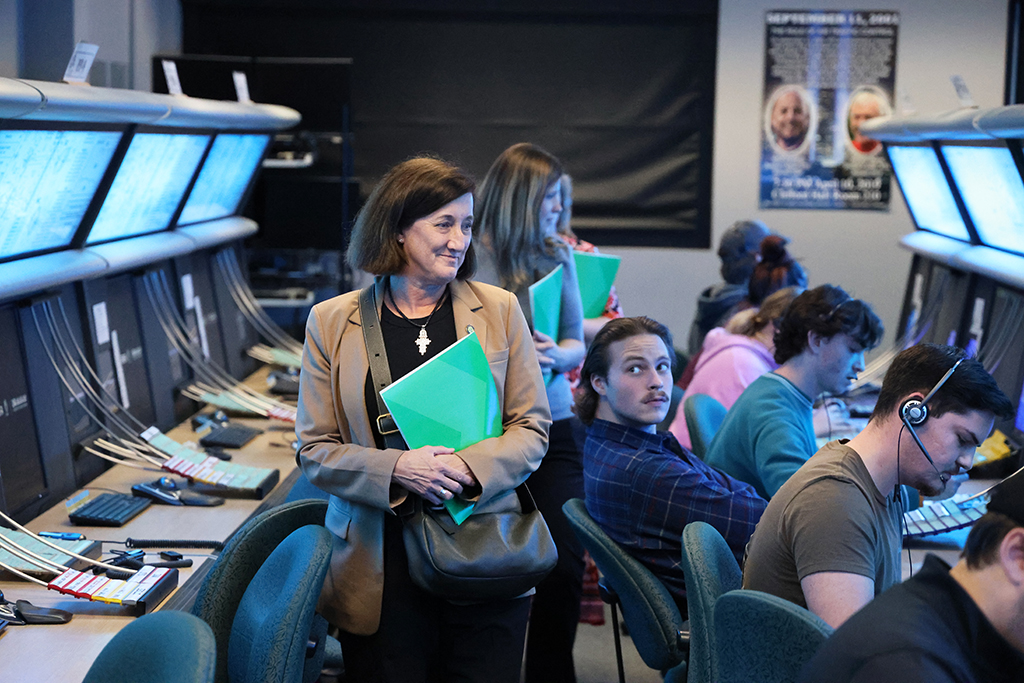
Speaking of labs, that’s where the FAA administrators met Craig Carlson, associate professor of Aviation, who was overseeing a group of students working in the Air Traffic Control Radar Lab in Ryan Hall.
Carlson explained that UND has submitted its application for the FAA’s Enhanced Air Traffic College Training Initiative, which could give UND students a fast track to airport control towers. The program would allow them to bypass training at the FAA Academy in Oklahoma City and get directly to work in towers across the nation. The program is meant to help fill in-demand positions for air traffic controllers.
Carlson said he is hoping FAA administrators involved with the program soon will conduct a site visit at UND, in preparation for potential approval into the program. Carlson said he is optimistic UND can begin participating in the program in the spring.
“Then hopefully we can graduate some people,” he said, so they can fill those needed jobs.
While on the tour — which spanned UND’s multiple aerospace buildings both on campus and at the airport — and given the depth of the educational experience at UND, the administrators remarked that students receive a seemingly liberal arts education when it comes to aviation.
While on the tour, and with Kraus commenting on everything from NASA artifacts on display on campus to the artwork that adorns the walls, Thomson asked, “What can’t you do at this school?”
When it comes to aerospace education and research at UND, the answer may very well be “not much.” But pending inclusion in FAA programs such as the Enhanced Air Traffic College Training Initiative, and the potential for Vets 2 Wings to roll out nationwide, faculty members are hoping to do much more.