Middle schoolers program robots, build bridges, extract DNA at UND
First annual BrainSTEM event brings seventh-graders to campus in partnership with American Society of Civil Engineers
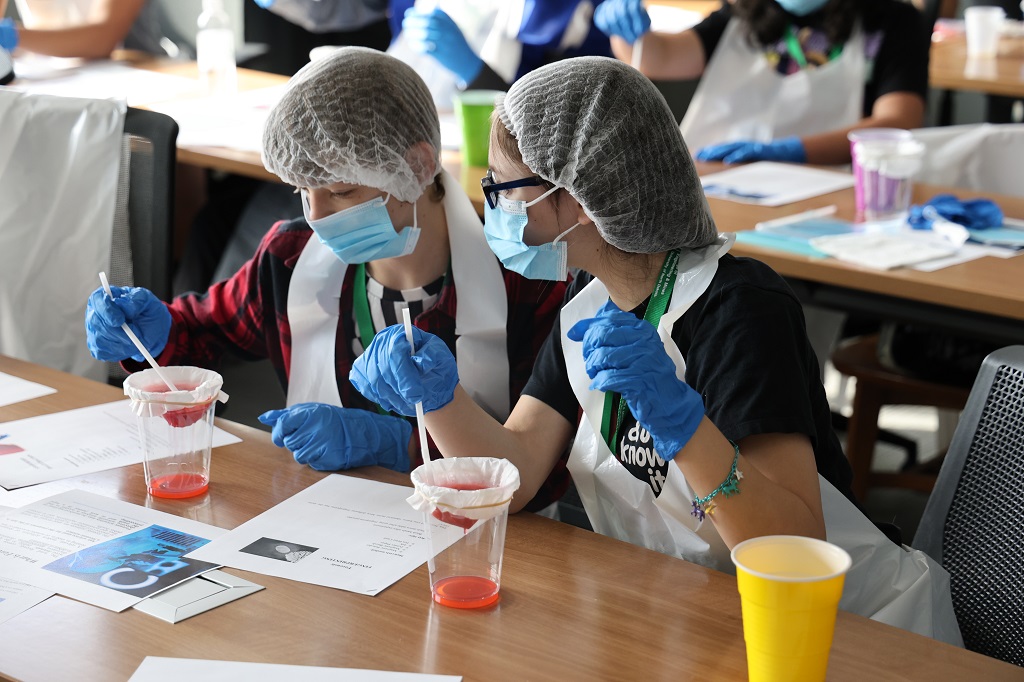
Lindsay Fugleberg, teaching assistant professor of Forensic Science at UND, addressed the 20 students sitting at lab tables in the University’s Collaborative Energy Complex.
Time to put on your aprons, masks and hairnets for the day’s work, she instructed on Oct. 10.
“Forensic scientists can work in a lab on evidence, but they also can work at a crime scene,” Fugleberg continued, as the students busied themselves with donning their protective gear. “What types of evidence would forensic scientists analyze? Fingerprints, yes. Blood samples. What else? Saliva.”
And high among the materials of interest to forensic scientists is the molecule that carries genetic information: DNA.
“So today, you guys are going to be extracting DNA,” Fugleberg said.
Hands-on experience
Thus did seventh-graders from Valley Middle School in Grand Forks get some hands-on experience in a fascinating, STEM-related career field.
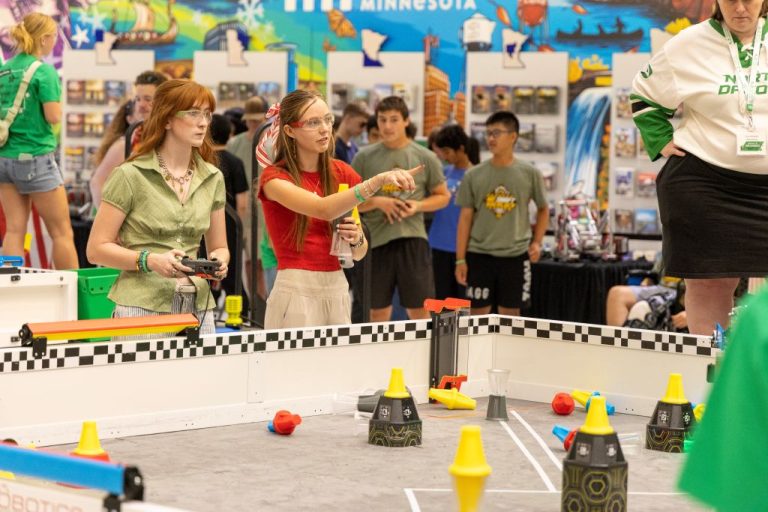
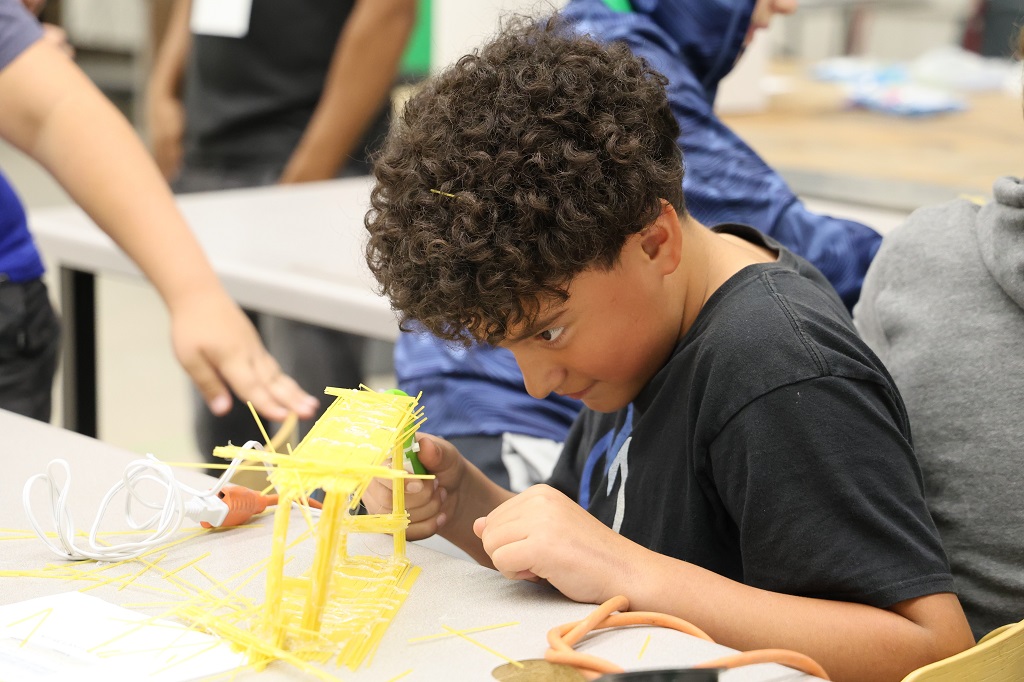
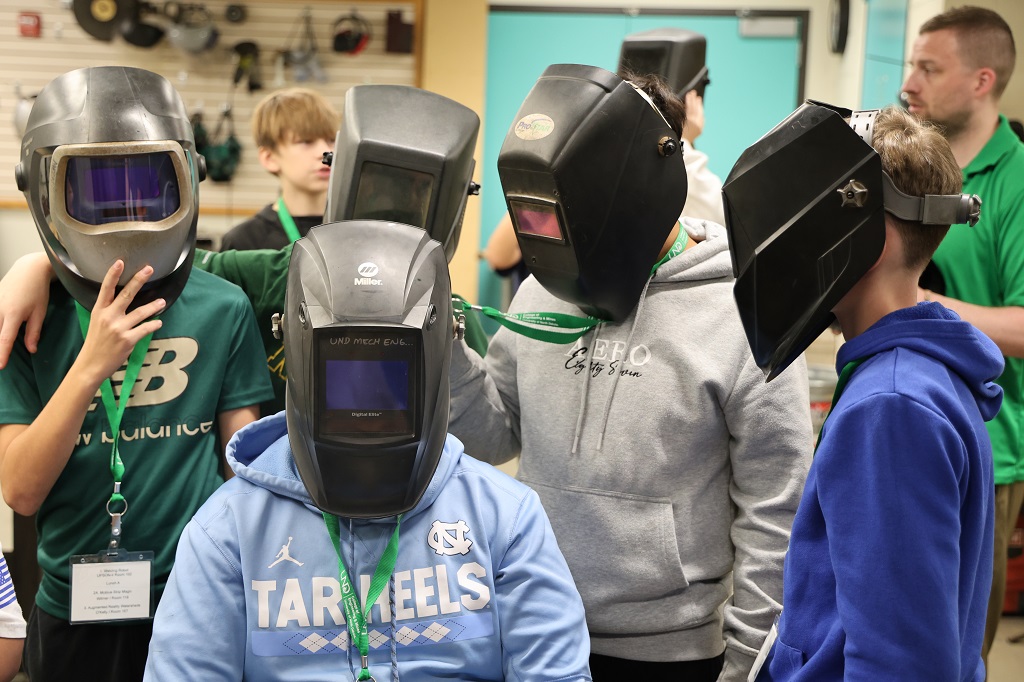
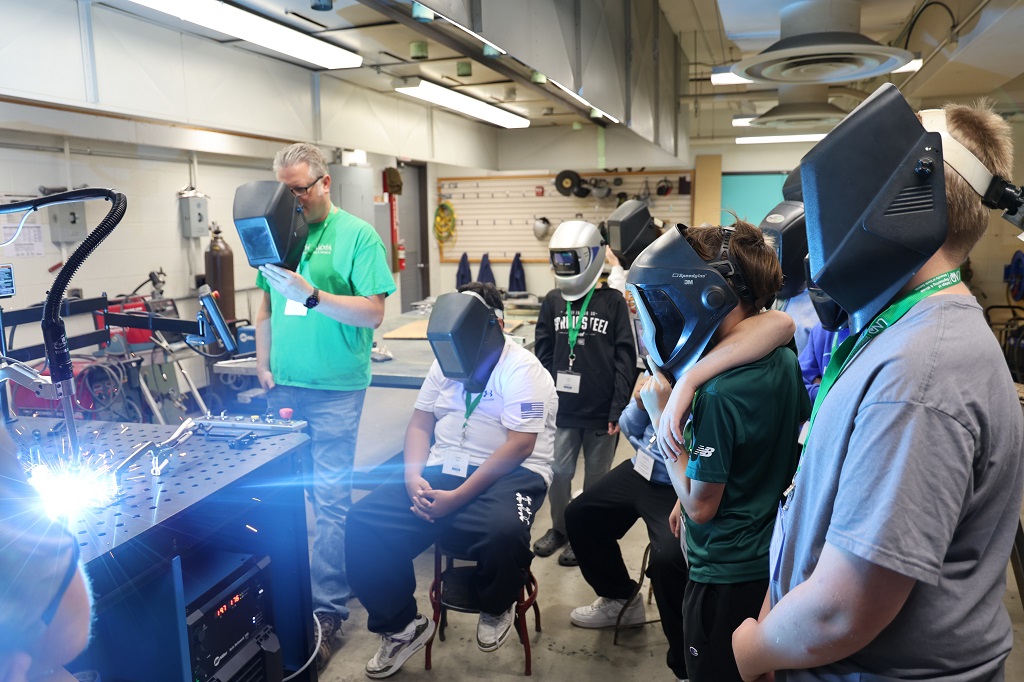
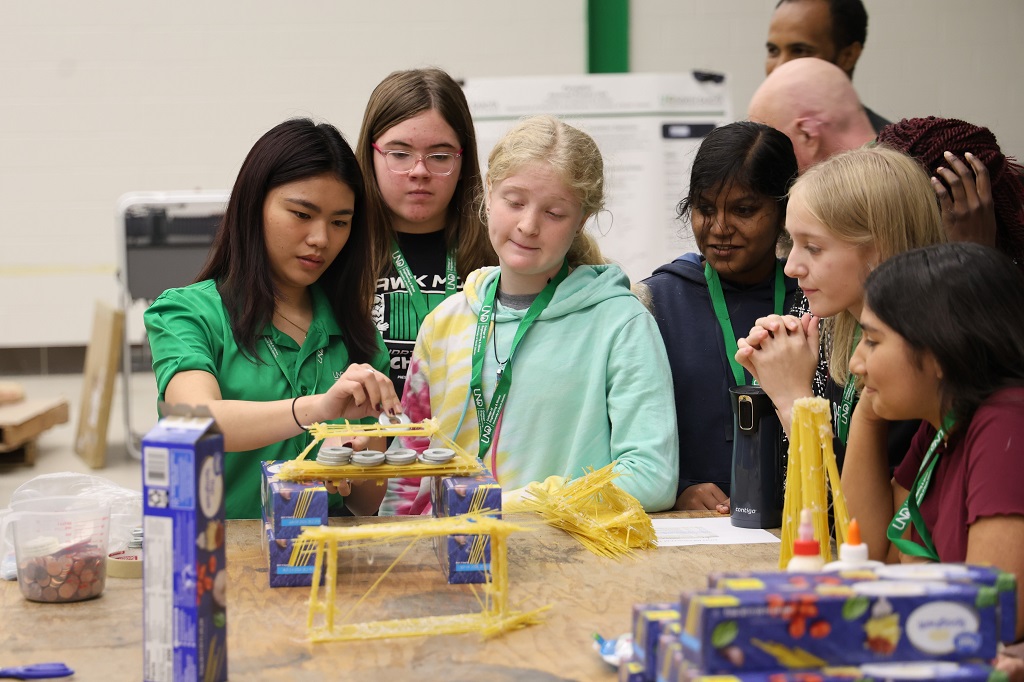
And that wasn’t all. While the CSI: Junior Investigators Workshop extracted DNA from strawberries (the method is explained here), other Valley seventh-graders programmed a robot to make perfect welds. Still others built bridges using dry spaghetti and tested them to with weights, practiced watershed management by using an augmented reality sand table and learned some “kitchen chemistry” about how acids and bases react with certain foods.
It was all part of the First Annual BrainSTEM event, a program that’s the result of a partnership between UND and the North Dakota Section of the American Society of Civil Engineers. Nearly 170 Valley seventh-graders took part, visiting the UND campus to take part in STEM workshops and get exposed to related career fields.
Each workshop was 50 minutes long, with the instructors being faculty members, graduate students or others working in STEM fields.
Sparking an interest
The goal was to give students a chance to meet role models from different backgrounds while learning about new careers, said Chad Frost, director of outreach, recruiting and career development at the UND College of Engineering & Mines.
“The idea of BrainSTEM is to give young people in underrepresented or socio-disadvantaged groups exposure to STEM,” Frost said. With that in mind, many of the workshop instructors were women or people of color.
“Plus, this is something that we in outreach and recruiting as well as our dean have asked, which is, ‘How do we reach out to kids at an earlier age to get them interested in engineering, science, technology and mathematics?’ So that’s kind of the whole deal.”
‘Almost like play time’
Andrew Dahlen, lecturer in Mechanical Engineering at UND, agreed. “You know, in a lot of ways, the engineering and manufacturing industries are invisible,” Dahlen said.
“There are manufacturers all over the United States, of course, but their doors aren’t open. Young people don’t get to see what they do every day. So, this is just a chance to open up those doors and say, ‘Hey, look at this. It’s exciting, it’s interesting work, it changes every single day.’
“Yes, it’s a lot of work, and yes, there’s a lot of math and science involved,” Dahlen continued. But the satisfactions are immense. “And to be honest,” he added with a laugh, “when you’re working with such amazing technologies, it’s almost like play time.”
Dahlen and Logan Proksch, a Chemical Engineering student and UND student ambassador, led the day’s workshop on robotic welding. Valley seventh-graders took turns inputting patterns using a control screen, then watching from behind welding masks as the multiton robotic welder torched the base material in exactly the desired pattern.
Finding the right ‘bait’
“It’s sort of like fishing,” Proksch said afterward. “You have to put the bait — the machinery, the robots — out there and in front of the students, in order for some of them to bite. Otherwise, if you just say, ‘Have you ever thought about being a chemical engineer later in life?’, they’ll answer, ‘What’s a chemical engineer?’”
Proksch remembers a time when he would have answered the same way. “You bet,” he said with a smile. “I went to many science camps when I was younger, and that’s partly where I developed my own love for this kind of stuff.”
An expanded BrainSTEM event already is in the planning stages for next year, Frost said.
The event was sponsored by AE2S, American Crystal Sugar, Braun Intertec, Burian & Associates, Byte Speed, Heyer Engineering, Jacobs, John Deere, Lowry Engineering, Microsoft, Moore Engineering, SRF Consulting, Stantec, Ulteig, UND Arts & Sciences, UND Civil Engineering and UND College of Engineering & Mines.
Click here to watch a short video about the BrainSTEM event on Oct. 10.