Records of historic disability rights victory arrive at UND
Arc of North Dakota v. State of North Dakota records will ensure that pivotal chapter of disability-rights history does not get forgotten
The University of North Dakota’s Elwyn B. Robinson Special Collections has recently acquired an archive documenting a landmark lawsuit in the fight for the rights of individuals with developmental disabilities. The Arc of North Dakota v. State of North Dakota Document Special Collection will soon be accessible to the public.
In 1980, The Arc of North Dakota, along with six families of individuals with developmental disabilities, filed a class-action lawsuit against the state. The suit contended that individuals in the Grafton Development Center and San Haven State Hospital were subject to unethical practices and conditions.
Spurred by a 1979 visit from Syracuse University professor Steven Taylor, who described San Haven as a “human warehouse,” the legal battle for the rights of individuals with developmental disabilities lasted nearly a decade and would change the history of the state.
Community connections bring records to UND
Rosemary Flynn, principal librarian and archivist at the Energy & Environmental Research Center (EERC), was the catalyst for the transfer. As both an archivist and a mother of a child with Down syndrome and autism, Flynn was able to bridge the gap between the two institutions.
She first learned of The Arc’s extensive archive through a conversation with her friend Rachel Hafner, the executive director of The Arc, Upper Valley (The Arc of North Dakota’s Grand Forks-area chapter). The Arc, Hafner said, was in the process of moving, and Hafner also mentioned the documents.
“I, being an archivist, suggested to her that the archives be deposited somewhere,” Flynn recalled. “I wanted to make sure this was a part of history that was not lost.”
The documents, which include attorney-client correspondence and media coverage of the lawsuit, will be valuable to students in fields such as law and education, Flynn said. And having access to these documents will help students in fields at the forefront of improving rights of individuals with developmental disabilities.
Flynn also hopes that making these documents publicly accessible will encourage further donations from individuals and families with direct experience with the pre-lawsuit conditions at institutions like Grafton and San Haven.
“When people find out about this, I would love to see that others in the community start to make deposits of items related to Grafton and San Haven,” Flynn said. “The families of the people who lived there may have items they may be wanting to transfer. Those things would help UND to keep telling their story.”
Providing a holistic view of a dark part of the state’s past can also highlight current problems regarding the treatment and rights of individuals with developmental disabilities, she added.
“There are still strides that we need to be making in order to create a more equitable, caring and compassionate environment in the state — not just for those with developmental and intellectual disabilities, but also for their families and caregivers,” Flynn said.
Curt Hanson, head of Special Collections at UND, noted that Special Collections already houses several related documents, including personal collections from figures central to the case.
These documents include those of Bruce Van Sickle, the federal judge who ruled that North Dakota’s systems violated the rights of residents at the Grafton and San Haven, and Dr. Robert Eelkema of the UND School of Medicine and Health Sciences, who was appointed to monitor the state’s compliance following the lawsuit.
Hanson described the recently acquired collection as a “treasure trove of documentation” and an essential resource for understanding the state’s role in the case. He added that the newly acquired documents provide greater insight into the process of The Arc’s historic legal victory.
Panel emphasizes historic lawsuit’s impact on state
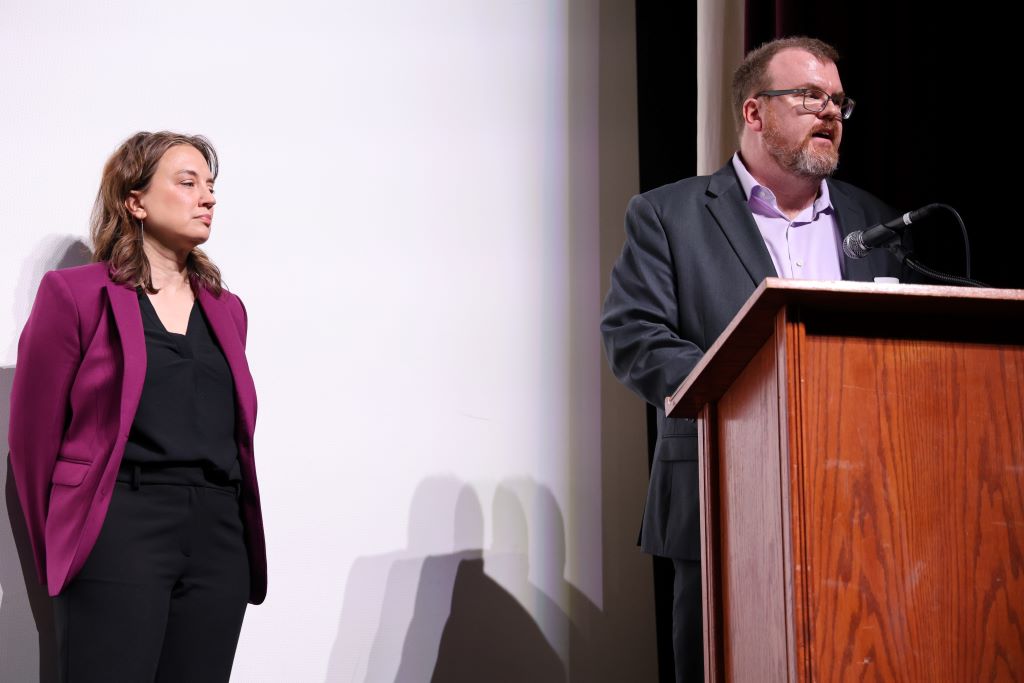
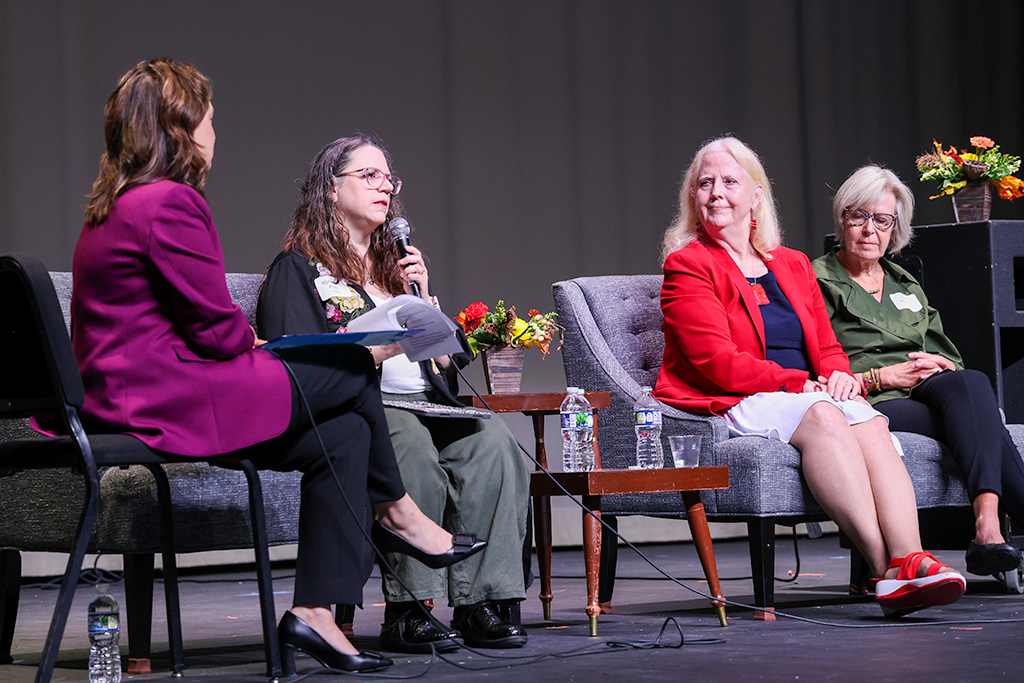
To commemorate the transfer of the archives, The Arc of North Dakota hosted an event on Tuesday, Sept. 19, at the Empire Arts Center. The event included introductions from Hanson and Kirsten Dvorak, executive director of The Arc of North Dakota; a screening of the 1993 documentary, “Abolition of Shame: A North Dakota Homecoming,” which chronicles the lives of former Grafton residents after leaving the institution; as well as a panel discussion.
“We are gathered here at the Empire Arts Center not only to reflect on a pivotal moment in the state’s history, but also to celebrate the ongoing commitment to advancing the rights of individuals with developmental disabilities,” Dvorak said in her introduction. “This is a night to reflect, to learn and to commit ourselves to building a legacy that will empower future generations.”
Following the screening, a panel of experts and self-advocates, including former residents of the Grafton facility and people directly involved in the 1980 lawsuit, discussed the impact of the lawsuit and the reforms that followed.
Sandi Marshall, a social worker, advocate and UND Department of Social Work alumna, also participated in the panel. She emphasized the dramatic changes the lawsuit brought about.
“I think there were people with the state who always had the heart to do the right thing, but the money and the top legislative leadership didn’t believe that people would be better off in the community,” she said. “So much has changed, and it’s because of the lawsuit and the infusion of money that we were able to build a community system.”
Before the lawsuit, she explained, North Dakota spent $42 less per person than the national average on care for individuals with developmental disabilities in state-run institutions, ranking last by that metric. But the success of the historic lawsuit led to drastic changes in funding.
“By the end of the lawsuit, we had risen from being the worst state to actually being the best,” she said. “We spent more money than virtually every other state in relation to institutional services, and we had decreased the number of people in the institution by a dramatic amount.”
One day, Marshall added, she’d like to see the number of people with developmental disabilities in institutions drop to zero.
But, for now, Mary Schneider, North Dakota state representative, attorney for the 1980 lawsuit and graduate of the UND School of Law, cautioned against losing ground on what was accomplished four decades ago.
“What I’m most concerned about is that we prevent any backsliding, because we’re in an era right now that frightens me a bit,” she said. She was referring to the political divisions in the country which give rise to dehumanizing rhetoric.
It’s important for North Dakotans to be proactive in thinking about “how we fund our services, how we support people, how we break down prejudices, and how we move forward in fully integrating and supporting people with disabilities throughout North Dakota, in our work programs, in our lives, in our communities,” Schneider said
“I think we can develop legislation over the next few years that will help people who are already doing well in community programs, and we can work together to prevent any backsliding, so that we only move forward.”
The full documentary screened at the event can be watched below or on Disability Rights North Dakota YouTube channel.
Archives create pathway for brighter future
Flynn gave voice to a similar sentiment, telling UND Today that giving the archives a permanent home in Special Collections is about more than preserving the past. It’s also about creating a pathway to a brighter future and further advancement for the rights of individuals with developmental disabilities.
“Having this kind of collection creates a chance for students to come to one place and really study what was happening at the time,” she said. “It’s a great opportunity to remind people from newer generations about what the fight was during the ’80s and ’90s. We will not be able to move forward and make progress if we don’t know where we are coming from.”
While the collection isn’t available yet, the library is already hard at work scanning and adding the seven boxes of documents to the Special Collections repository and should be available soon, Hanson said.