Newly translated Utopian novel offers timeless insights
Translated by a UND alumna, with an introduction by a UND professor and published by The Digital Press at UND, the novel describes a ‘journey to a hidden world’
“As the noise came closer to me, I crouched into a quiet, shadowy corner, waiting in fear and shock.”
Moments later our narrator, Mullah Abbas Efendi, finds himself spirited from the heart of a Medieval palace into a hidden world filled with advanced technology, sophisticated urbanites and learned conversation.
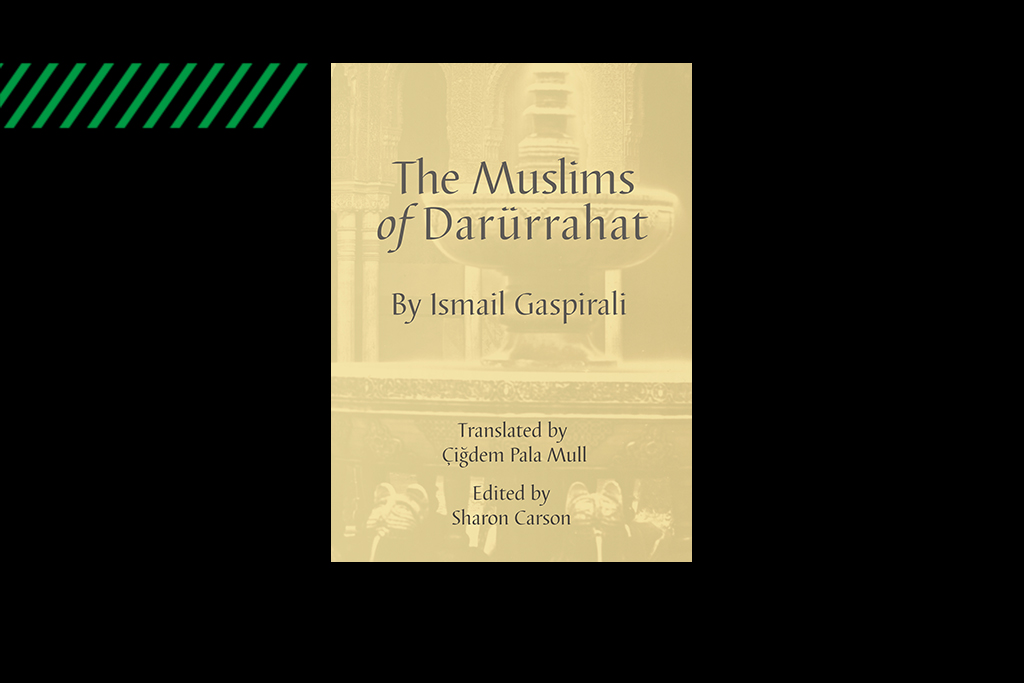
This is not the plot of the next Hollywood blockbuster or airport bestseller, but rather of the 19th-century utopian tale, “The Muslims of Darürrahat” by Ismail Gaspirali. It tells the story of Mullah Abbas Efendi’s journey to a hidden world, his fascinating encounters with its inhabitants and his struggle to return.
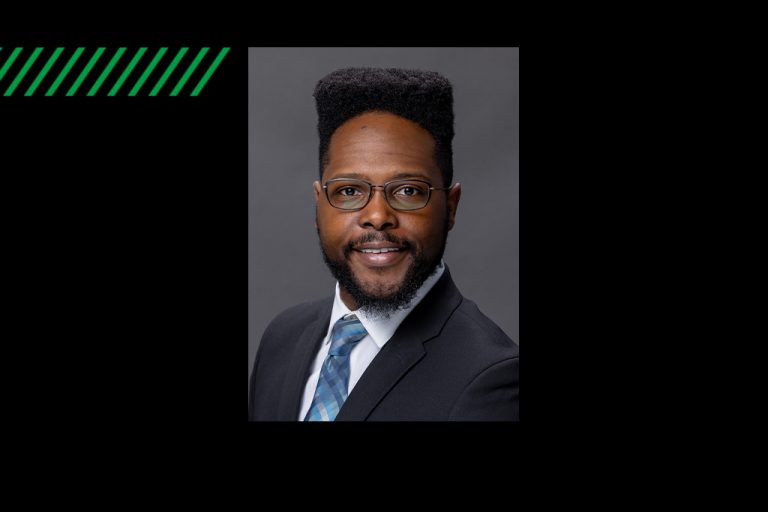
Gaspirali was a writer, editor, publisher and politician whose lively imagination created a vision that is both strikingly contemporary and marvelously strange. UND alumna Çiğdem Pala Mull translated this story, and UND Chester Fritz Distinguished Professor Sharon Carson provides a historical and literary introduction. Together they have brought his intriguing and powerful text to a wider audience in collaboration with North Dakota Quarterly.
“Our main hope is that a range of readers will find a path into Gaspirali’s fantastic world and enjoy it as a work of imaginative literature,” Carson said. “We tried to build a book around the translation that would spark the interest of general readers in English who might not be familiar with Gaspirali and his times and writing, and also offer something to specialists interested in utopian literature, comparative cultural studies, Central Asian literary history and literary journalism.”
Gaspirali’s tale is not only timeless, but also opens an important window into the 19th-century Crimean Tartar world. Just as the narrator finds himself transported to Darürrahat, Gaspirali’s story transports the reader across national boundaries and historical contexts.
The need for ‘hopefulness’
This passage from the 21st-century world to 19th-century Asia reminds us that that while the past might be a foreign country, it continues to speak across time and space in important and familiar ways.
“I was especially interested in offering an intriguing story that had been originally crafted in Turkish by a Crimean Tatar Muslim writer,” Çiğdem said, “a story created in the 19th century during very complex cultural times, and a story which would illustrate that utopian literary imagination has long been transnational and not confined to western literary traditions.”
Carson argues that despite an unfamiliar historical setting, the book embraces its utopian premise by communicating so easily across cultures, national boundaries and time: “The sense of timeliness for this book may arise partly because there seems a never-ending human need to turn toward ‘hopefulness,’ especially during times which are fraught,” she said.
“And across time, space and culture, times are always fraught. Our times included. I think this is the attraction of utopian imagination: the attraction toward the possibility of a better possible world.”
Like all the books in the North Dakota Quarterly supplement series, this book is available as both a free download and a low-cost paperback.
As Bill Caraher, editor of North Dakota Quarterly, put it, “This book, along with the first two volumes of the NDQ book series, represents North Dakota Quarterly’s century-long commitment to publishing innovative and thought-provoking humanities scholarship.”
The book may be ordered through Amazon.com, or downloaded on the website of the Digital Press.
A list of all the books from the NDQ supplement series is available on the North Dakota Quarterly’s website.