UND professor helps put nature on the record
Professor of Biology Bob Newman is among experts contributing to The Nature Record, a national assessment of America’s environment
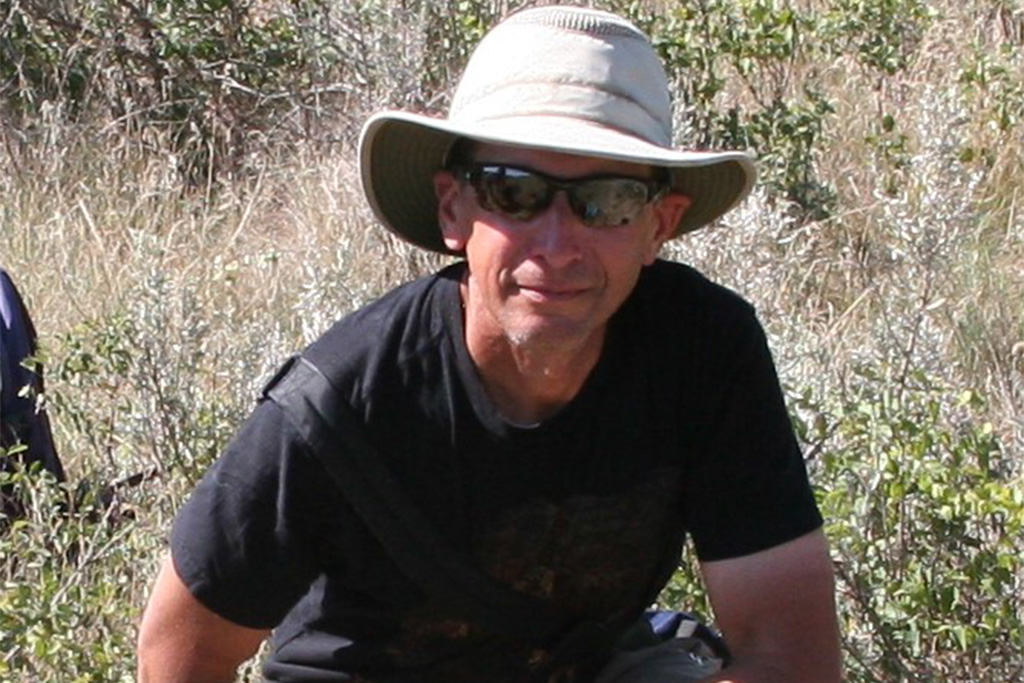
UND Professor of Biology Bob Newman is among nearly 200 experts contributing to The Nature Record, a national assessment of the condition of nature in the United States and the benefits it provides to people, communities and ecosystems.
Newman, professor and chair of UND’s Department of Biology, is contributing to the assessment’s chapter on “Drivers of Change,” which examines the forces shaping nature in the United States. Those forces include habitat loss, climate change, pollution, land-use change and other pressures, as well as the human decisions behind them.
“One of the major messages of this whole report is that humans are part of these ecosystems,” Newman said. “We’ve always been part of nature, and we have an impact on it, but we also depend on it.”
The assessment’s path has changed since Newman first joined the effort, but its central mission has remained the same: to provide a rigorous, evidence-based account of nature in the United States and why understanding it matters.
Background on The Nature Record
The project began as the first National Nature Assessment, a federal effort modeled in part after the National Climate Assessment. As UND Today reported in 2024, Newman was selected to help co-author one of the report’s chapters, bringing his knowledge of Northern Prairie ecosystems to a national team studying America’s biodiversity, ecosystems and the ways changes in nature affect human life.
After that assessment was canceled as a federal project in 2025, many contributors chose to continue the work under a new name, The Nature Record. Despite the setback, the report entered its final stages after opening for public comment earlier this spring.
Newman added, though, that the intention is still the same.
“This report was originally envisioned as something parallel to the National Climate Assessment,” Newman said. “So, it still needs to be based on the best available science and the best available evidence.”
This aspect was especially important for the chapter Newman worked on, which examined changes in nature, and why they happen.
Understanding the ‘Drivers of Change’
In the “Drivers of Change” chapter, Newman and his co-authors examine both direct causes of environmental change, such as habitat loss, pollution and climate change, and the broader human systems behind them.
“If something is changing in nature, it’s changing because something is causing it,” Newman said. “Eventually, you get to human decision-making and the values and worldviews that lead to those things.”
That perspective is especially important in places such as North Dakota, where the landscape is shaped by many individual landowners and local decisions.
“North Dakota is more than 90% privately owned,” Newman said. “Lots and lots of individual landowners are making lots and lots of individual decisions that play out over entire landscapes.”
Even small decisions, taken together, shape grasslands, wetlands, wildlife habitat and water quality across the state and regions like it.
For example, Newman said, a landowner’s decision to convert grassland or prairie into cropland may make sense on its own, but across a landscape, many such decisions can contribute to habitat loss, affect water quality and change the conditions wildlife depend on.
That is why a national assessment such as The Nature Record needs diverse perspectives.
The forces changing nature do not look the same everywhere, Newman said, and understanding them requires different perspectives on America’s landscapes and the communities where those changes happen.
Science as collaboration
For Newman, working on the assessment has also been a lesson in team science.
The chapter he contributed to includes authors with different areas of expertise, experiences and perspectives. That kind of work, he said, requires listening, revision and a willingness to reconsider one’s own assumptions.
“We didn’t necessarily all agree on everything,” Newman said. “But we talked about it and tried to find something that everybody could agree to.”
He said the best collaborations depend on “listening to learn” rather than “listening to debate.” For a project as large as The Nature Record, disagreements can be productive when they lead to a stronger final product.
“Two heads are better than one, but mostly when they’re two different heads,” Newman said. “People with different experiences, different knowledge, different perspectives and different worldviews will together put something together that is probably more robust and reliable than one person who happens to have strong opinions.”
That, Newman said, is why diversity is especially important for projects such as The Nature Record.
More than data
One example of why that approach is important is the Nature Record’s inclusion of photography, poetry, stories and other forms of artistic expression alongside data and research.
That matters, Newman said, because people do not relate to nature through data alone.
“Most people don’t experience the world, or relate their experiences of the world, through data,” Newman said. “Art and the humanities are about how we express our relationships with anything, including nature.”
Graphs and evidence are necessary, but art can remind people what is at stake in conversations about the condition of the natural world.
“You can show them a graph, or you can show them photographs or paintings of animals and birds,” Newman said. And for Newman, that connection is part of why nature matters beyond its economic value.
“It’s deep,” he said. “It’s about the kind of world we want to be in, the food we eat, the water we drink and the air we breathe.”
Finding the ‘bright spots’ in nature
In that spirit, the Nature Record also includes examples of what Newman called “bright spots” — places where people are taking action and making a difference.
That is important, he said, because the challenges facing nature can easily feel overwhelming.
“It’s really easy to get depressed, really fast,” Newman said. “And what you have to hold on to is that, yes, those are real problems. But there’s still a lot of beauty out there, and we know what to do about it.”
Sometimes, he said, those actions are large-scale. Other times, they are local: restoring prairie, supporting native bees, cleaning up a trail or making space for nature in a community.
“There are things that you can do in your own life, and that you can support in your own neighborhood or community,” Newman said.
For Newman, that is part of the value of The Nature Record. It gathers evidence, but it also shows people how they can respond — through policy, community action and smaller decisions made in the places they know best.
One small step, he said, is to visit The Nature Record’s website, where the full draft report can be read, save for a few unfinished chapters.