Training grad students to be effective mentors
UND program helps mentors learn how to avoid miscommunication, engage in productive mentoring relationships
In the fall of 2023, the School of Graduate Studies and Teaching Transformation and Development Academy (TTaDA) launched an innovative new program to address a persistent need in higher ed.
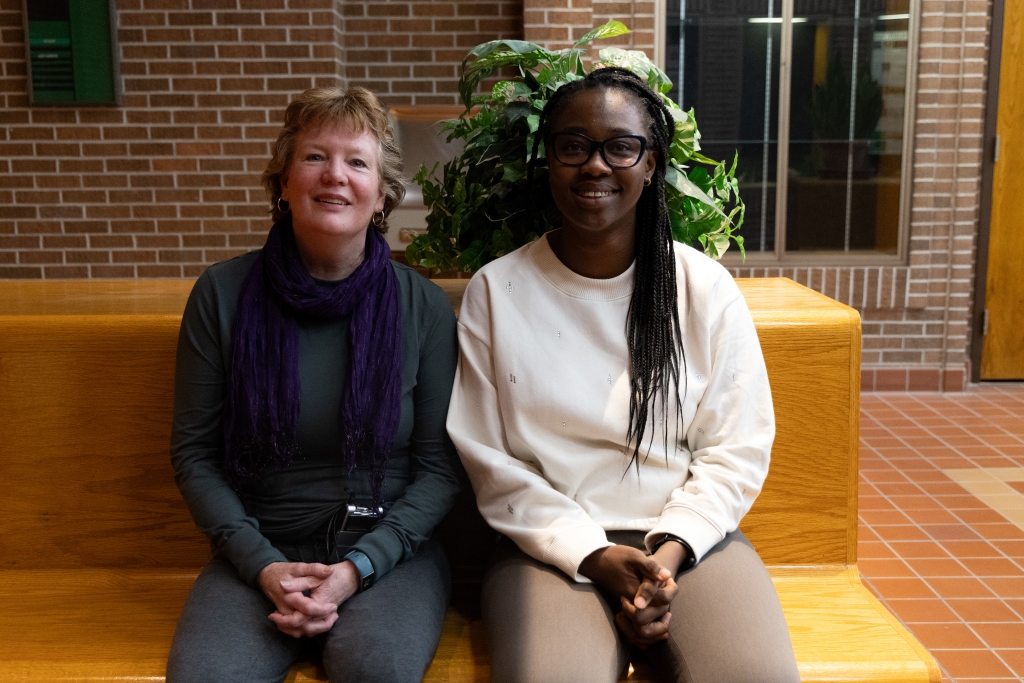
The program, Mentors Helping Mentors, was created by Diane Darland, a biology professor, and Anne Kelsch, the director of faculty development at TTaDA. The pair designed it to equip graduate students with tools to help them not only as students and researchers but also become better mentors themselves.
Mentors Helping Mentors was inspired by Darland’s experience with the Center for the Improvement of Mentored Experiences in Research (CIMER). This organization uses structured, science-based approaches to help mentors and mentees build effective, supportive relationships.
“The CIMER facilitation training was something that I wish I had done at the beginning of my career,” Darland said. “I noticed that there were both faculty and staff in academia, but there weren’t any graduate students. I thought, ‘Oh my goodness, everyone needs this training.”
After her experience with CIMER training, Darland recognized that something similar would help students and faculty at UND. Darland’s mentee, doctoral student of biology Blessing Okosun, and Kelsch were brought on board to help Darland adapt the CIMER curriculum to fit the needs of UND’s graduate community and make it accessible to students in fields beyond STEM.
A shift for mentorship in academia
Graduate students often have to juggle multiple roles as students, researchers, lab managers and undergraduate course teachers. Yet, as Darland and Kelsch discovered working with the program’s first cohort, few students have received any formal training on becoming mentors.
Okosun said that, as a graduate student at UND and other institutions, she recognized friction could arise from miscommunication and conflicting perspectives.
“I had a personal interest in learning how to mentor a new set of leaders,” said Okosun, who, in addition to helping mold the program, was a member of its first cohort.
“When we were crafting the workshops, I was advocating from the student perspective. I was also thinking about what would make for an interesting program. You don’t want something like this to be boring.”
The training is held at the beginning of the semester, similar to the existing orientation for Graduate Teaching Assistants (GTAs). But Mentors Helping Mentors takes a more specific look at mentorship, covering topics like handling difficult conversations, understanding diverse mentee needs and setting clear expectations between students and instructors.
“A lot of times people have really excellent mentorship experiences, but a lot of times people don’t. And, we don’t spend a lot of time training folks to be mentors,” Kelsch said. “So, in my mind, this a shift in the culture of higher education from an ad hoc approach to mentorship, to training students to be advocates for good, intentional practices in mentorship.”
“It’s a real way to make big improvements in the future, which could have tremendous ripple effects as these students mentor others who they know will be future mentors,” she added.
A unique aspect of Mentors Helping Mentors is its approach to learning. Rather than lecture students, Darland and Kelsch act as facilitators during workshops, allowing the students to learn from each other’s perspectives and experiences.
Kelsch said this strategy of active participation allows the blossoming mentors to connect with one another and create a support system beyond the workshops.
“It’s really much more meaningful when you’re having conversations with your peers,” Kelsch said. “I also think it’s easier to be open with your peers, to talk about what’s hard and what you’re struggling with. You not only take away a new set of skills, but you walk away with a sense of mutual support.”
Kelsch said the collaborative environment offered by this model was immediately apparent, and the cohorts formed strong bonds by the end of the program.
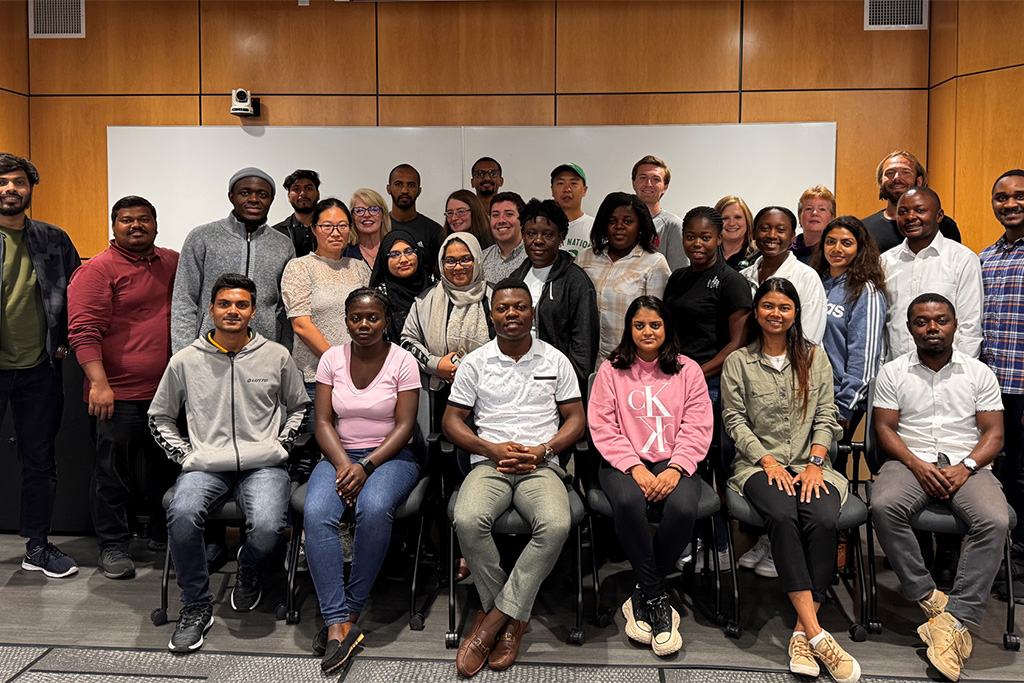
“After one three sessions, we watched these students who had just met each other taking pictures with one another. There was a real sense of community,” she said. “I think it’s really helpful to have someone in the same boat as you, people who are there who want to see you be successful.”
Mentorship: A two-way street
The workshops cover a range of mentorship practices, from aligning expectations to active listening and providing constructive feedback to undergraduate students.
A major emphasis is placed on how the cohorts can establish clear communication with their own mentees, a skill that Okosun said has significantly impacted her mentorship style.
“When undergraduate students come to work with me, I don’t just throw information at them. I take the time to ask them if they understand and listen to them to see how they’re translating that information,” she said. “I didn’t do that before, and I think it’s really helped shape my communication with students and peers.”
Darland echoed this sentiment and emphasized that aligning expectations can help eliminate friction in mentorship roles.
“Just because I say something doesn’t mean the other person heard it right,” Darland said. “Mentorship is a two-way street, and we’re trying to make sure both sides understand and agree on their roles and responsibilities.”
Another critical element of the program’s curriculum is understanding and recognizing the diversity of individuals on campus and how that contributes to the mentor-mentee relationship.
“The future of science is going to be built by people with diverse perspectives,” Darland said. “Diversity means more than just race or culture; it includes skillsets, thinking processes and life experiences. People bring all of that to the table when you’re working with them.”
For Okosun, this emphasis on diversity was enlightening and helped her become a more empathetic mentor.
“It helps to understand that when you’re working with someone, you’re working with their whole experience, their culture, their background,” she said. “When you approach mentorship thinking about that, it helps align expectations and have more open, honest conversations that allow you to move forward for the good of science.”
A ‘voice of change’ through mentorship
One of the program’s most unique requirements is the development of a personal mentoring philosophy. Each participant drafts a one- to two-page document outlining their core beliefs and strategies for effective mentorship.
Darland said that these mentor philosophies have become a valuable part of the program for graduate students. She’s had conversations with students from the first cohort who found that it helped set them apart from other applicants as they moved into the professional world, some crediting it as a factor in helping them receive job offers, she added.
“We wanted the students to walk away with something concrete that they can use professionally going forward,” Darland explained. “It’s a living document and something they will continue to refine as professionals. It offers concrete milestones for mentees and mentors and provides strategies for getting around challenges that come up.”
As a program participant, the exercise of putting her philosophy into text helped her apply the concepts of the workshops in practice.
“I had to think a lot about my experience as a Black woman in STEM and how that contributed to my role as a mentor and mentee,” she said. “It helped me not only shift my thoughts but reshape them as I practice what I wrote in my philosophy.”
Since its inception, Mentors Helping Mentors has trained 68 students across three cohorts. The program is expanding, recently offering a version for online students and preparing to welcome a new cohort in the spring of 2025.
Darland and Kelsch hope that as more students participate, the program will create a “ripple effect” as graduates carry the mentorship skills they’ve developed into other academic and professional environments. They say the program is catching on; seats quickly fill up for each new cohort, and they can see the positive effects of the workshops already.
“We’re already starting to see these students percolate through the system and use the knowledge they’ve learned,” Darland said, explaining that she’s talked with students already seeing ways to use their new knowledge to change the dynamics of environments outside of UND.
“They are going to be the voice of change. They can have an impact on the labs and classrooms they move to after UND and make good mentorship the norm wherever they are.”