UND, NDSU, tribal colleges host National Institute on Aging leaders
Agency leadership gathers in Grand Forks to discuss aging research, rural health and Indigenous partnerships
UND, North Dakota State University and North Dakota’s tribal colleges recently welcomed leaders from the National Institute on Aging, part of the National Institutes of Health, to Grand Forks for the NIA Regional Directors Committee meeting.
The two-day event, co-hosted by UND, NDSU and tribal college partners across North Dakota, brought together NIH officials, researchers, faculty, tribal college leaders and community members to discuss the future of aging research, rural health care challenges and opportunities for collaboration across the region.
Throughout the meeting, speakers recognized the leadership and organizational efforts of David Wilson, UND’s associate vice president for Health Research, for coordinating the regional gathering and helping bring NIH leadership, university researchers and tribal college partners together in North Dakota.
UND Vice President for Research & Economic Development Scott Snyder welcomed attendees and highlighted the importance of the visit for North Dakota.
“In one of the most rural states in the country, aging North Dakotans face challenges in accessing health care and health care professionals,” Snyder said. “UND stands uniquely prepared to partner with North Dakota State University and other institutions of higher education in the state to help solve these health care disparities.”
NDSU Interim Vice President for Research Heidi Grunwald emphasized the collaborative role the state’s research universities play in training health care professionals who serve rural communities.
“With UND’s medical school, NDSU’s pharmacy school and our community pharmacists and extension, together, we play a vital role in this state,” said Grunwald.
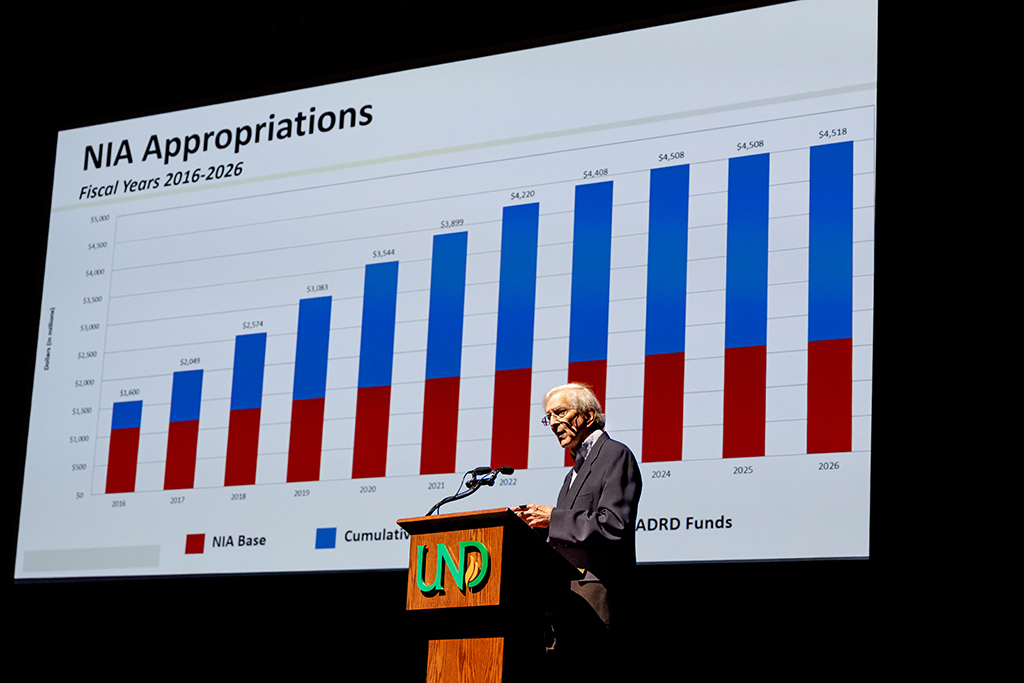
A highlight of the meeting was a keynote presentation by Dr. Richard Hodes, director of the National Institute on Aging. Hodes, who has led the institute since 1993, outlined the NIA’s mission and discussed current national priorities in aging research, including Alzheimer’s disease and related dementias, geroscience, clinical gerontology and behavioral and social research.
Hodes also described the significant growth of NIA funding over the past decade, noting that the institute’s budget has expanded from just over $1 billion to approximately $4.5 billion, reflecting increasing national investment in aging and dementia research.
He encouraged researchers to connect their work to public health outcomes and emphasized NIH priorities related to scientific rigor, data sharing and collaboration.
“Understanding the aging process is a means for understanding and translating and intervening to improve the quality and health of life,” he said.
During the meeting, NIH officials also discussed new funding opportunities, updated grant review processes and strategies to support early-stage investigators and rural research initiatives.
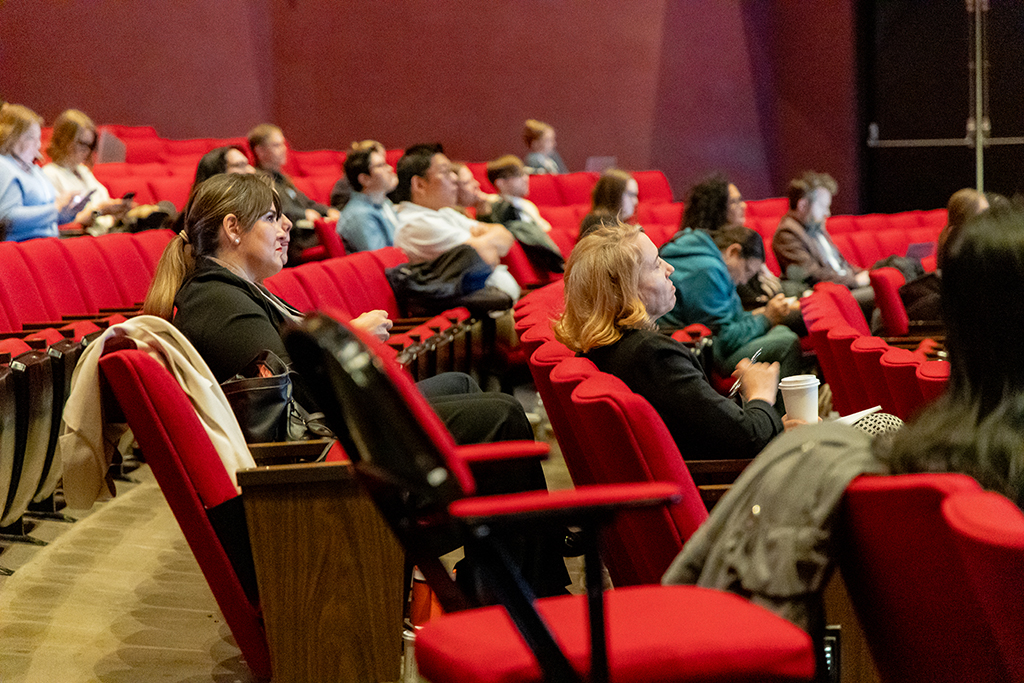
Faculty and researchers from across the Midwest had the chance to engage directly with NIH leadership, ask questions about the changing federal research landscape and explore opportunities for future partnerships.
The event included presentations on tribal health research, clinical research infrastructure and strategies to address disparities affecting rural and Indigenous populations.
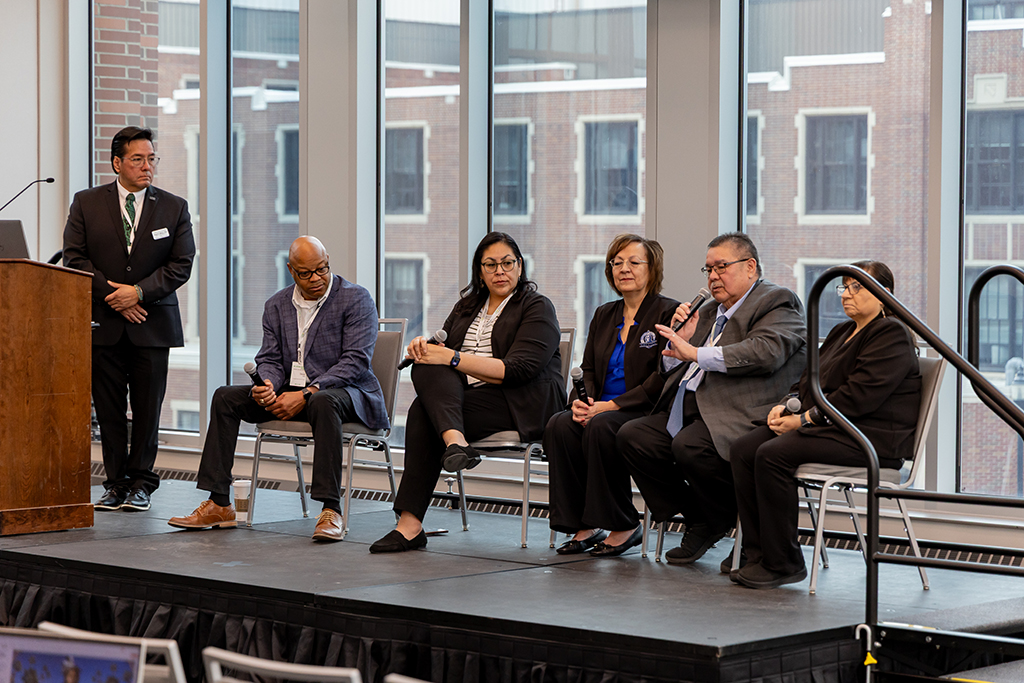
A special session also brought together presidents and leaders from The North Dakota Tribal College System to discuss the importance of culturally grounded research partnerships, student mentorship and expanding pathways into science and biomedical research careers.
United Tribes Technical College President Leander McDonald emphasized that building trust and long-term relationships with tribal communities is foundational for meaningful research collaborations.
“It’s all about partnerships,” McDonald said. “It’s all about relationships.”
McDonald and other tribal college leaders discussed the importance of community-based participatory research, tribal data sovereignty and ensuring that research benefits local communities.
The discussion also highlighted the challenges many Indigenous students face as first-generation and low-income college students, as well as the importance of mentorship and early exposure to STEM and health science careers.
Twyla Baker, president of Nueta Hidatsa Sahnish College, said building confidence and creating pathways into research careers are critical for Indigenous students.
“We need to be testing their leadership capacity early, telling them that yes, you can do this,” Baker said. “When you’re talking about chemistry, math, statistics, all of those things, a lot of it has to do with confidence.”
Tribal college leaders also emphasized the need for stronger federal partnerships and reduced administrative burdens for smaller institutions pursuing research funding and workforce development opportunities.
NIH and NIA leaders said the conversations provided important insight into how federal agencies can better support tribal colleges, Indigenous researchers and rural communities through aging and biomedical research initiatives.
Organizers said the meeting provided an important opportunity to strengthen connections between NIH leadership and researchers working in rural states.
The visit underscores UND’s growing role in aging, rural health and biomedical research and highlights the university’s continued collaboration with national research partners to address the health needs of North Dakotans and rural communities across the country, the organizers continued.