New director: ‘UND’s Center for Rural Health is unmatched’
Prospect of working with ‘the outstanding team that continues to drive that excellence’ helped draw Jacob Warren to UND

The Center for Rural Health within the UND School of Medicine & Health Sciences connects resources and knowledge to strengthen the health of rural and tribal communities. CRH is also North Dakota’s federally designated State Office of Rural Health.
And as the home of the Rural Health Information Hub (RHIhub), the National Resource Center on Native American Aging and the Rural Health Research Gateway, the Center plays a key role in national as well as statewide and regional health affairs.
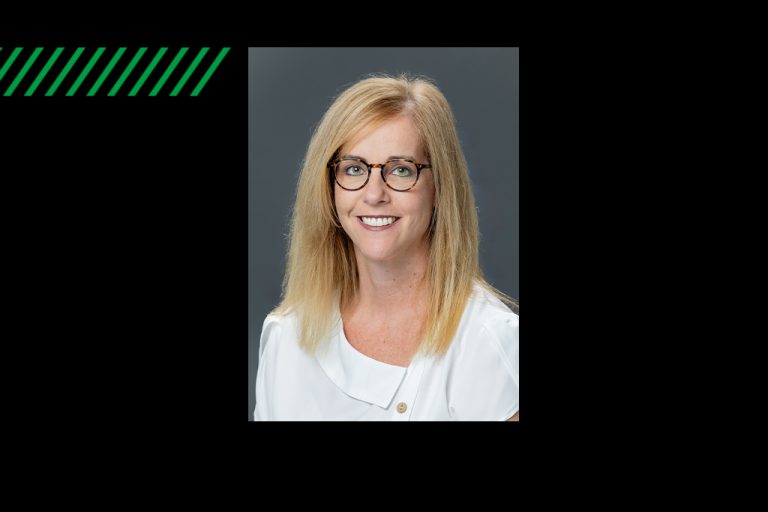
So it’s news that following the recent retirement of Acting Director Brad Gibbens, the Center has hired a new director. Jacob Warren joined UND after serving at the College of Health Sciences at the University of Wyoming in Laramie.
A native of Georgia, Warren was chosen to lead UND’s CRH after a national search. He brings decades of experience in rural health policy and research to North Dakota’s only medical school.
Recently, Warren sat down with For Your Health, the newsletter of the School of Medicine & Health Sciences, for a brief conversation about rural health, the weather in North Dakota and UND’s national reputation.
Editor’s note: This Q&A originally appeared in For Your Health.
****
Thanks for your time, Dr. Warren. Welcome to North Dakota! In your experience, what is the reputation of UND’s Center for Rural Health nationally, and did that reputation affect your decision to come to North Dakota?
UND’s Center for Rural Health is unmatched across the U.S. Having the opportunity to work with the outstanding team that continues to drive that excellence was a major factor that drew me to this position. In addition to the amazing work done within North Dakota, the Center also has a stellar national reputation for being a reliable partner that produces quality work to spread rural health knowledge throughout the country.
Our School recently published its Eighth Biennial Report, which documents health and health care in North Dakota. What can we say about the state of health in the rural parts of our state? Furthermore, has our strong CRH and a medical school helped improve our health status as a state relative to other largely rural states?
The 45-year history of partnership the CRH has with the State, combined with the 120-year history of medical education that SMHS has brought to North Dakota, have created an incredible culture of truly focusing on the health needs of rural North Dakota and how to best meet them. Initiatives such as the Medicare Rural Hospital Flexibility Grant Program or FLEX (which works to stabilize rural healthcare infrastructure for hospitals and EMS), the Area Health Education Center Program or AHEC (focused on expanding the healthcare workforce), and our State Office of Rural Health (which focuses on building health and healthcare capacity in rural areas) clearly demonstrate how the Center is laser-focused on creating rural communities where all people can thrive.
I’m not aware of any other state that has the types of relationships that exist within CRH – and much of that comes from its history as being one of the first state offices of rural health in the nation. That state service is part of the very fabric of the Center, and that has allowed it to support so many important entities, including critical access hospitals and rural health clinics across all parts of North Dakota.
I’ve lived and worked in a lot of states, and have no doubt that CRH and SMHS have contributed significantly to the health of rural North Dakotans.
Along those lines, we have another national reputation: our weather….
It’s funny you mention that. One of the first things I learned about Grand Forks when I saw this job opportunity was that it is the coldest city in the continental U.S.! I grew up mostly on the sunny coast of Georgia, where anything below 50 degrees was considered freezing cold, so I’m glad I’ve had several years living at 7,200 feet elevation in the Rocky Mountains to partially adjust to the temperature and to learn how to shovel snow and drive on ice!
I’m looking forward to seeing if I’m as prepared as I think I am. I may have to get back to you on that one!
Say more about your research and policy background. What has been your professional focus within rural health?
My research background has focused on community-engaged research approaches, where rural communities become active partners in identifying their health needs and in developing solutions to those needs.
Rural residents are innovative and resilient, and it has always been very important to me to be sure their voices are at the forefront as we try to research new ways to improve rural health outcomes. My research has also focused on rural health equity in two main ways. One is on recognizing that there are distinct inequities in access to healthcare and in many health outcomes in rural areas that necessitate the development of programs specifically designed for rural. The other is in recognizing that rural areas are remarkably diverse, and that it is important to look within rural to identify and support subpopulations that may experience even higher levels of health inequities when compared to rural as a whole.
In terms of policy, most of my work has focused on creating systems, policies, structures and programs to reduce infant and maternal mortality in rural areas. I’ve had the great fortune to serve, for the past three years, as an appointed member of the federal Advisory Committee on Infant and Maternal Mortality, where I also co-chair the rural health subcommittee. I have also served on numerous state advisory boards and working groups examining ways to improve outcomes of rural and frontier mothers and babies.
Say something about your vision for UND’s CRH over the next few years. What are you hoping to explore up here that’s new to either the state or rural health as a domain?
Coming into this position, I have very big shoes to fill. My goal is to learn as much as I can and work to create a collaborative vision with the leadership, staff and faculty in the Center.
Getting a sense of our existing strengths and opportunities for growth will help us come together to chart a path for the future of the Center. A few areas I will be excited to explore with the team will be how we continue to support all the great work of the Center, while also looking at opportunities to grow in the area of research so that in addition to supporting communities and agencies in implementing best practices and in learning more about their needs, we can also help develop new approaches for addressing pressing rural health issues.