Bringing the past to life
UND professors transform learning through role play, archival research
Editor’s note: In the UND LEADS Strategic Plan, the Discovery core value calls on the University to “foster innovative teaching, applied learning, and transformative research that exemplifies discovery, as shown by experimenting, researching, drafting, writing, prototyping, rehearsing, etc.” The story below showcases the efforts by two UND professors to make Discovery come alive through innovative teaching, as called for by the Strategic Plan.
This story originally was published by UND Today on May 8.
####
By Nichole Dumlao
Walking into Professor Cynthia Prescott’s “Monuments, Museums and Memory” class, you might find students engaged in heated debate — not as themselves, but as historical figures arguing over the design of the Vietnam Veterans Memorial in Washington or the fate of a controversial monument in San Francisco.
Meanwhile, across campus in Associate Professor Craig Carlson’s aviation history course, students roleplay as 1960s Grand Forks stakeholders — complete with protest signs — debating the relocation of the Grand Forks airport. (In the early 1960s, plans for Interstate 29 showed the new highway running right through the existing airport, which at the time was located just west of campus. This prompted a months-long relocation debate, the specifics of which were researched and vividly role-played by Carlson’s students.)
These scenes exemplify a powerful teaching philosophy shared by both professors: Learning deepens when students actively engage with primary sources and historical perspectives, rather than passively consuming information.
“I was never excited about traditional history teaching about presidents, political leaders and wars,” Prescott explains. “I was really excited about learning how real people experienced those events.”
This perspective drives Prescott’s approach to making history tangible. Rather than presenting history as a grand narrative to memorize, she creates opportunities for students to develop what she calls “historical empathy” — the ability to understand different perspectives from the past by literally stepping into others’ shoes.
Deeper understanding
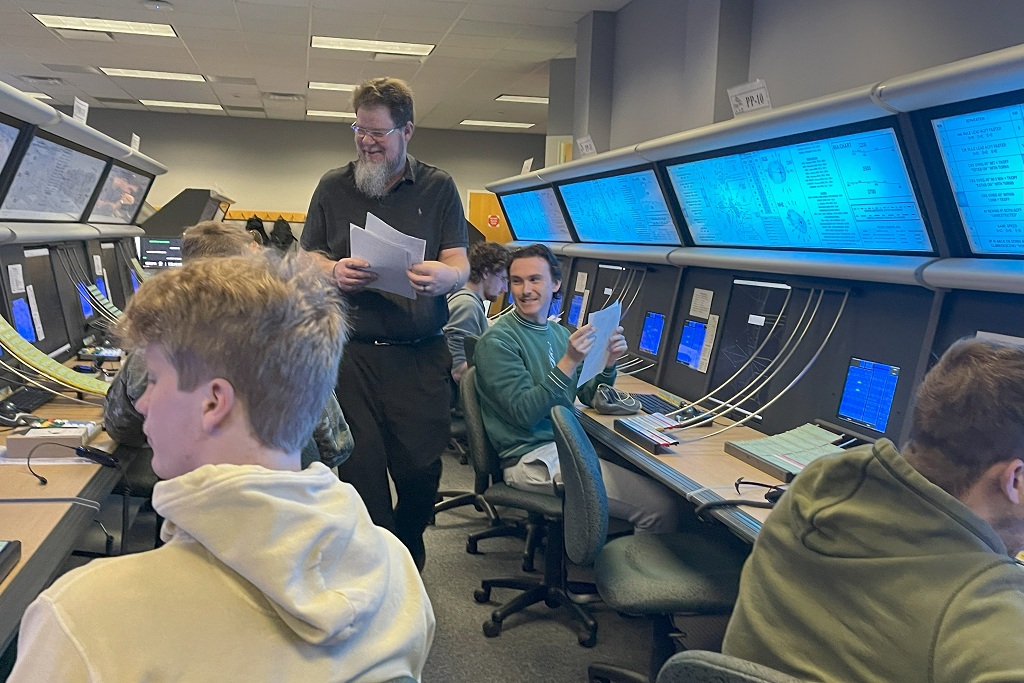
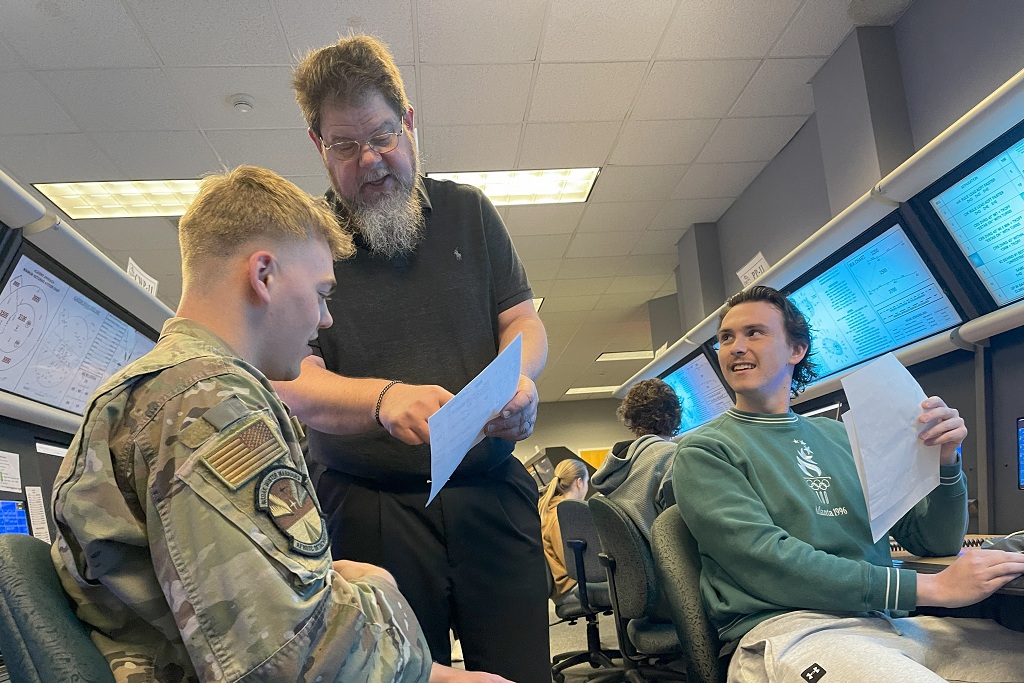
Carlson shares this commitment, though he arrived at it through a different path. After serving as an air traffic controller in the U.S. Air Force before joining UND’s faculty, he discovered that challenging students to find their own answers leads to deeper understanding.
“I found that if they struggle to find the answer, they really remember it a lot better,” Carlson says. “Most students do not like it at all in the beginning; but then by the end of the class, they appreciate it. They’ll grudgingly say they appreciate it.”
Ella Centolla, an Air Traffic Management major, agrees. “Professor Carlson excels at adapting to new technology while maintaining a strong foundational knowledge of the subject,” she said. “What really sets him apart is his ability to tailor his teaching to each student’s learning style and clearly explain complex concepts.”
One innovative approach shared by both educators is their use of UND’s Special Collections department as a living laboratory. Located on the fourth floor of the Chester Fritz Library, this resource provides students access to primary documents and artifacts that bring historical research to life.
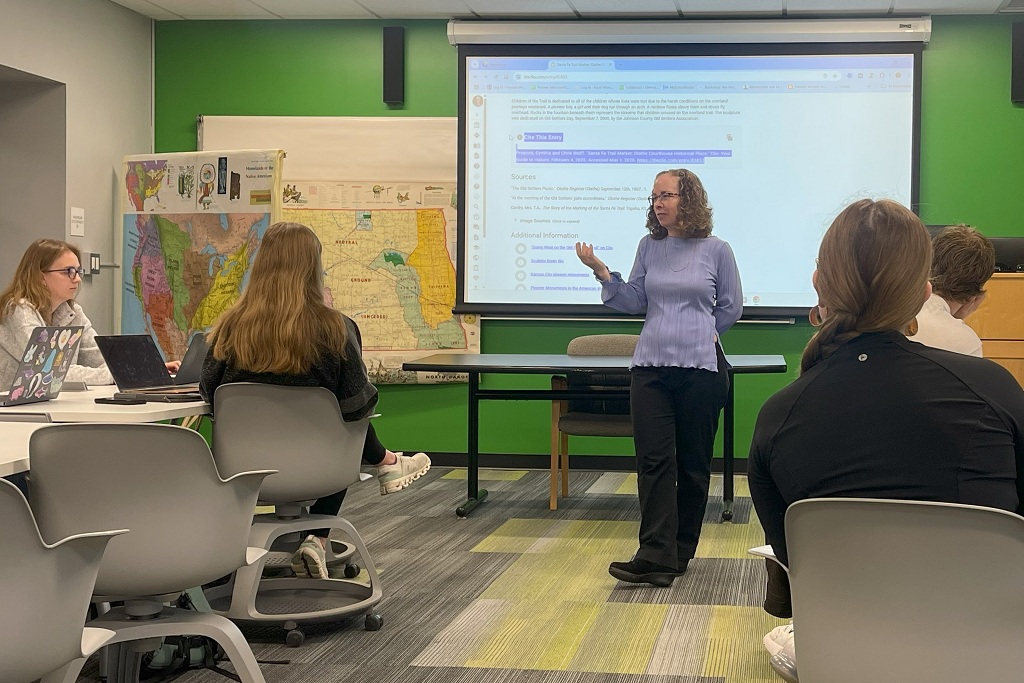
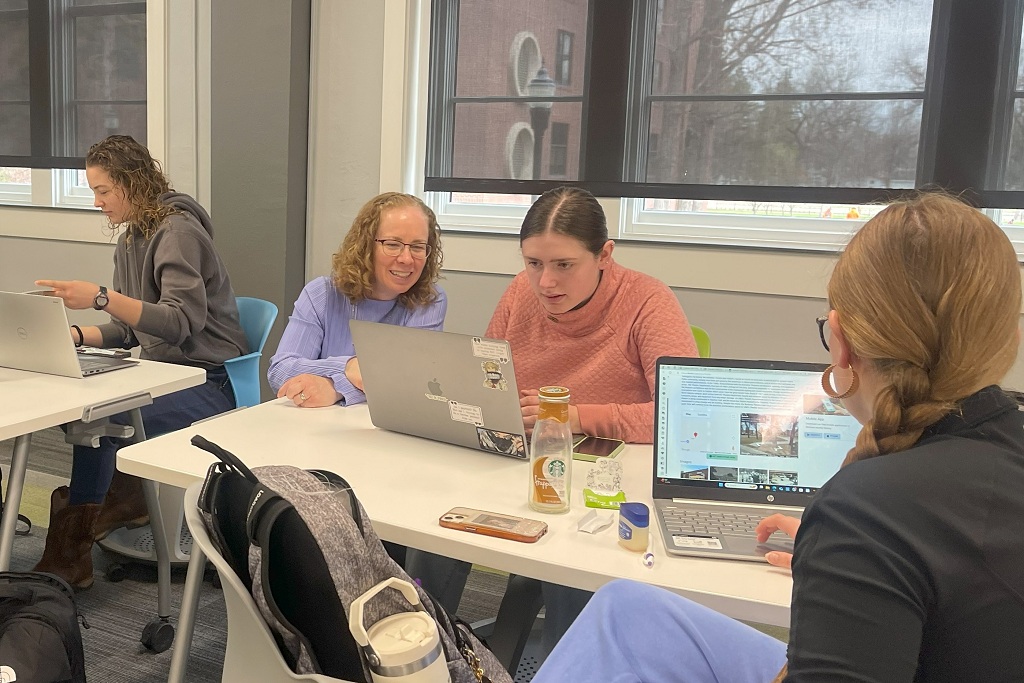
In Prescott’s History 253 course, “History of Stuff,” students progress from analyzing photographs to studying three-dimensional objects, ultimately researching local historic sites in Grand Forks using Special Collections resources. The final project involves creating entries for Clio, a public history website and mobile app, producing content that becomes part of walking tours of UND and Grand Forks that future visitors can access.
“To learn about working with stuff, why would we read about it when we can actually do it?” Prescott says. “Getting hands-on with artifacts encourages students to actually do the kind of thinking I’m trying to help them develop.”
Beyond traditional lectures
“Professor Prescott’s class stands out because it goes beyond traditional lectures,” enthuses Amelia Benware, a History major. “She transforms learning through innovative activities like creating museum labels, engaging in peer review and interactive discussions where students’ voices dominate. The out-of-classroom experiences, role-playing exercises, and even archaeological ‘trash can digs’ make history come alive in ways textbooks never could.”
Similarly, Carlson’s students dive into Special Collections to research historical factions from 1960s Grand Forks for their airport relocation role-play. “Some of them really got into it,” Carlson recalls. “They literally brought in signs … because they researched their faction’s history.”
The impact of these immersive approaches extends beyond mastering content to developing skills that transfer across disciplines. For Carlson’s aviation students, for example, role-playing and critical thinking exercises prepare them for high-stakes decision-making as future air traffic controllers.
“The intellectual challenge of having to represent a perspective different from your personal worldview can be really powerful,” Prescott notes. “It doesn’t mean you’ll change your mind about the issue, but it does make you think about it in a more complex way when you can understand where your political opponent is coming from.”
Both professors measure success not just in test scores but in lasting impact. “When they come out of this class and a year or two later say, ‘Wow, I still remember when we did that’ — that for me is a win,” Prescott said.
Their innovative approaches demand more from both students and faculty. Prescott evaluates reflective writing where students articulate how their thinking has evolved, while Carlson actively seeks constructive criticism to continuously improve his methods.
“Don’t be afraid to try something new,” Carlson advises other educators. “I think a lot of people get kind of comfortable in just doing the same thing and rolling it out every semester. But try to break out of that mold.”
Not just fun activities
Both educators credit UND’s supportive environment — including access to Special Collections and flexibility in course design — for enabling their innovative teaching methods. While their disciplines differ dramatically, their shared commitment to active learning transcends traditional academic boundaries.
“It needs to be motivated by meaningful learning objectives, not just fun activities,” Prescott emphasizes. “Think about how you can put students in authentic positions doing tasks related to the content you’re teaching them, empowering them to practice skills they’ll actually need beyond the classroom.”
As educational approaches evolve across disciplines, Prescott and Carlson show how innovative teaching can make any subject — from air traffic control procedures to historical monument controversies — relatable, intellectually challenging and professionally relevant. Through role-play, archival research and hands-on analysis of primary sources, they ensure that for their students, learning is an active and memorable journey rather than a passive experience.
About the author:
Nichole Dumlao is an Honors undergraduate student majoring in Psychology and Communication, with a minor in Substance Use and Abuse. She currently serves as a strategic communication intern in the Office of the Vice Provost for Faculty Affairs at UND.
After graduation, she hopes to pursue graduate studies to further her academic and professional goals.
####
>> Questions or comments about the UND LEADS Strategic Plan? Your thoughts are welcome! Please contact Ryan Zerr, associate vice president for Strategy & Implementation, or Anna Marie Kinney, coordinator of the University Writing Program, the co-chairs of the UND LEADS Implementation Committee. You also may offer your thoughts by visiting the UND LEADS Strategic Plan home page and clicking on the “Provide your feedback” link.
Thank you for your support of the UND LEADS Strategic Plan!