Service learning: UND professors, students make real-world difference
Adding community service to college classwork can greatly amplify students’ gains, professors say
By Alexis May
Student learning at UND isn’t limited to textbooks and lectures. For evidence, consider professors Ashley Fansher and Merie Kirby, whose hands-on, community-based projects challenge students to apply what they learn to real-world issues globally and in North Dakota.
Fansher, assistant professor of Criminal Justice, guided her graduate students through a service-learning project with MPOWA, a London-based investment firm. The students researched gender-based violence and made policy recommendations to guide MPOWA’s investment strategies in Kenyan initiatives, such as community support services for survivors.
Students also explored international cultures and policy, and learned to think critically about how ethical investment in anti-violence initiatives and grassroots advocacy can drive social change.
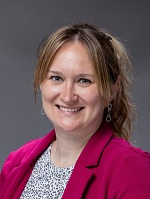
As Fansher explained, the goal was to create an impactful and practical learning experience for students. “MPOWA was asking for our students to write a report on gender-based abuse in Kenya, along with some policy suggestions, so they could work on investing money into those policies,” she said.
The project required students to dive deep into systemic challenges in Kenya, analyze research and recommend actionable and feasible solutions. It wasn’t just an academic exercise but a chance for students to contribute to lasting change, Fansher said.
By connecting academic work to real-world global issues, Fansher’s goal is to help students understand the value of their research beyond the classroom.
Fansher emphasized the importance of showing students that their ideas and voices can carry weight in international conversations, especially when aligned with partnering organizations serious about social justice and community investment.
Fulfilling responsibilities
The students’ work with MPOWA supported the firm’s mission to empower women and assist victims of violence, while also preparing students for careers in policy, justice and service. As one student described, the project was born from Fansher’s drive to offer students a more meaningful educational experience: “When Dr. Fansher brought up this project for our class, I was very excited because it’s not something I had experienced before,” the student said. “Usually, we have assignments to test our skills and comprehension, but rarely do we get the chance to make a real difference. This project did that.”
As a final project, the students were invited to present their findings directly to MPOWA in a Zoom meeting; the meeting included MPOWA team members on the ground in Africa, along with those in the United Kingdom and the Middle East. This connection created the potential for future collaborations, including work related to international sex trafficking and gender-based violence.
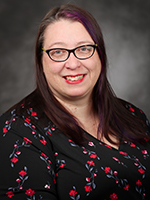
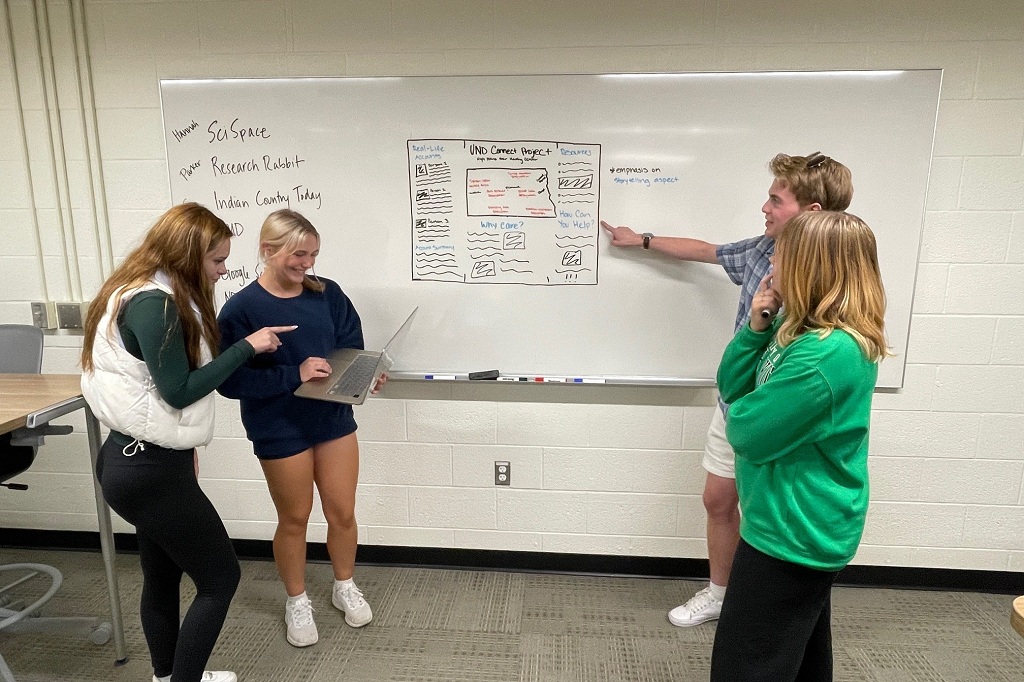
Merie Kirby, a teaching associate professor and the director of the UND Honors Program, brings service learning into her classroom by partnering with local organizations such as High Plains Fair Housing. As part of a UND CONNECT project, Kirby’s students create educational materials focused on housing issues that affect the Native American community, blending traditional academic research with community interviews and storytelling to promote fair housing awareness and advocacy.
Through UND’s Honors 260, a service learning course, students can earn credit for their community service efforts. Students who are already involved in volunteer work — ranging from tutoring and assisting in animal shelters, to working with Easter Seals or local health care facilities — can earn academic credit through structured reflection.
“We ask them to think deeply about their role in the community, their future profession’s impact, and how various groups work together to address needs,” Kirby explained.
By reflecting on their experiences, students connect academic learning with civic and professional responsibility. The community response has been overwhelmingly positive. “I’ve had people say, ‘Oh, that student helped my child with math,’ or ‘We adopted a dog walked by your student!’” Kirby said. These connections are helping UND students be seen not just as temporary residents, but as valuable contributors in Grand Forks and beyond.
Fostering community engagement
Both professors agree that service learning helps students find purpose in their academic journey. Kirby noted that many of her students begin with the mindset of “I know this is good for me,” but quickly shift to “I actually enjoy this and feel like I’m making a difference.”
That spark — seeing their work matter outside of class — is what she finds most rewarding.
In addition, these programs align with UND’s broader mission of fostering community engagement and student impact, the faculty members said. By creating opportunities for students to apply their skills in authentic contexts, Kirby, Fansher and others try to ensure that a UND education not only prepares students for the “real world,” but makes them an active part of it.
About the author:
Alexis May is a UND sophomore majoring in Communication and minoring in Sports Business. She is also a strategic communication intern for Faculty Affairs.