UND CONNECT: Native traditions come alive in fashion show
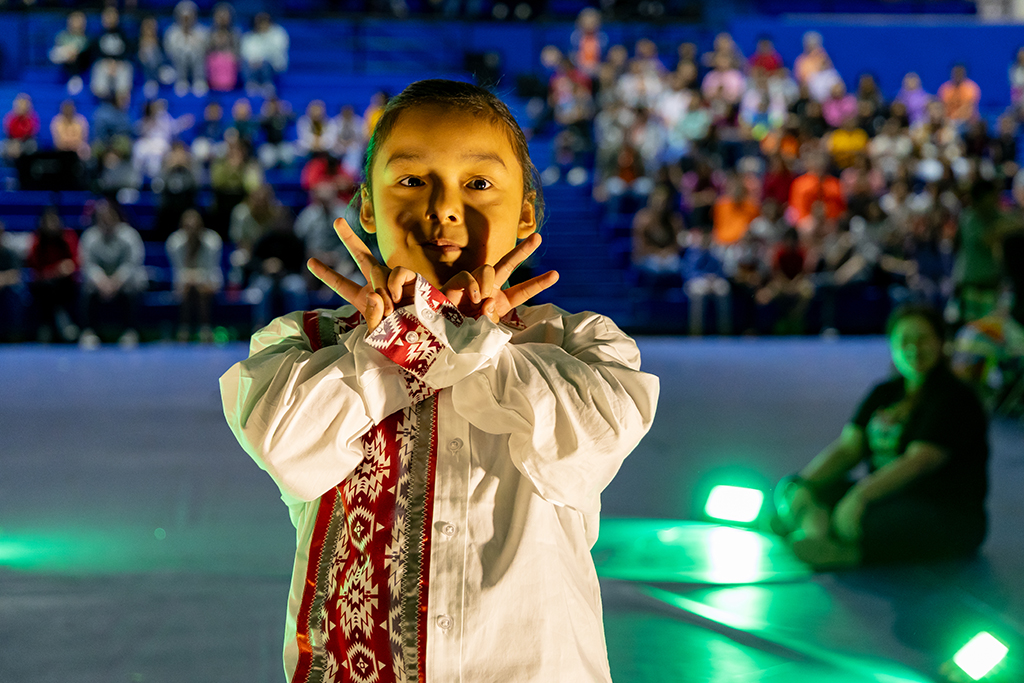
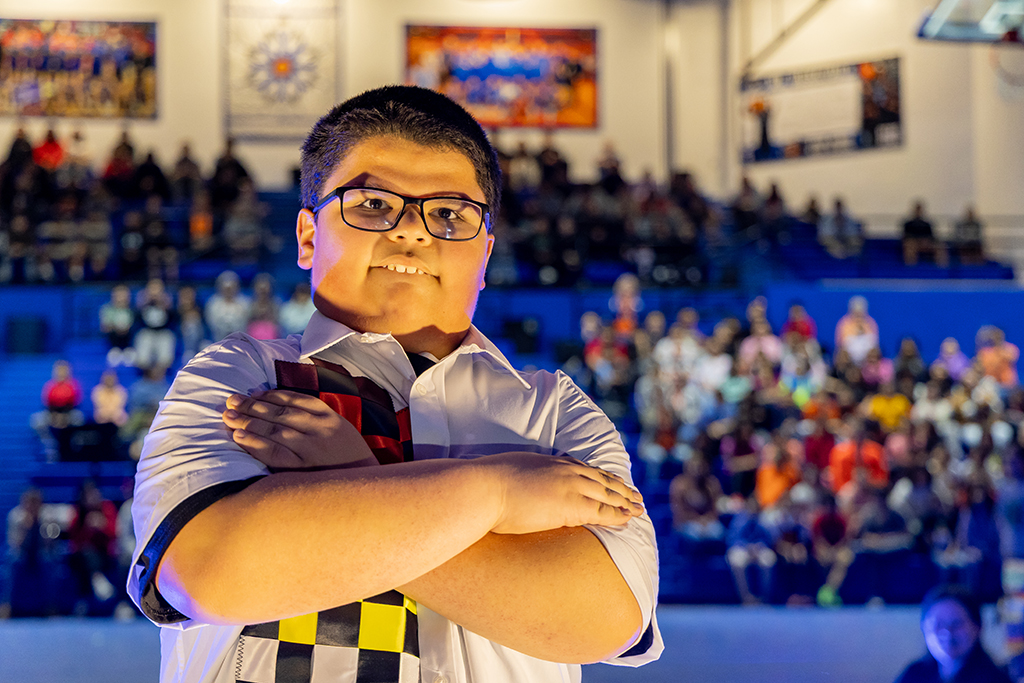
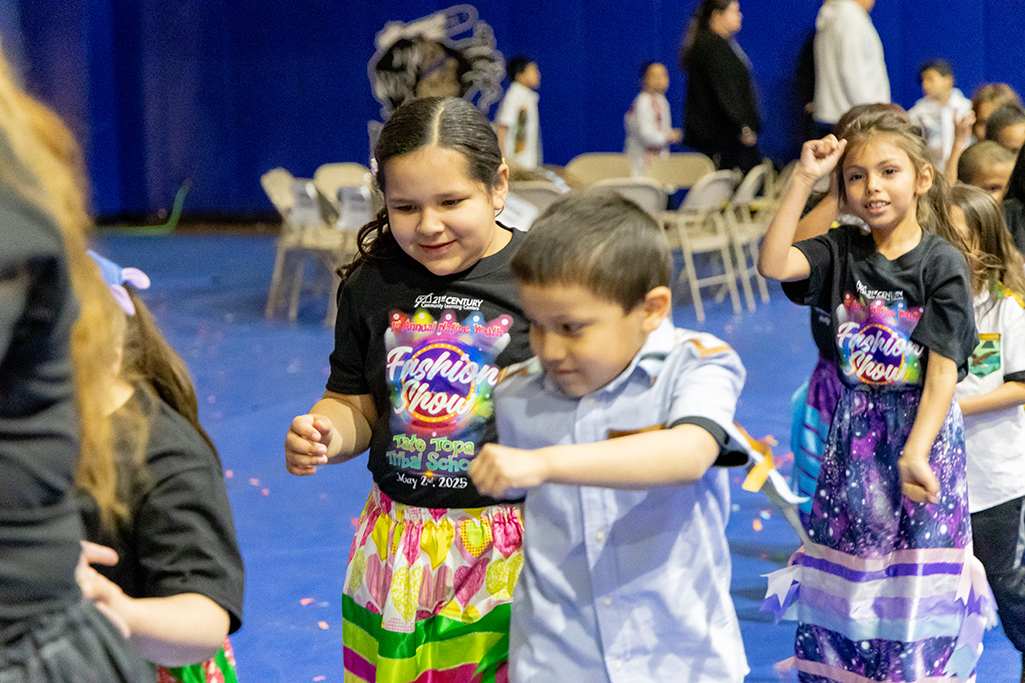
K-8 after-school program students model colorful ribbon skirts, shirts to wow crowd in fashion show, UND CONNECT project in Fort Totten, N.D.
“In Native American cultures, giving is a sacred act that reflects respect, community and balance. Through ceremonies and everyday acts, giving strengthens relationships and honors one’s role within the great circle of life.”
That’s according to ChatGPT.
* * *
Ask educators in Fort Totten, N.D., and they’ll tell you it’s that very same act of giving selflessly of one’s time, treasure and talent that got the first-ever 21st Century Native Youth Fashion Show started.
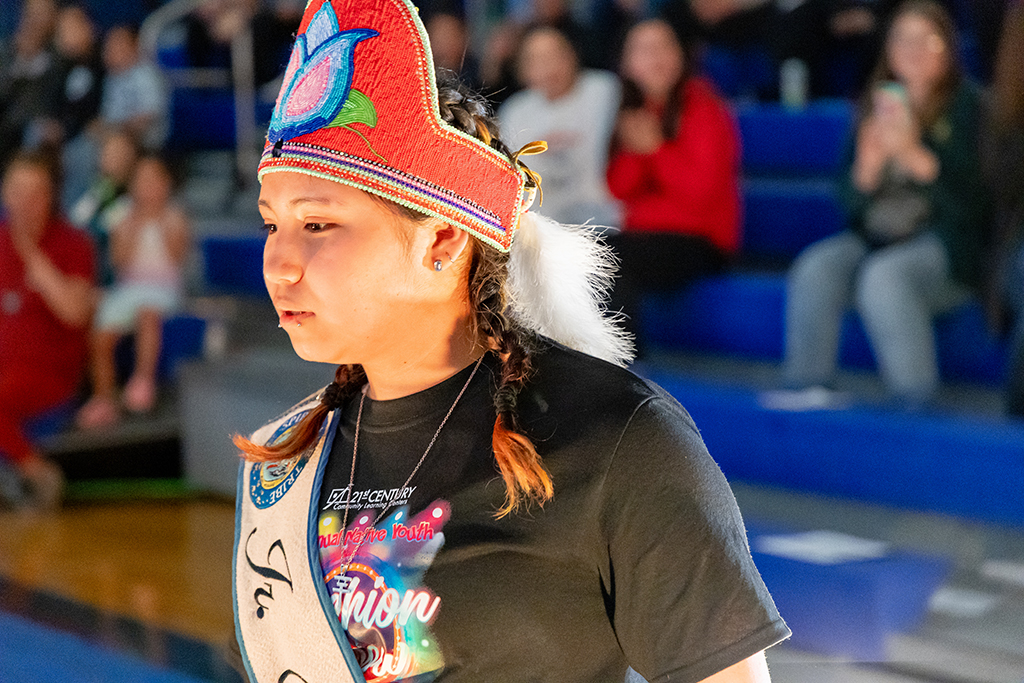
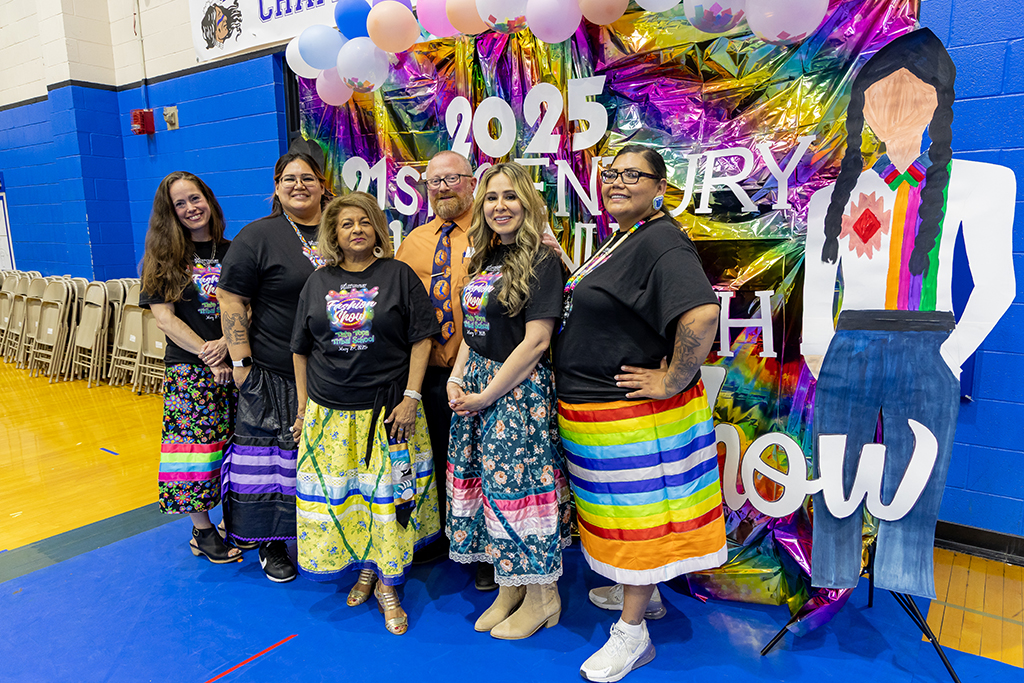
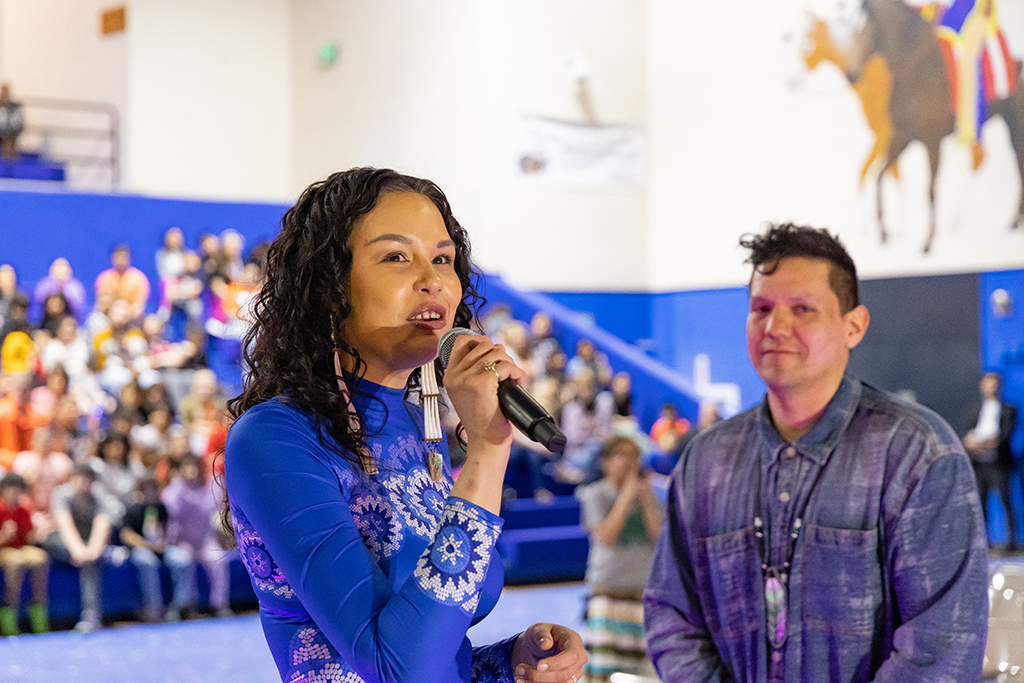
Recently, a crowd of nearly 300 family members, friends, educators, tribal and state dignitaries stretched far into the upper decks of the Four Winds High School gymnasium to celebrate Indigenous culture with a high-energy parade of ribbon skirt and shirt regalia.
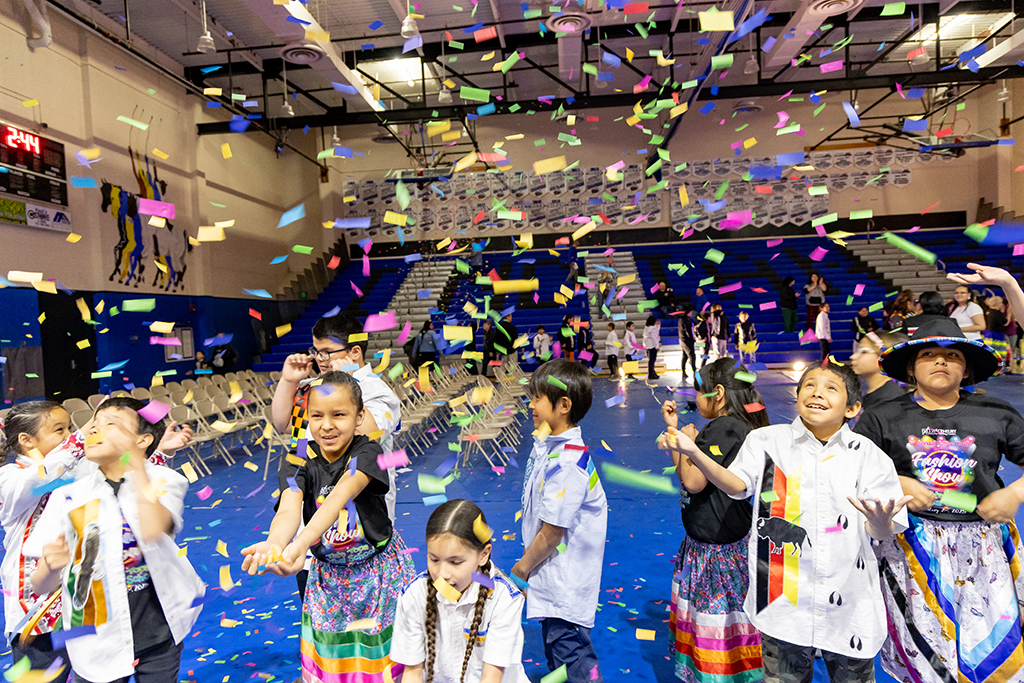
The music was pumping, the confetti was flying and the grandparent paparazzi were going wild as nearly 100 students from the Tate Topa Tribal School’s K-8 21st Century after-school program shuffled into the gym one by one to strut their stuff, hit their marks and strike a pose (or two) in front of the flashing cameras.
Mena de la Paz, fourth-grade teacher and director of the after-school program, described the afternoon as pure joy.
“It made my heart so happy to see the drum group singing and the children coming out to show how proud they are to be Indigenous and to be Dakota,” De la Paz said.
“At one point, we were made to feel ashamed of being Native Americans, so it’s incredible to be able to revitalize that sense of culture, pride and identity through these beautiful ribbon creations and prayer songs.”
Big show sparked by a little kindness
The whole extravaganza, which also featured a glamorous international fashion model with Spirit Lake roots, was made possible through countless volunteer hours and the help of a UND CONNECT grant, De la Paz said.
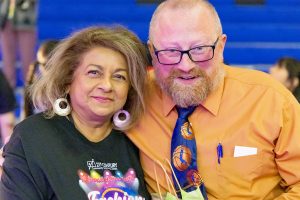
Renuka de Silva and Julie Robinson, assistant professors of Teaching & Leadership in UND’s College of Education & Human Development, wrote the grant proposal and collaborated on the project from beginning to end.
The purpose of the UND CONNECT mini grants is “to inspire a sense of wonder, a love of discovery and a commitment to serve while engaging in collaborations that serve the evolving needs of our people, tribal nations and the state of North Dakota.”
This project would bring in Native elders to share the history of the ribbon regalia, and participants also would get an eagle-eye view of what it was like for one woman to design and create the clothing in her own cottage business.
Preliminary plans to foster cultural knowledge, Dakota identity and pride definitely fit the bill, but everyone involved agreed the final outcome exceeded all expectations.
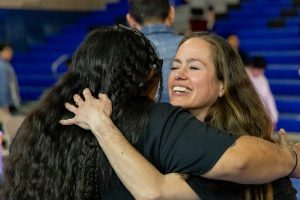
“Truthfully, this is the brainchild of Mena de la Paz and the UND professors,” Principal Byron Engberg said. “They did an outstanding job of bringing culture into an after-school program that doesn’t ordinarily incorporate culture. You could see the passion in creating all the regalia and hear it in the screams from the crowd.
“The whole experience really helped the students make a deeper connection to their culture, and that’s so incredibly important no matter who you are. We need to take care that our culture doesn’t evaporate through the generations. I’m pretty confident this group is going to continue to take pride in who they are. The kids loved it. The teachers loved it. It was a fantastic outcome.”
From a single stitch to the stage
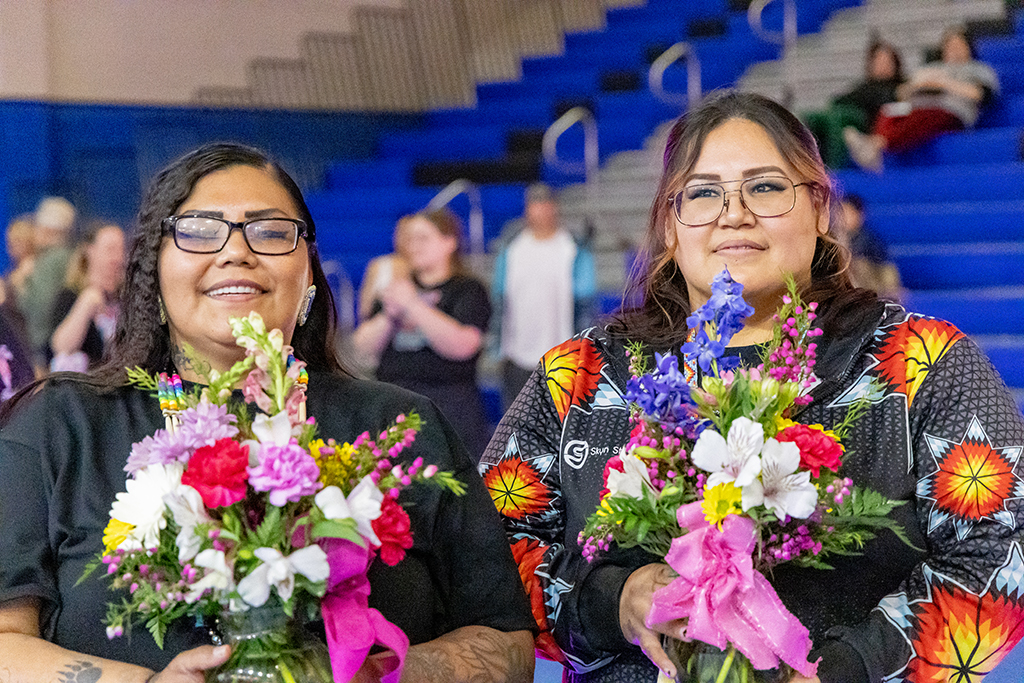
Probably no one found that to be more true than Lorena Brown-Joshua.
The mother of nine and paraprofessional, substitute teacher and bus monitor at Tate Topa Tribal School, said she didn’t quite know what she was getting herself into when De la Paz first approached her last December.
De la Paz had a favor to ask the talented seamstress who was known for gifting her handcrafted ribbon skirts to girls who didn’t have one of their own to wear during the school’s annual Ribbon Skirts & Shirts Day.
Generally, the colorful clothing is worn during cultural gatherings and special events to signify resilience and celebrate Dakota identity.
“It’s such a special part of our culture, but not everyone has the means to make or buy their own,” Brown-Joshua explained.
Depending on how fancy you go, the price of a handmade ribbon skirt for girls averages $60 to $80, and women’s skirts can sell for as much as $250, she said.
“I just never wanted anyone to feel left out, so I started fixing up the ribbon skirts at home, bringing them to work and passing them out,” Brown-Joshua said. “I guess the colors and details of my work must have caught Mena’s eye because she asked me how I’d feel about making ribbon skirts and ribbon shirts for all of the 21st Century kids.”
With about 75 students enrolled in the after-school program at the time — that number soon would grow to almost 100 — De la Paz admitted it was a big ask. Even so, Brown-Joshua quickly agreed.
It was doable, she thought. After all, fellow colleague and Dakota culture teacher Leora Fox-White was working on a similar project of her own. She also had been making stacks of ribbon skirts to give away at school, and now she was sewing both skirts and shirts for all the students in the boys and girls drum groups.
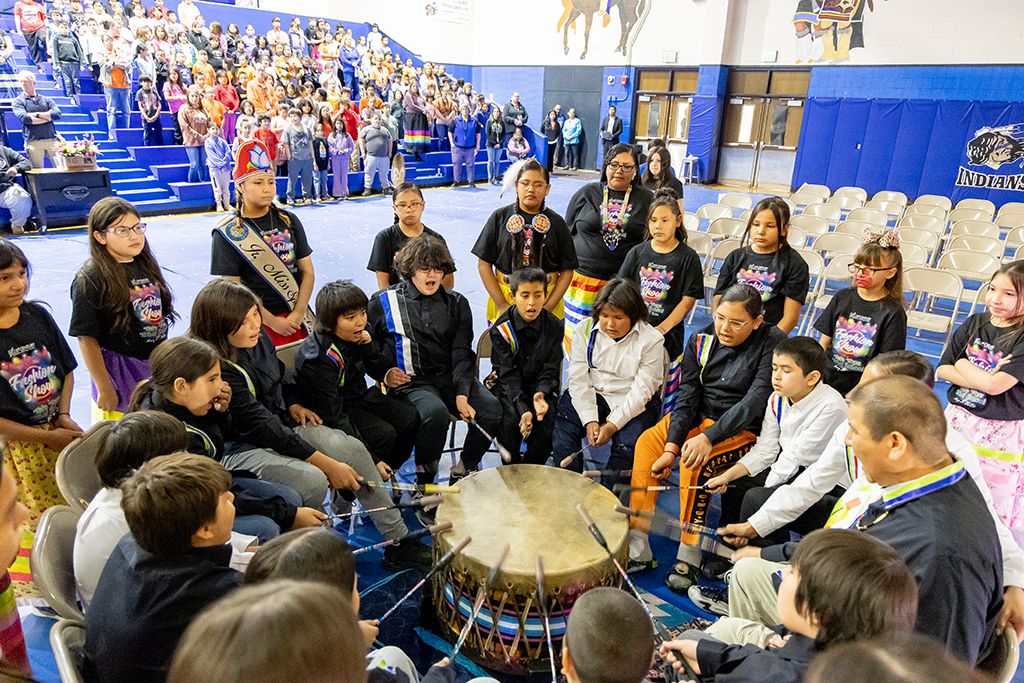
The school recently had been able to re-establish the drum groups — which had gone dormant after instructors retired — thanks to a grant from the North Dakota Consensus Council.
Project gets bigger after UND CONNECT call

“Originally, my plan was going to be just a basic skirt, maybe four or five ribbons stacked, a quick zip and done,” Brown-Joshua said. “The same with the shirts — three or four ribbons — zip, zip, zip.”
But that idea soon changed when De la Paz and Principal Engberg got the call from UND. And then again when the school bus driver casually mentioned that his granddaughter, Paige Dauphinais, recently had modeled Indigenous designs at New York Fashion Week.
“We were just talking about the project, and he pulled out his cellphone and showed me a picture,” De la Paz said. “That’s when a light bulb went off. That’s it! That’s what we’re going to do for our end goal. We’ll host a community fashion show to showcase all the beautiful ribbon designs by Lorena and Leora.”
Now the pressure was on.

“Forget the basics,” Brown-Joshua said. “I better sprinkle in some pizzazz, add some oohs and aahs and some real jaw-droppers, too.”
From January until two days before the show, that’s just what she did — almost every evening, every weekend and in the wee hours in between.
And the results of her detailed designs — not a single one alike — certainly did not disappoint.
“I was mesmerized by the whole show,” de Silva said. “It was beautiful. I just don’t know what other words to use.”
Added Robinson: “And Paige was absolutely amazing. She had the kids in the palm of her hand.”
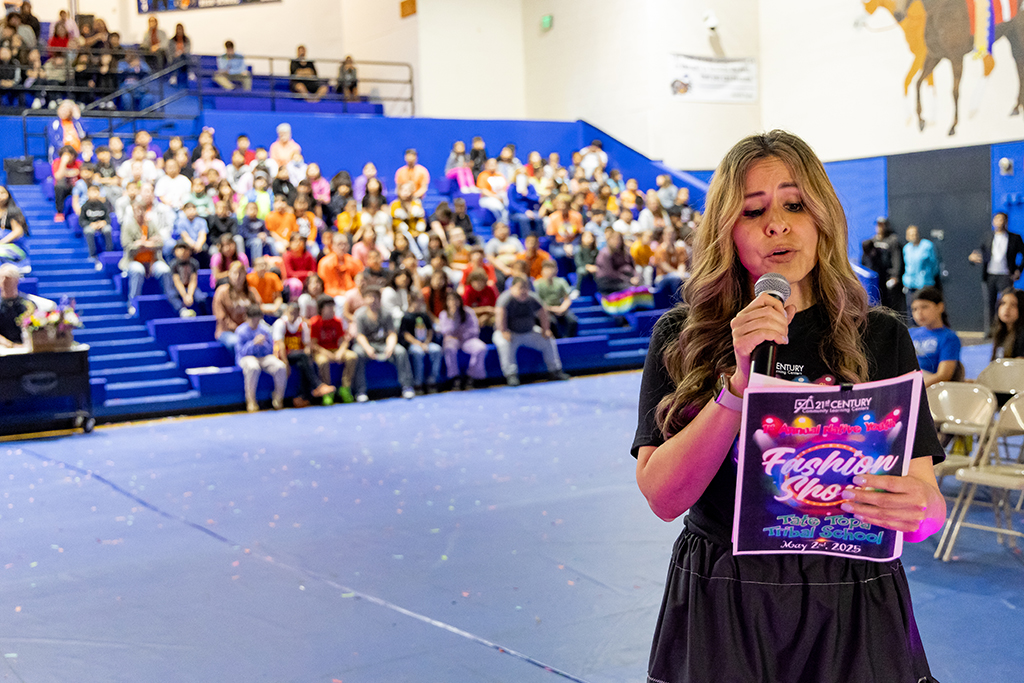
Dauphinais, who earlier had conducted a modeling workshop with the students, returned for the day of the show, along with her hip-hop artist fiance Stuart Lohnes, who acted as emcee for the event. Dauphinais is an independent model who’s worked all across the U.S. and in London. (At the show, she wore a gown by Indigenous designer Kayla Lookinghorse.)
“This has meant the world to me because my whole goal in wanting to become a well-known fashion model was to bring it home and inspire my younger cousins and the next generation,” Dauphinais said. “I wanted them to know their horizon is endless. I tell them, ‘Don’t let anyone put you in a box because you can do absolutely anything.’”
From the start, Dauphinais said some of the students were naturals, demonstrating graceful poise and perfect pose alike. And after a pep talk and a little confidence-building, even the shy ones put on the shine.
“Now, I’ve got competition for sure,” Dauphinais said with a laugh. “I’m like a proud mama today. It’s so incredible to see them smile and become these little butterflies. It’s so inspiring.
“Our culture once was taken from us, so it’s our job to embrace it and take it back. I love seeing our traditions coming back to life now in full force. That’s how we become whole and truly ourselves.”
And young model Walutawi Herman — aka Junior Miss Spirit Lake — seconded that with a little advice of her own: “Be proud of who you are. There’s nothing really to hide. It’s you. Be proud of the culture you represent.”
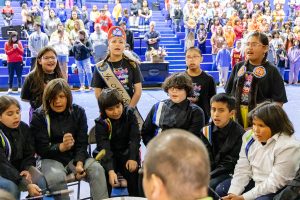
>> Did you miss it? Don’t forget to click on the large photo of the drum groups to hear the music in a slideshow format.
>> Do you want to read more UND Today stories? Just hit the link or go to our home page to subscribe to our twice-weekly newsletter.