UND CONNECT project tackles teacher burnout
Project brings teachers together to reduce burnout through coping skills, peer support
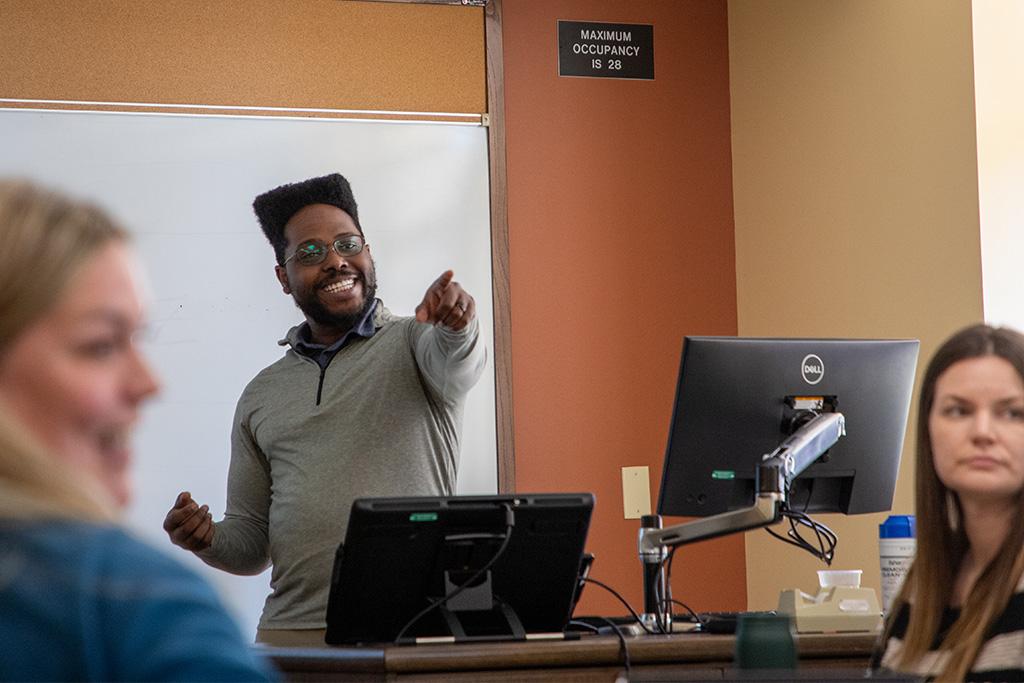
Some seemed tense and others tired on April 12, when a group of local educators sat in a classroom in the UND Education Building and talked quietly to one another.
But perhaps the reactions were understandable, given that the spring semester was well underway, and the topic of discussion was burnout.
Burnout is an occupational hazard for teachers. Managing classrooms, creating lesson plans and navigating administrative duties can take a serious toll — especially when time is short and pressures are mounting.
But Assistant Professor of Counseling Psychology Akorede Teriba has a plan to mitigate some of the negative effects of stress and burnout for local educators.
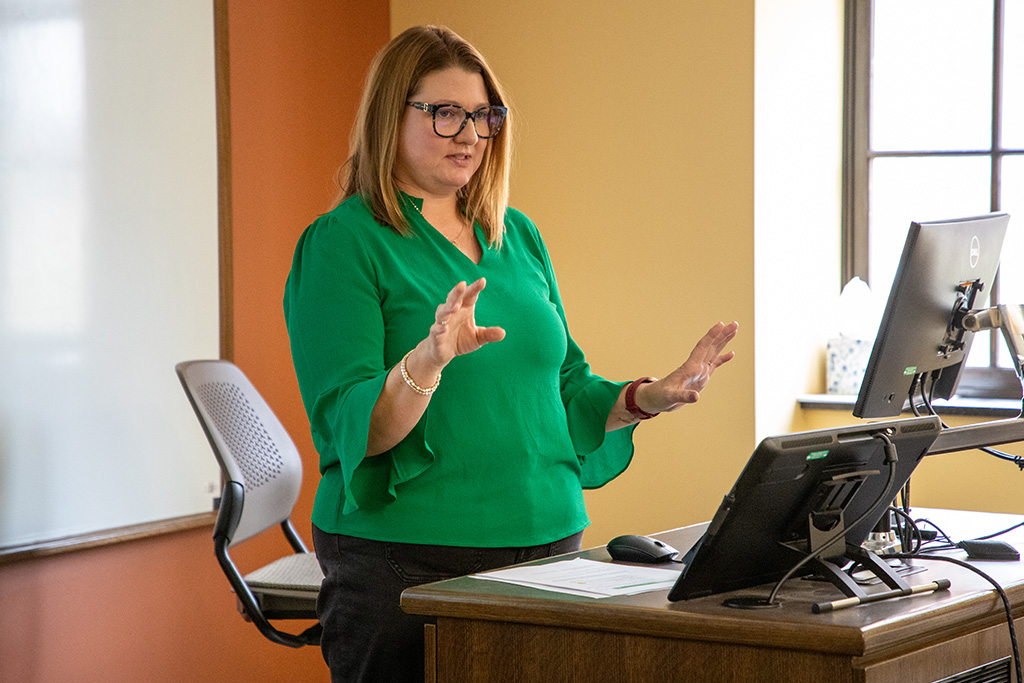
The Grand Forks teachers mentioned above were attending a five-hour workshop facilitated by Teriba and other faculty from College of Education & Human Development. The session focused on real-world strategies for dealing with professional stress — everything from communicating better to setting boundaries and, above all, supporting one another as colleagues.
“This is a dual approach,” Teriba explained. “If we can support the teachers while also addressing the systems that they work in, we can make a difference for students and teachers.”
The program is part of Teriba’s UND CONNECT initiative, “Decreasing Teacher Burnout Through Action Research,” which emphasizes peer support and personal care as crucial factors in teacher well-being.
“We’re teaching teachers how to be there for each other,” said Kathryn Ellingson, a counseling psychology student and advisee of Teriba. “Teachers need support, and sometimes you’re only able to get that from other people in the school system.”
Taking the hybrid approach
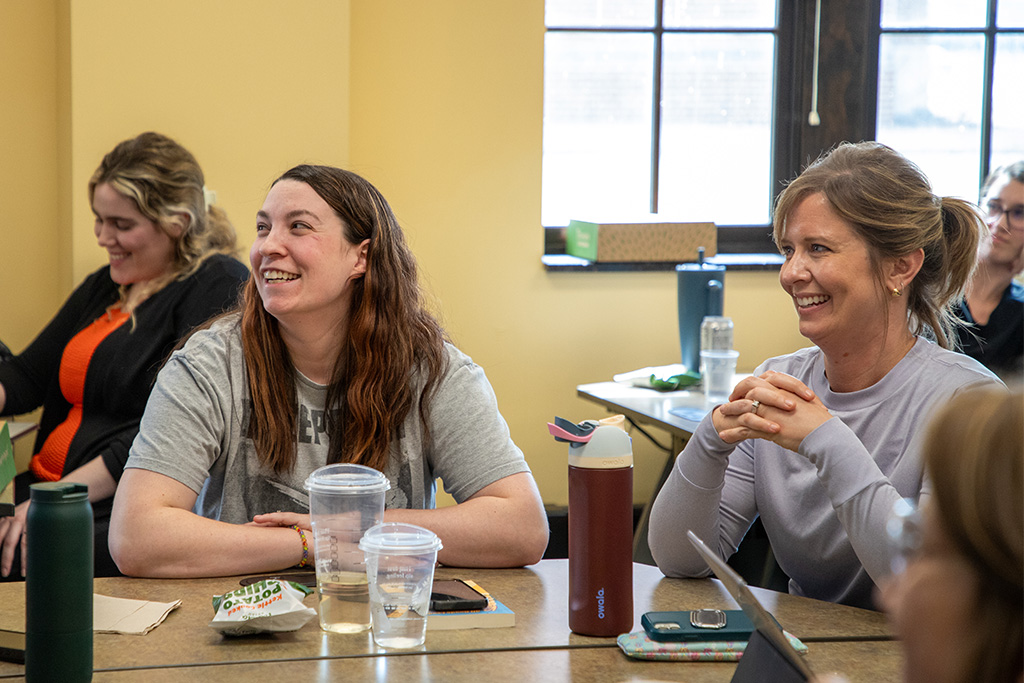
“Even before the training started, they were validating each other’s experiences,” Ellingson said as she recalled watching the teachers connect before the workshop began.
This was by design, Teriba said, as the workshop was conceived to use a hybrid approach — part peer-support group, part professional development. While Teriba and his colleagues at CEHD would give discussion prompts and exercises, they also gave teachers time to connect and discuss.
As the teachers discussed their personal experiences, common themes began to emerge. And, while Teriba anticipated some commonality, the extent to which the teachers were able to relate to each other surprised him.
“We did anticipate some similarities in their experiences, because we know that burnout is common among teachers,” Teriba said. “What I didn’t expect was how common some of these experiences were and how many of them would be at the core of being a teacher, how much there would be this shared experience.”
Miscommunication and interpersonal friction, the emotional toll of having difficult conversations with students and challenges separating homelife and work were common issues the teachers cited as contributing to burnout.
Another member of Ellingson’s cohort and fellow advisee of Teriba, Amber Peterson, emphasized the impact of social media on the well-being of teachers. It can, she said, create a culture of “toxic positivity,” which further alienates teachers who are struggling.
“It’s not showing the burnout,” she said. “It’s not showing the teachers who’ve been in the system for 10 or 15 years who are experiencing stress and burnout. During our breaks here, I’m already seeing that they’ve learning things from each other, sort of creating a community.”
As Ellingson suggested, the workshop created a space where teachers could share their feelings and experiences without fear of judgment. One could almost see the tension lift from their faces as they realized this was a place where their concerns wouldn’t be dismissed.
Such relief was essential to the UND CONNECT project, Teriba said.
“Allowing them to talk about things that are difficult can really help. It gives them hope, and hope lets individuals really imagine a better future, even if they’re struggling at the moment,” he said.
“It’s important for teachers to know they can have these conversations.”
Getting ahead of teacher burnout
Callan Bruce, a multilingual-learner teacher at Central High School, attended the workshop out of a sense of foresight.
“I’m a young teacher, and I don’t feel like I’ve reached the point that some teachers have just yet,” Bruce said. “I think I wanted to go to this workshop as a way of getting ahead of the burnout. I wanted to learn this now so I know how to handle things and avoid the point that some teachers get to.”
Bruce, who returned to teach at her alma mater after years of living outside the state, said the workshop reminded her that everyone in education deserves a little grace.
“Give yourself the grace that you give to other people,” she said. “Sometimes I’ll think, ‘I can’t expect too much from this teacher because they’re overworked right now,’ or ‘I can’t work this kid too hard today.’ I need to remember that I deserve that, too.”
At the end of the workshop, teachers were paired with one another and arranged for biweekly meetings to talk about how they’re applying what they’ve learned. Though this peer support component will serve as the bulk of the UND CONNECT project, Teriba says he hopes this is only the beginning of something that will expand in scope.
“Part of this project was to help teachers better support one another. But as I’ve learned from listening to them,” he said. “It’s evident there are systemic issues as well.
“It’s the administrative responsibilities; the limitations on schedules and the timing and nature of evaluations that are major contributors to burnout,” he added. “These are external things that deeply impact the teachers’ experiences, both in and out of the classroom.”
Teriba referred to their current intervention project as a “pilot program,” and he envisions their intervention workshops expanding beyond Grand Forks. Teriba said they can use what they learn from the UND CONNECT group to implement plans for statewide — possibly even national — programs.
“As a faculty member at UND, the hope is to kind of put Grand Forks and the University on the map,” he said. “If folks across the state and other places in the country can use what we’re learning and developing and we can reach teachers all over, we’ll take that as a win.”
>> Do you want to read more UND Today stories? Just hit the link or go to our home page to subscribe to our twice-weekly newsletter.