From script to stage: ‘The Addams Family’ brings the dead to life
A behind-the-scenes look at the work that brought UND Theatre’s “The Addams Family” from auditions to opening night
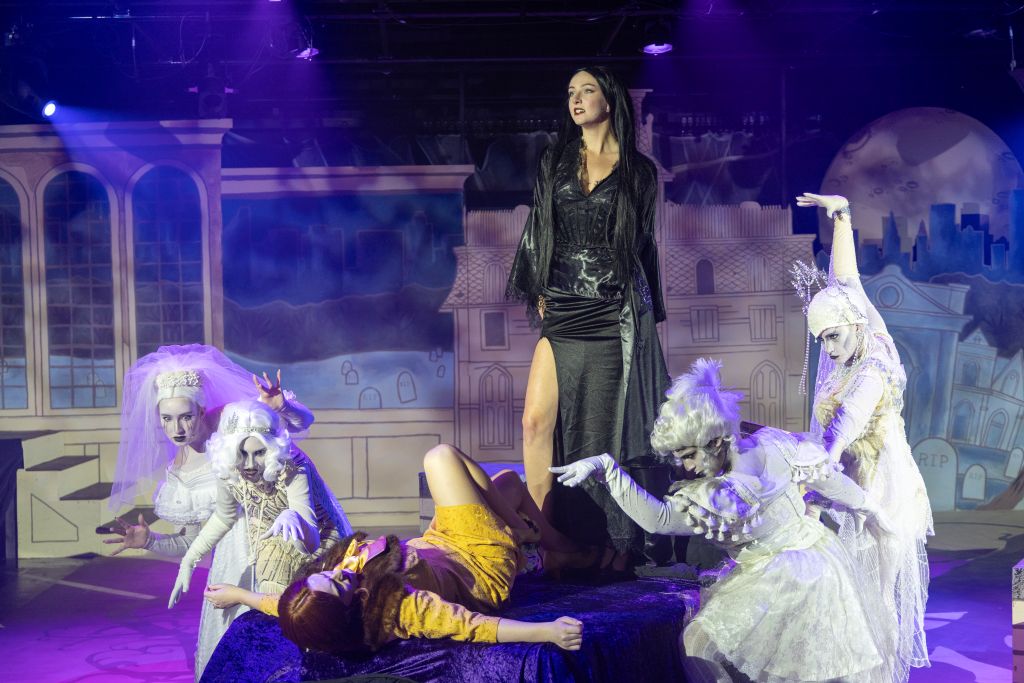
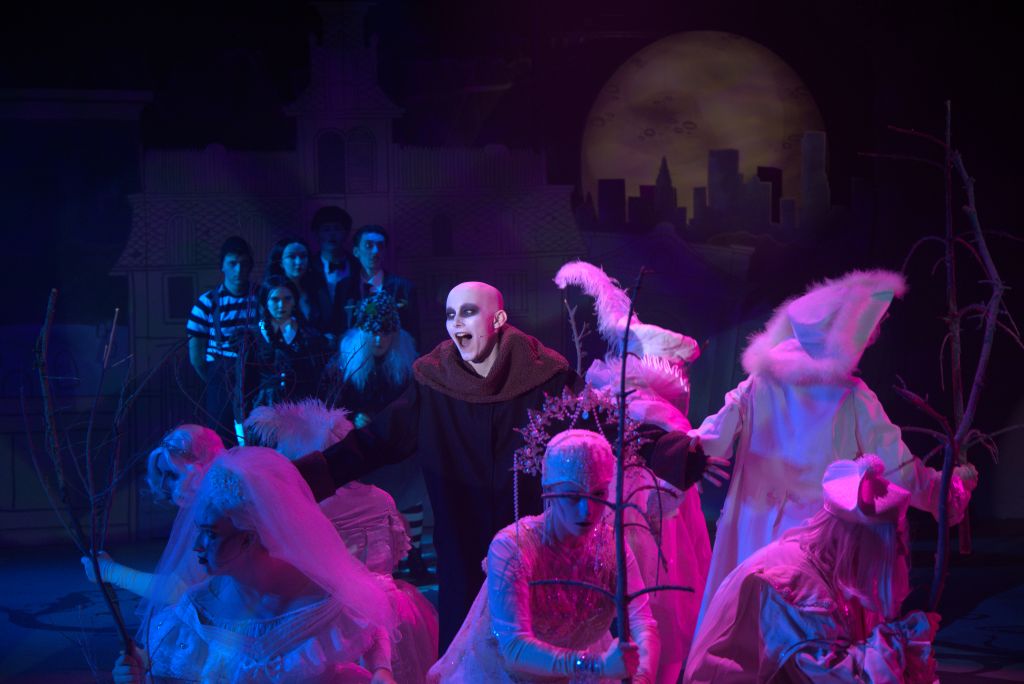
Bringing the dead to life takes a lot of work. For the actors portraying the Ancestors in UND Theatre’s “The Addams Family,” that meant learning to inhabit bodies caught somewhere between the weightlessness of ghosts and the stiff angles of rigor mortis.
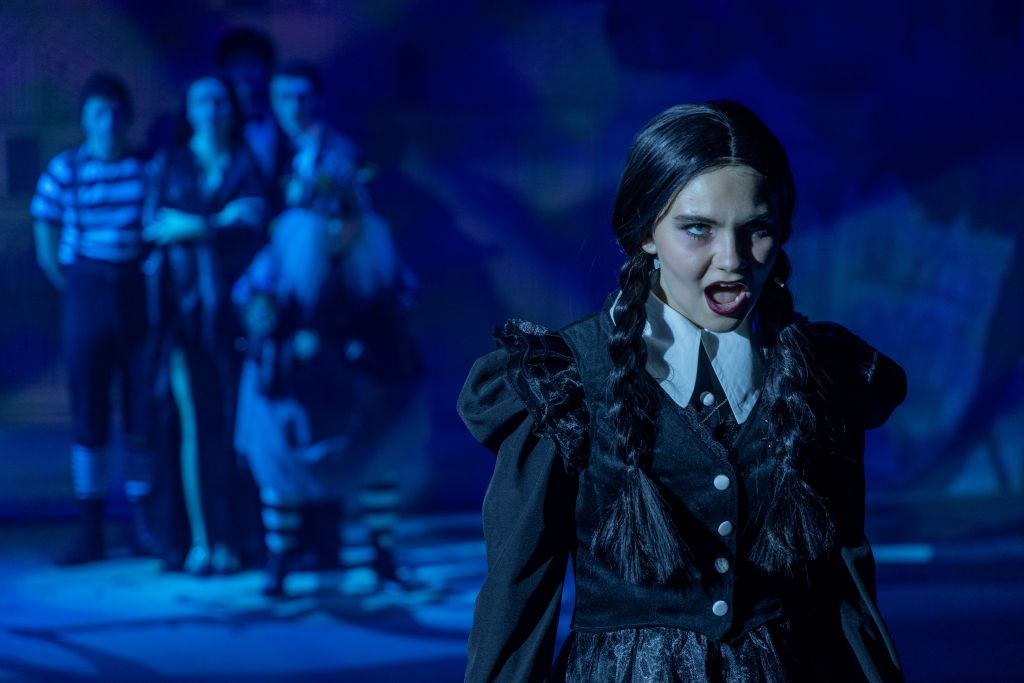
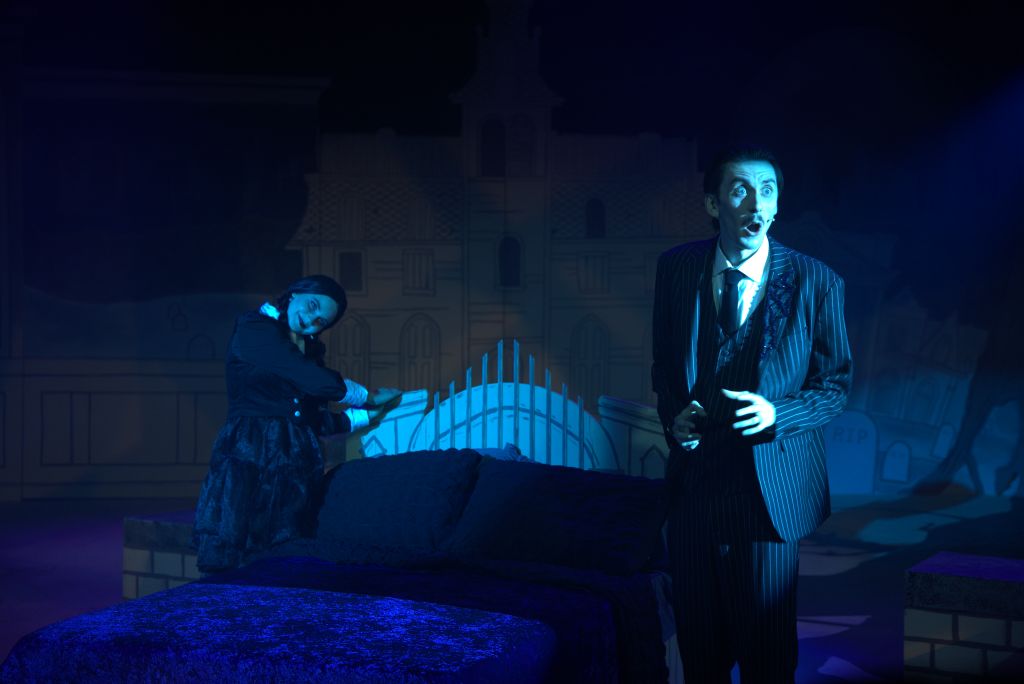
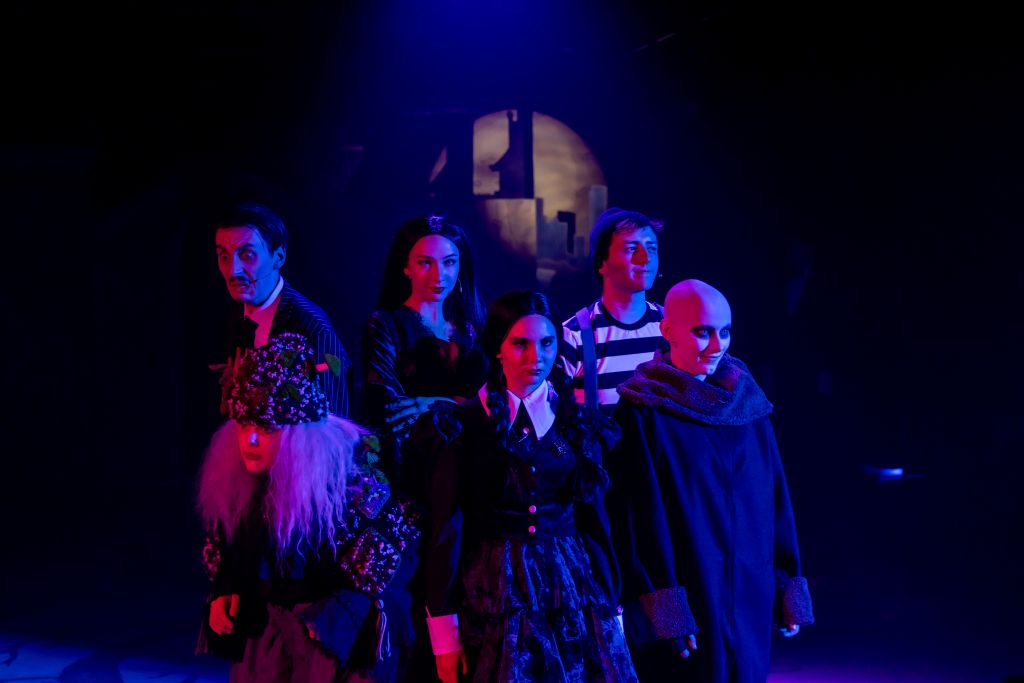
The living members of the family had their own quirks to develop. Morticia, Gomez, Wednesday and Pugsley needed to make the macabre feel as familiar as a family dinner.
“Darkness and grief and unspeakable sorrow,” Morticia, played by Madi Watts, said, as familiar snaps echoed through the theater.
Such are the comforts of the Addams household, brought to life on Starcher Stage in early October. Affection takes a grisly turn, but beneath the morbid humor is a familiar devotion.
“Because living or dead, family is still family,” Morticia said. That statement was tested in the play when Wednesday, played by Isabella Voller, falls in love with Lucas Beinecke, played by Mirko Drago, and brings his decidedly more conventional family home for dinner.
Some assembly required
As auditions for the production began, it was off to the races for everyone involved. Work began on everything from set construction and choreography to lighting and costumes. A new space brought new challenges and a household’s worth of peculiarities to perfect. Students from Intro to Theater Arts assembled scenery with wheels and painted the lurid details that would make the Addams family feel at home.
While students pieced together the family’s surroundings, Emily Cherry Oliver, the director, was discovering who would inhabit the space. Having directed “The Addams Family” before, she knew of its humor and its charm. Auditions gave her a chance to see what a new cast might bring to the oh-so-familiar characters.
One audition that stood out was Bethany Shipley’s, who tailored Fester. The role is typically played by a man, but Shipley’s interpretation prompted Oliver to reconsider that expectation.
“Bethany nailed the audition,” Oliver said. “It made me reconsider the role and how it could be cast.”
Once the actors were selected, they jumped right into rehearsals. By the end of the first week, they gathered for a read, getting acquainted with one another and the delightfully morbid family they were about to become.
As their characters continued developing throughout rehearsals, Oliver reminded the actors of the Addams family’s cartoon origins and encouraged choices as exaggerated as the family’s affections.
The actors needed to be “brave enough to fail in rehearsal, because that’s when creative choices surface,” Oliver said.
For the Addams family, the abnormal was a part of everyday life. The actors had to find that same ease in their characters. And on Starcher Stage, the family had company on three sides. The intimate black box placed audiences close to the actors, making moments when characters spoke to the audience feel like a personal invitation into the Addams household.
“Some of the script has direct address to the audience, and having the audience so close gave us more opportunities to connect in unique ways,” Oliver said.
The Ancestors helped sustain that connection. They enhanced the mood and moved scenery between scenes, carrying the production forward while remaining inhabitants of its world. Oliver chose to incorporate them into some moments where the script did not originally place them. Their presence helped round out the storytelling, giving the dead something to contribute beyond an eerie appearance.
Their animated expressions were essential when another character held the audience’s attention. Oliver credited the department’s acting training with teaching students that they remained part of the story wherever the focus fell.
Pulled in a new direction
For Choreographer Emily Wirkus, inspiration came from the drape of old cobwebs and bodies bending and stretching like branches of old trees. She also looked at Latin dance styles, developing movement that could be beautiful and grotesque all at once.
For the Ancestors, the work began in the new Movement Studio in Starcher Hall, where mirrored walls allowed actors to watch themselves experiment. Wirkus demonstrated the qualities of movement and then helped students find versions that worked in their own bodies. They were gradually building confidence in gestures that were meant to look anything but ordinary.
“It is absolutely magic to experience to see what once were daydreams in your head and on paper come to life,” she said.
Each Ancestor developed a distinct presence. Students drew on their characters’ eras and costumes, contributing their own physical skills and behaviors to the choreography. Wirkus described a collaborative process, with actors building on her choreography to find movements that served the story and showcased their abilities.
With audiences seated on three sides, Wirkus discovered that some choreography gave one section a better view than the others. So, she took the movements developed in the studio and added another dimension.
In “Crazier Than You,” the two couples began orbiting one another as they confessed their love. In the number “Tango de Amour,” the steps took on a more prowling quality, rotating through the space “like a lion might circle their prey,” Wirkus said.
Those adjustments gave more viewers a share of the flirtation, tension and storytelling unfolding between the characters.
“It’s always so satisfying to see the choreography transform with just a few simple edits, like painting the space with more depth of movement,” Wirkus said.

Dressed to distress
In costume designer Amy Lyste’s shop, the family’s world was taking shape in fabric. Preparations reached from collars to soles. Costume sketches shared space with fabric samples, while star-speckled tulle, sequins and white lace crowded work surfaces. Pale costumes waited patiently on a nearby racks for the Ancestors who would wear them.
Cobweb details connected the family’s costumes, giving its members a shared touch of “neglect.” A student within the costume shop carefully hand-embroidered the beaded webbing, making even neglect a labor of love. Another talented student crocheted Grandma’s granny-square cardigan by hand.
Morticia’s handmade, floor-length black gown carried a surprise of its own: a reveal with a higher slit and a flash of purple beneath it. For a matriarch with a flair for the dramatic, the detail was worthy of a little extra attention.
Wednesday’s yellow dress made a different kind of entrance. Using the bodice of her black dress as a guide, the costume team created a yellow replica. For a family accustomed to darkness, dressing for dinner in a bright color was its own unsettling development.
The characters took shape one stitch and fitting at a time. Once the costumes reached rehearsal, the actors could discover how their clothes moved with them. Wirkus saw the difference on the first day costumes were added, particularly among the Ancestors. Their appearance and movement of the fabric supplied what seemed to be a missing piece.
“You saw each and every actor get lost in the joy of the movement in new and exciting ways,” Wirkus said.
The shapes practiced in the studio now belonged to figures from another time. The actors could see and feel the characters they had been working to become.
They are creepy, they are kooky and altogether mushy
Wednesday wanted one normal night. Instead, dinner brought a stolen potion, spilled secrets and enough family tension to keep the Ancestors amused.
By the opening night the cast gave death a beating heart. Gomez found himself caught between a promise to his daughter and his devotion to Morticia. Pugsley feared that his sister Wednesday’s new romance would leave her with less time to torture him. Beneath the family’s unusual expressions of affection were familiar worries about growing up and letting go.
By the final bow, the audience had seen more than the Addams family brought to life, they had felt the care and creativity that made it possible. For Emily Cherry Oliver, who had previously directed the show with a professional cast, the students had truly made the family their own.
“I would put our production and our actors up against professionals any day,” she said. “They did an incredible job!”