Q&A with Provost Link on digital accessibility
‘We must make sure every student has the opportunity to succeed,’ says provost on UND’s efforts to meet ADA requirements for digital accessibility
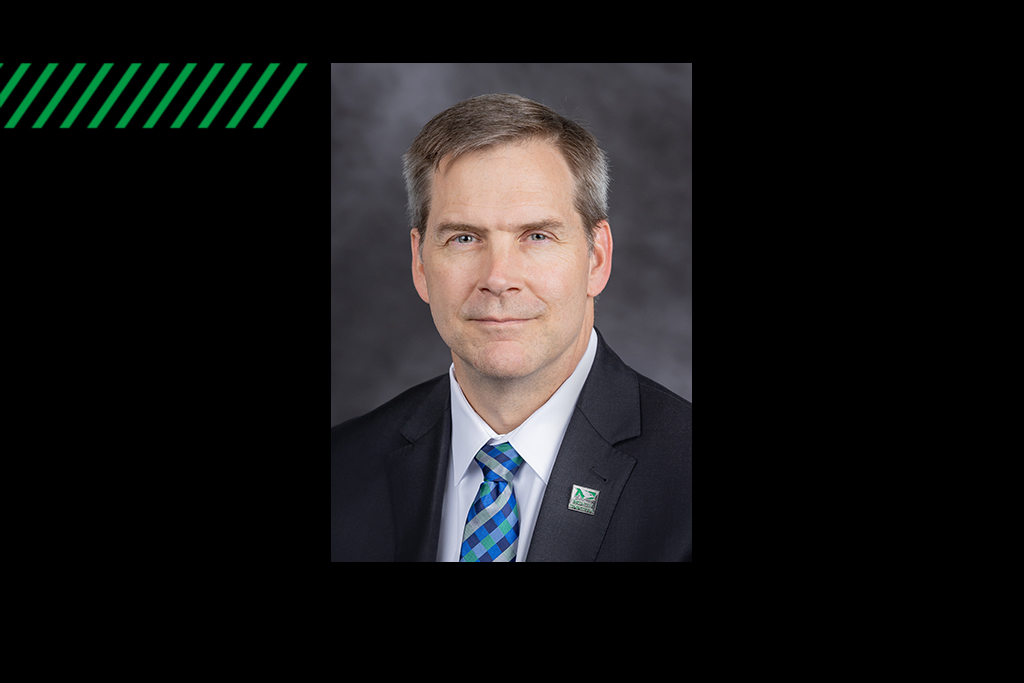
Editor’s note: Following the “Strive for 85” fall kickoff event on Monday, Aug. 18, UND Today hosted Provost Eric Link for an interview and further remarks on digital accessibility. Link answered questions on UND’s prioritization of accessibility; how the compliance effort will affect campus; and what resources are available to faculty and staff creating online content. Coverage of the kickoff is available to read in UND Today, which includes a link to a full recording of the event. This Q&A has been edited for style and clarity.
To meet upcoming changes to the Americans with Disabilities Act, UND’s digital resources and services need to be broadly accessible. From your experiences both as a professor and now as an academic leader, why is accessibility important?
As a teacher, whenever I’ve been in the classroom, I’ve tried to make sure that every student in each of my classes had an opportunity to be successful. That said, what I know now and what I knew as a 28-year-old assistant professor in my first academic job out of graduate school are quite different, and my understanding and appreciation for what it means to truly make class materials accessible to everyone has grown over that time.
I certainly wasn’t thinking about contrast ratios and alternative text options when I was using transparencies on an overhead projector, but I understand now that there may have been students in my classes at that time that had challenges because of those teaching methods, despite my best intentions.
Accessibility is important because it’s about ensuring that every member of our community can fully participate in the life of the University. Removing barriers, whether physical, digital or procedural, opens the door for students to engage in the course material and have the opportunity to learn and grow.
At UND, we are all committed to embodying some core values in our classes. Some of these values are expressed in our UND LEADS strategic plan. To realize UND’s mission and strategic priorities, we must make sure every student has the opportunity to succeed. Meeting digital accessibility requirements reflects our university’s commitment to educational excellence and access for every individual.
Would you say accessibility is a priority for UND, and how does prioritizing digital accessibility fit into the University’s strategic goals?
Yes! And, as I just mentioned, I see digital accessibility in strong alignment with the core values of the institution. Learning, Equity, Affinity, Discovery, Service — each of these cornerstones of the UND strategic plan, in their own way, point us to a future where educational excellence and opportunity are reflected in all dimensions of our work. Embracing accessibility as part of that vision is essential.
To be sure, there are federally mandated accessibility requirements that we must comply with, and we are working actively toward that compliance. But accessibility isn’t just about meeting a federal regulation, it’s about living our values and ensuring that everyone in our community can engage fully and receive exceptional educational experiences, which is core to our institutional mission at UND.
To help us all navigate this terrain, the University formed a Digital Accessibility Steering Committee and a Digital Accessibility Working Group in March to lead and coordinate campuswide efforts to make our digital resources, platforms and technologies accessible in accordance with Title II ADA regulations. These committees have been working closely with stakeholders across campus to help us all create a more inclusive digital environment.
One of the hallmarks of this campuswide effort is the “Strive for 85” campaign, which launched back in the spring semester and was celebrated in a kickoff event just last week. The initiative encourages faculty to follow best practices for course content creation and selection with a goal of achieving a Blackboard Ally score of 85% or higher for spring 2026 course content by the start of the spring 2026 semester. The federal regulations that are driving some of this work have a compliance deadline of April 2026. We are working toward that goal, of course. The “Strive for 85” campaign is an important step toward that compliance goal.
Does this just apply to UND? Is it temporary?
The federal guidelines apply to all public entities, including state universities, public K-12 schools and all state and local governments. More specifically, we are working toward compliance with WCAG 2.1 Level AA guidelines. WCAG stands for Web Content Accessibility Guidelines.
As we learn more about how to create accessible materials, the federal guidance may change or evolve, but that does not mean that the current guidance is temporary in any way.
We’re taking several steps to meet these regulations. Over the past year, we’ve been reviewing our websites, documents, videos and other web-based content to identify gaps using both automated tools and manual checks. Ongoing reviews will help us maintain compliance and address new issues. We’re focusing on public-facing content such as academic materials and high-traffic resources, adding features such as alternative text, captions and accessible forms.
This is no small task. We have thousands upon thousands of documents on our UND website, and thousands more — perhaps even tens of thousands more — that are used by faculty in their Blackboard class sites, and beyond.
I think we are up for the challenge, however. As we “Strive for 85,” we’ll get there. As faculty create new course materials and update existing course materials to meet accessibility standards, we’ll meet our goals and enhance learning opportunities and academic excellence across the campus.
How are these regulations impacting higher education on a broader scale?
All universities across the country are working, in one way or another, toward accessibility goals. With the rapid expansion of online courses, hybrid instruction and digital platforms for teaching, learning and support services, the need for accessible digital content has never been greater.
The relative degree to which campuses across the country have achieved compliance with these federal regulations varies widely, of course. Our task is first and foremost to make sure that the students we serve here at UND receive the best opportunities for learning and success that we can provide, and we’ll measure our success in reaching these goals not by whether we are doing better or worse than other institutions, but on the quality of the instruction we provide right here.
That said, this is a national movement, and I’m glad to be part not only of an institution, but also of a profession that values this work.
How are these accessibility goals being implemented on campus, especially in Academic Affairs?
It all starts with each faculty member at UND joining in the effort. We will not achieve our campuswide accessibility goals without the dedication of every single faculty member. If we all join together to make a difference, then we will not just meet our “Strive for 85” campaign goals — we’ll surpass them.
To someone unaccustomed to this work, or unfamiliar with the language of accessibility, or who has struggled to turn a PDF into an accessible document — I freely admit I’m in this latter group — reaching our accessibility goals on campus may seem like a tall mountain to climb.
But we can all take small steps forward now, and if we do this consistently, we’ll get there. Even small changes to the way faculty present their materials in Blackboard Ultra can make a difference. In my own discipline — by trade, I’m a professor of American literature — I often would upload image-based PDFs of short stories into my course management systems. Replacing those uploaded PDFs with permalinks to accessible versions of the stories I’m teaching can have a dramatic impact on the overall accessibility of my course materials.
Under the updated ADA regulations, course materials posted in Blackboard must meet accessibility standards, ensuring that all students, regardless of disability status, can engage fully with the content.
Faculty can get started by using Blackboard Ally to check their course materials’ accessibility scores, watching the Digital Accessibility Committee’s quick instructional video for tips, and replacing older, inaccessible content with more accessible alternatives.
For faculty who might have questions or need assistance, can you share what resources are available and explain how faculty can access them?
Of course! I want to assure faculty that they are not alone when trying to tackle this work. While meeting and maintaining compliance is everyone’s responsibility, UND has a rich and growing set of support services and resources available to help faculty with this important work.
The Teaching Transformation & Development Academy is offering a self-paced Blackboard Ultra course called the “10-Step Accessibility Challenge” that introduces the Blackboard Ally tool and common accessibility issues.
The Document Accessibility page offers a quick guide with 10 simple, actionable steps to improve accessibility, including checklists.
The Accessible Content webpage has guidance with different content types, including websites, PDFs and other documents with practical tips for common issues.
And UND also began offering access to Deque University this summer, which provides great accessibility information in a self-paced, online format, which I’ve heard is quite a useful resource.
Faculty can also reach out for hands-on help. Each UND college has a designated instructional designer who can provide support and strategies for building accessibility into courses. For one-on-one help, TTaDA has an accessibility lab that’s open for reservations, and faculty can also submit an Accessibility Assistance Ticket — a request form to get direct help with document accessibility issues.
The instructional designers in TTaDA cannot actually do the work for the faculty. The faculty have to have ownership of the materials for their classes and are ultimately responsible for meeting accessibility metrics for those materials. But the support team in TTaDA can answer questions, provide training and mentoring, and will do everything in their ability to help all UND faculty meet our goals.
Through working toward accessibility compliance now and into the future, how do you see that effort contributing to continued excellence at UND?
There are a few ways to think about this. First, accessibility is a quality standard that isn’t going away. Higher education is moving toward a future where accessibility is a baseline expectation that’s part of designing, delivering and sharing information in ways that include everyone. It’s the right thing to do, and it’s rooted in the values of our amazing institution. Academic excellence is for everyone. Every student — not just some students — should have the opportunity to learn, grow and succeed at UND.
One of the things I recently learned about — and I mentioned this at the “Strive for 85” launch event last week — is what’s called the “curb-cut effect.” I might be late to the game on this particular concept, but if you are unfamiliar with it, it’s a reference to the downstream, beneficial effects of curb cuts.
Originally, curb cuts — where a curb has been cut into to allow a sidewalk to meet street level — were designed to help those in wheelchairs gain access to sidewalks. Over time, however, these curb cuts were used by parents pushing baby strollers, cyclists and so many others.
Before joining academia, I used to have a commercial driver’s license, and I made deliveries throughout downtown Boston in a large truck. I would actively seek out curb cuts and park near them because they enabled me to roll a dolly easily from the truck to the entrance of the business where I was making a delivery.
The point is, there is value to this work. This work isn’t for the few — it’s for all of us. It speaks to our values, it demonstrates our commitment to our students and our community, and it enhances access and opportunity.
The work we’ll do, together, as we “Strive for 85” will have long-term benefits to the entire UND community.
####
>> Questions or comments about the UND LEADS Strategic Plan? Your thoughts are welcome! Please contact Ryan Zerr, associate vice president for Strategy & Implementation, or Anna Marie Kinney, coordinator of the University Writing Program, the co-chairs of the UND LEADS Implementation Committee. You also may offer your thoughts by visiting the UND LEADS Strategic Plan home page and clicking on the “Provide your feedback” link.
Thank you for your support of the UND LEADS Strategic Plan!