U.S. energy secretary talks ‘cracking the code’ at UND
Can carbon capture boost oil recovery in North Dakota’s Bakken Formation? We believe it can, UND researchers plus federal and state officials say
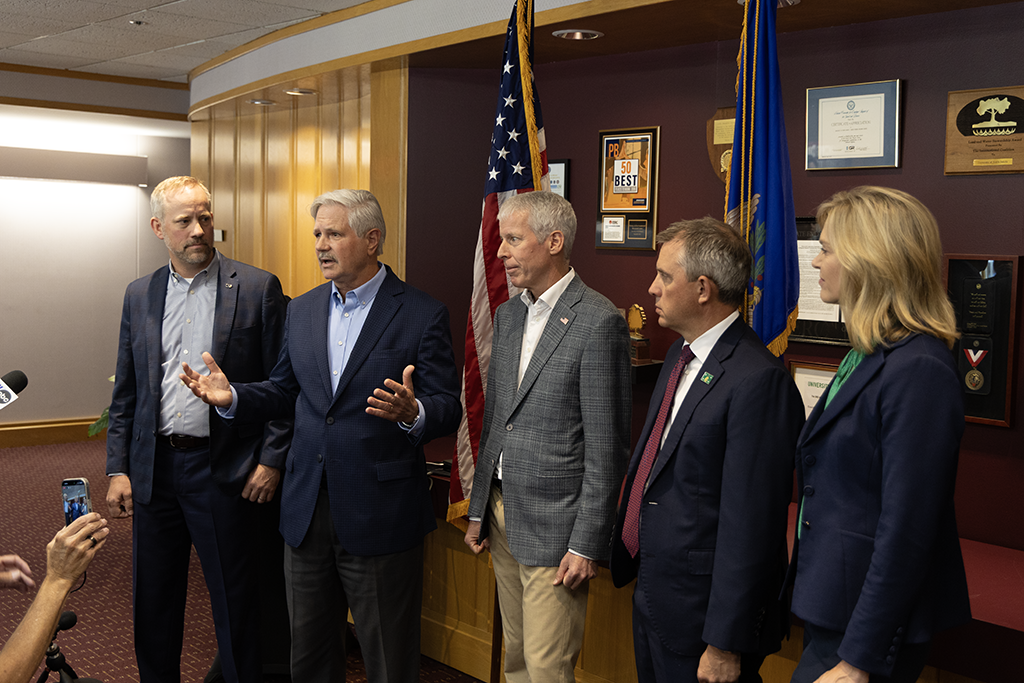
On Aug. 13, the U.S. secretary of energy paid a visit to UND’s Energy and Environmental Research Center (EERC), meeting with lawmakers and energy experts with the goal of “cracking the code” to increasing North Dakota’s oil output.
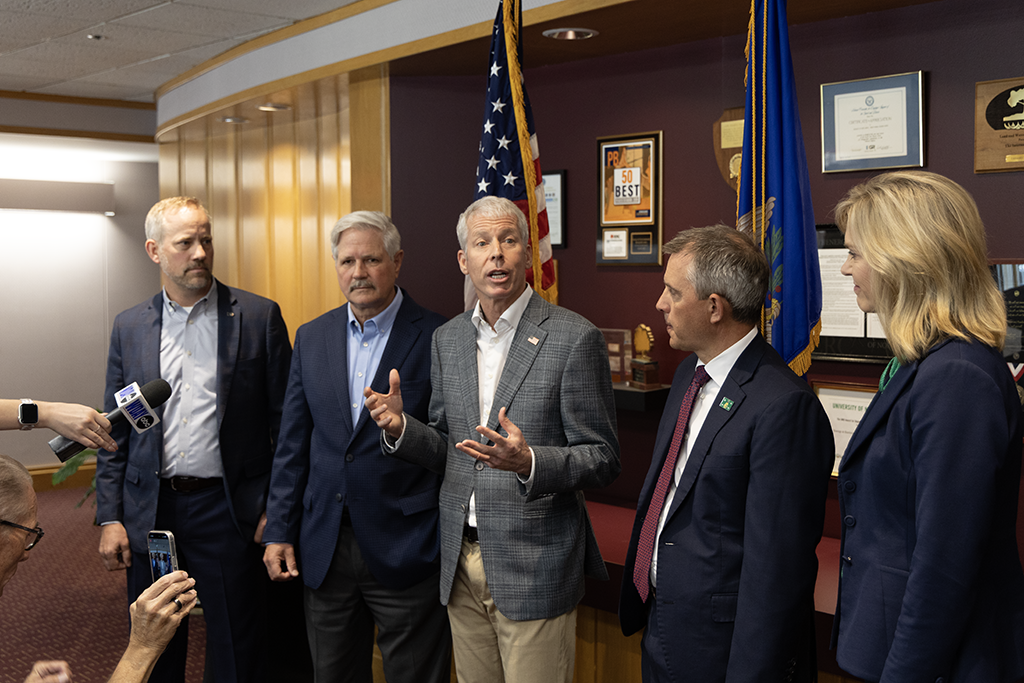
Joining Secretary of Energy Christopher Wright at the EERC were U.S. Sen. John Hoeven, R-N.D.; U.S. Rep. Julie Fedorchak, R-N.D.; and Gov. Kelly Armstrong.
A former oil executive, Wright is known for founding Liberty Energy, a company specializing in hydraulic fracturing or “fracking” technology. Thus, Wright is well-acquainted with the state’s energy landscape — indeed asserting during his address that North Dakota is “the best-governed state in the nation.”
Specifically, Wright cited Hoeven’s tenure as the 31st governor of North Dakota from 2000-10 as key to fostering a business-friendly climate in the state, an era that ushered in a wave of energy innovators.
This period, which Hoeven often dubs “cracking the code 1.0,” led to increased investment in fracturing technology and the subsequent oil boom in Western North Dakota’s Bakken Formation. The Bakken, Wright said, has played a key role in reducing America’s dependence on foreign oil.
“Twenty years ago, the United States was the largest importer of oil and natural gas in the world — the most energy-dependent,” Wright said. “To change the economic game for our country and reset global oil prices, the shale revolution had to transfer from just natural gas to include oil. Where did that happen? Right here in North Dakota.”
Fracking technology, Wright added, has since vaulted the U.S. to a new status as the largest exporter of liquefied natural gas in the world, and a growing exporter of oil.
However, oil production in the Bakken has declined from its peak of 1.5 million barrels per day in 2019 to around 1.1 million barrels today — a figure Hoeven argued will continue to decline without intervention.
That’s where state policymakers and energy experts hope that enhanced oil recovery will prove beneficial, a process Hoeven calls “cracking the code 2.0.” Enhanced oil recovery involves injecting captured carbon dioxide deep into the Bakken’s oil wells, which often stretch out miles below the earth’s surface.
According to Wright, unconventional oil reservoirs such as the Bakken typically yield only about 10% of their potential reserves — a figure he hopes could double through EOR. In addition, using CO2 for enhanced oil recovery will extend the working lives of North Dakota’s coal-fired power plants, Hoeven added.
“What makes more sense than using our coal plants to get the CO2 to do it?” Hoeven said. “We have 700 years of lignite coal reserves — so we have to keep those coal plants around for a while.”
“Nobody has figured out how to do this; we want to be the place that does,” he said.
Armstrong expressed optimism in the state’s ability to “crack the code” a second time around — citing the acumen of both Wright and the state’s elected officials.
“I have the easiest job in the world right now,” he joked. “I have a senator who was governor during the start of the oil boom, a congresswoman who served on the public service commission and a secretary of energy who understands the Bakken.
“They don’t just have energy IQ; they have North Dakota energy IQ. Hydraulic fracturing and horizontal drilling might have been invented in Texas, but we really perfected it here.”