Center for Rural Health associate director receives national award for brain-injury work
National Association of State Head Injury Administrators honors Rebecca Quinn as exceptional, transformational leader
By Jena Pierce
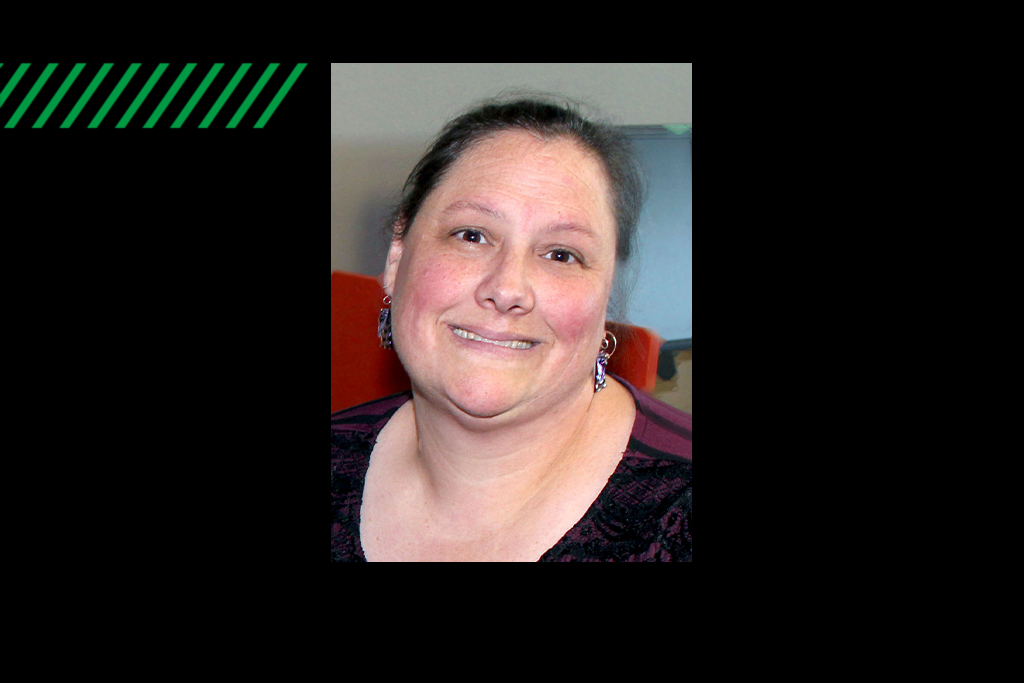
Rebecca Quinn, associate director at the Center for Rural Health (CRH), part of the School of Medicine & Health Sciences at the University of North Dakota, was recently honored by the National Association of State Head Injury Administrators (NASHIA). Quinn received the Friend of NASHIA award at the annual State of the States in Brain Injury Conference held in Portland, Maine, in October.
According to NASHIA, the Friend of NASHIA award is given to an individual who has consistently provided professional expertise and assistance to ensure that NASHIA offers quality information, materials, training and other opportunities to help states incorporate best practices into state programs and services, as well as to provide training to brain injury program administrators. NASHIA chose Quinn because she is “an exceptional leader whose vision and collaboration have transformed how North Dakota supports people with brain injury and their caregivers.”
Leading brain injury efforts
Quinn has been leading the North Dakota Brain Injury Network (NDBIN) for 13 years, when NDBIN began working toward raising awareness of brain injury prevention. NDBIN was originally developed at CRH as a traumatic brain injury prevention grant program, 18 years ago, but has grown into a comprehensive brain injury awareness and education program.
The program has grown to support seven staff members who provide information through outreach and education, referral services, peer support, training opportunities and more. Today, the North Dakota Brain Injury Network is a nationally recognized brain injury program which many other states hope to emulate. Webinars, trainings and virtual support groups have been attended by providers or survivors of brain injury in other states because of the network’s strong reputation.
Building support strategically
“Rebecca Quinn is a true systems builder,” the NASHIA release states. “She forges partnerships across agencies, communities and disciplines to create coordinated, person-centered services that truly change lives. Working closely with NASHIA, she has advanced best practices for her state’s Advisory Council on Brain Injury, shaped a strong state plan and has been a tireless advocate for paid peer supports.”
“I’m truly honored, humbled, and deeply touched to receive this award,” Quinn said. “This recognition reflects the collective work and collaboration of the NDBIN team, advocates, partners and friends committed to improving systems for people with brain injury. I am honored to work alongside and be inspired by such dedicated individuals every day.”
Known for her deep expertise and generous spirit, Quinn shares her knowledge with other states to help them think through how all of the pieces of complex systems connect. Her big-picture perspective has strengthened services across rural areas and expanded access to care for Medicaid beneficiaries. Quinn helped design one of the nation’s only Medicaid programs that specifically recognizes brain injury within behavioral health — a groundbreaking achievement that has strengthened care statewide.
Lasting impact
Quinn has testified many times at the North Dakota Legislature and is always received well due to her expert knowledge and experience in the world of brain injury. Her advice is sought after by those throughout state government but also by organizations and facilities that are looking to find additional information or guidance.
“Rebecca has been a tremendous force for brain injury prevention and advocacy in the state,” said Jacob Warren, director of the Center for Rurual Health. “The work she has led, for nearly two decades, is a testament to her passion in providing survivors with the education and resources they need, while working to prevent additional injuries. This award is very deserving, and we are proud to have her on our team.”
NASHIA continued, “[Quinn] also leverages policy to create lasting impact — including ensuring that brain injury is formally recognized within North Dakota’s Certified Peer Support Specialist framework, opening new opportunities for people with lived experience to lead and support others. Her partnerships now extend from youth programs to prisons and domestic violence services, making brain injury screening a recognized and supported part of her state’s work.”
Before coming to CRH in 2007, Quinn served as an adjunct professor in the social work department at UND, where she taught courses on gerontology and substance abuse. She is a licensed social worker and obtained her Master of Social Work degree from the University of Texas at Arlington in May 2000 and her Bachelor of Arts degree from Texas A&M in 1997.
About the author:
Jena Pierce is the communications manager at the Center for Rural Health at the UND School of Medicine & Health Sciences.