UND in orbit
With UND now controlling its satellites, the University has become one of America’s first to train students using its own space assets
By Averie Eixenberger
With the launch of two satellites, a new frontier of space sciences at the University of North Dakota now orbits around us. With UND now fully in control of day-to-day operations, students have the chance to gain real-world experience as satellite operators.
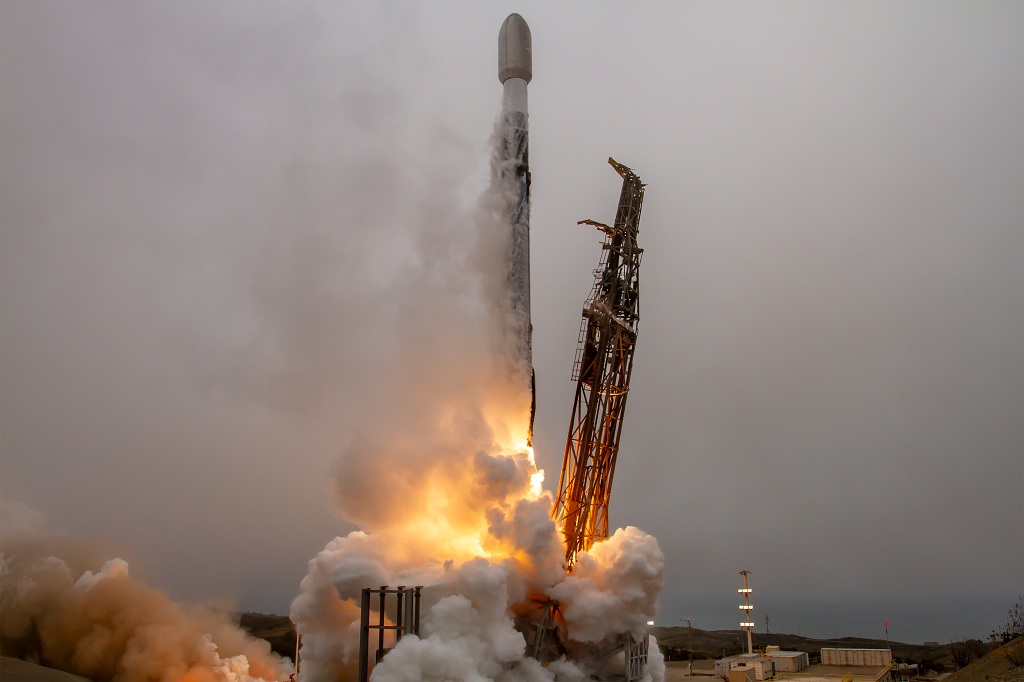
Getting a satellite into orbit is no easy task and requires time, research and collaboration. After years dedicated to the project, the satellites were launched aboard the SpaceX Falcon 9 Transporter 14 Rideshare mission this past June.
Thank you, North Dakota lawmakers
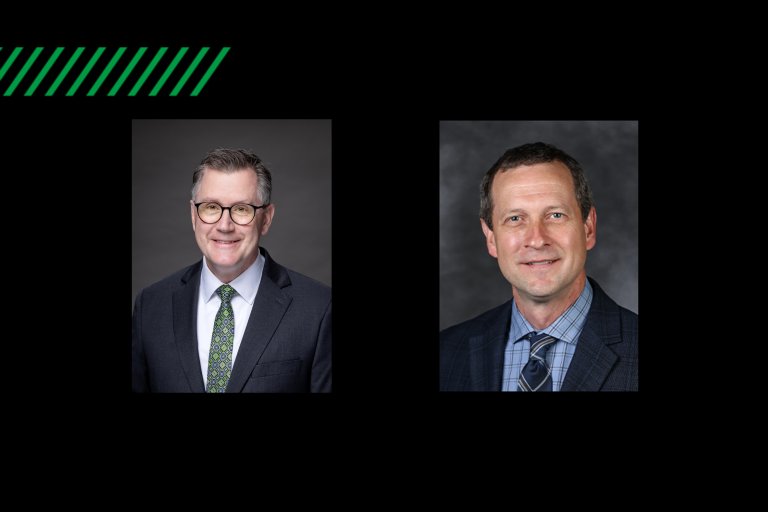
“UND had plans to place a satellite in space for many years,” said Pablo de León, professor and chair of Space Studies at UND and project manager for this satellite mission. “Several projects were initiated over time, but for a variety of reasons — most notably, the challenges associated with achieving orbit — they could not be completed.
“A few years ago, the North Dakota State Legislature awarded UND dedicated funding to support the development, construction, and launch of satellite infrastructure,” de León continued. “This funding made it possible to finally move the project forward.”
With funding secured, the project could continue into its next phases, undergoing several changes from how it was originally proposed. Those involved learned to evolve with it, keeping open minds to new ideas.
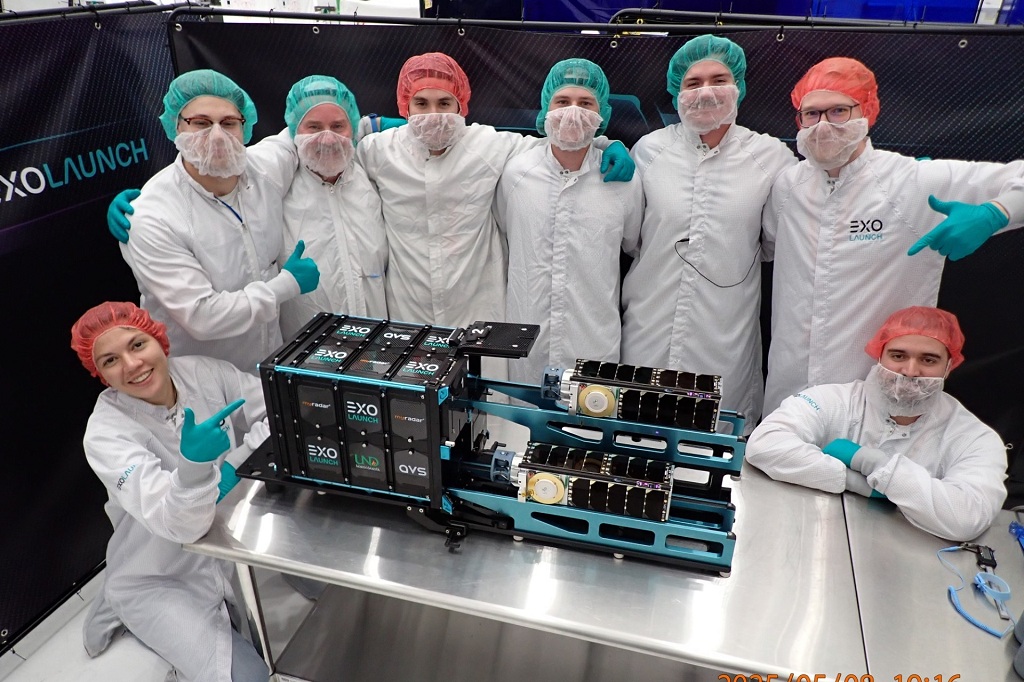
“The initial idea was to place a single satellite in space and operate it,” said de León. “During discussions among faculty, one of our professors, Dr. Marcos Fernández Tous, noted that he had been in contact with a company called AVS, which was establishing a presence in New York State and was developing small satellites. We reached out to them, and through discussions of possible mission architectures, the idea emerged to develop not one but two low-cost satellites.
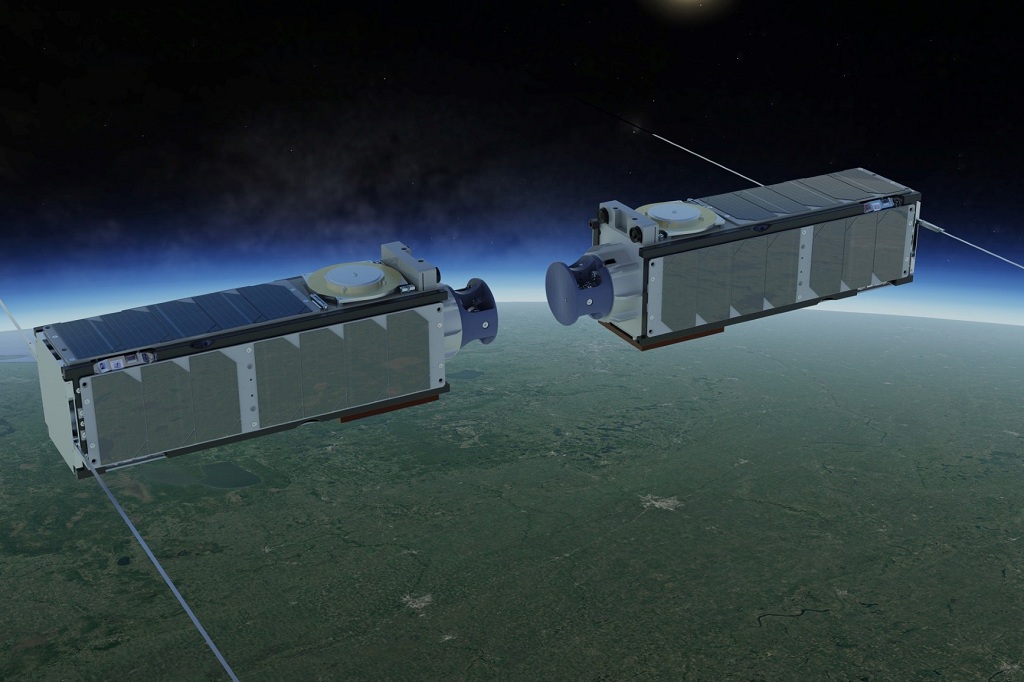
“These satellites would have the capability, after being launched separately, to locate each other in space and physically dock with one another.”
The ability for spacecraft and satellites to physically dock has real-world applications, as satellites of the future will require refueling while in space. The satellites would be able to demonstrate this ability to locate their target and make contact — an ambitious goal for the team, which was new to this type of mission, but determined to move forward.
“Gaining expertise in this area would uniquely position us to undertake more complex missions in the near future,” said de León. “The experience of executing such a sophisticated operation — finding another spacecraft and physically docking with it — would position UND as the only university with this specific expertise.”
Real-life training with real-world satellites
The launch, however, was not just the work of UND alone. Collaborations with Cornell University and AVS helped to get the satellite operational.
“Previously, Cornell University designed a similar mission, but was unable to achieve the objective of rendezvous between the two satellites,” said de León.
“Despite this, they were extremely generous in sharing their system designs, which helped reduce our development timeline, as well as detailing the software and hardware challenges that prevented successful docking. Although this presented a steep learning curve for our team, it enabled us, in collaboration with AVS, to implement the necessary changes and attempt a new mission using two redesigned satellites, which we named UND-ROADS.
“ROADS stands for ‘Rendezvous & Operations for Autonomous Docking and Servicing,’” de León continued. “With our in-house orbital mechanics expert, Dr. Ron Fevig, serving as the ROADS mission manager, his contributions were instrumental in successfully placing the two satellites into orbit and advancing the mission to its current stage.”
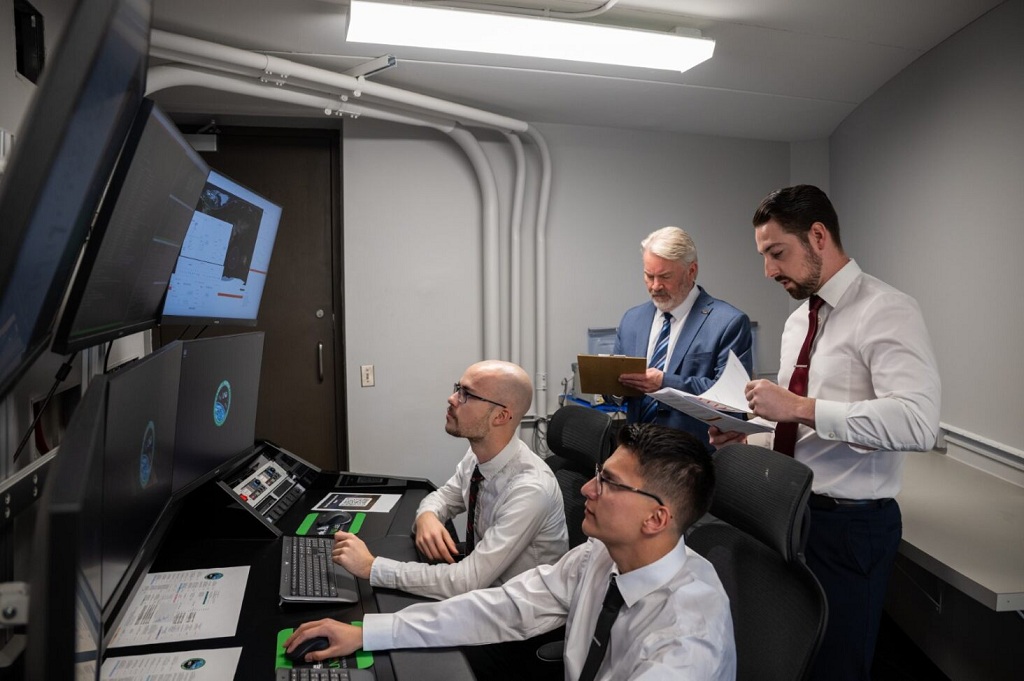
Now, UND is in control of the day-to-day operations of the satellites, with AVS assisting with critical operations. The project opens opportunities for students to gain hands-on experience as satellite operators.
“The two satellites provide space operations experience for UND faculty, staff and students,” said Fevig, associate professor of Space Studies and the project’s technical leader. “These satellites are intended to demonstrate autonomous docking between the two smallest satellites to ever do so. They are also intended to demonstrate Doppler tracking and also serve as a communications repeater to amateur radio operators worldwide.”
The project provided many opportunities for those involved, including the chance to work with industry partners. Faculty, staff and students gained new skills and experiences while getting the satellites operational.
“It was a wonderful professional development opportunity to go to AVS-US twice, once in March and again in April of this year, to work with AVS engineers and other staff and students from UND,” said Fevig. “It was incredibly satisfying to travel to AVS Headquarters in Spain to witness the launch and deployment of the satellites remotely and communicate with the satellites a couple of hours later. Graduate student Jacob Stanley joined me on that adventure.”
National leader in aviation, national leader in space
The opportunity to work directly with satellites strengthens the Space Studies program at UND Aerospace to help meet the demands of a growing job market. The ability to learn these useful skills while still in school makes students more competitive upon graduation.
“The roles of satellite operator and mission control specialist are in extremely high demand today and will become even more critical in the near future, with significant implications for both commercial space activities and military operations,” said de León. “UND is well positioned to become one of the first universities to offer this type of training using its own space assets, thereby educating the workforce in a capability that is essential to the future of U.S. leadership in space.”
As space operations grow and change, this next phase of UND aims to meet the growing demand for aerospace education. These satellites represent a continued dedication to preparing students for future career needs across all areas of aerospace.
“Obtaining this type of expertise is critically important in the 21st century, as an increasing amount of critical infrastructure will be deployed in space,” said de León. “The ability to navigate securely in the space domain and to control space assets is of fundamental importance. Through the ROADS program, we are learning not only about the design, construction and certification of these systems, but — most importantly for us in the School of Aerospace Sciences — about the operation of highly complex space systems.
“Developing the workforce of the future is what we do best. We are already the leading institution in the nation for aviation education, and we are now extending that leadership into the space domain.”
About the author:
 A UND senior, Averie Eixenberger is a communications and writing intern for UND Aerospace.