Making the space(s) for Learning
UND’s commitment to advanced, well-designed learning spaces is evident in every building across campus, authors say
Editor’s note: The following letter, written by Va’afusuaga Boese, classroom & Digital Media Services manager for University Information Technology; Kenneth Ruit, senior associate dean for Academic Affairs at the UND School of Medicine and Health Sciences; and Raya Rood, a member of the UND Student Senate representing the College of Education & Human Development, introduces a special edition of UND Today devoted to the Learning core value of the UND LEADS Strategic Plan.
As readers know, UND Today focuses on UND LEADS core values in our issue published on the last Tuesday of each month. This means that each of the stories in today’s issue centers on a UND program or activity that reflects the plan’s core value of Learning.
To continue the monthly UND Today series, our issue on May 26 will be devoted to the “Equity” core value.
Comments or questions? Contact Tom Dennis, UND Today editor, at tom.dennis@UND.edu. Thank you for reading!
****
By Va’afusuaga Boese, Kenneth Ruit and Raya Rood
In its core value of LEARNING, UND commits to making sure it has the technology and physical spaces that students and faculty need to have “productive and enriching educational experiences.”
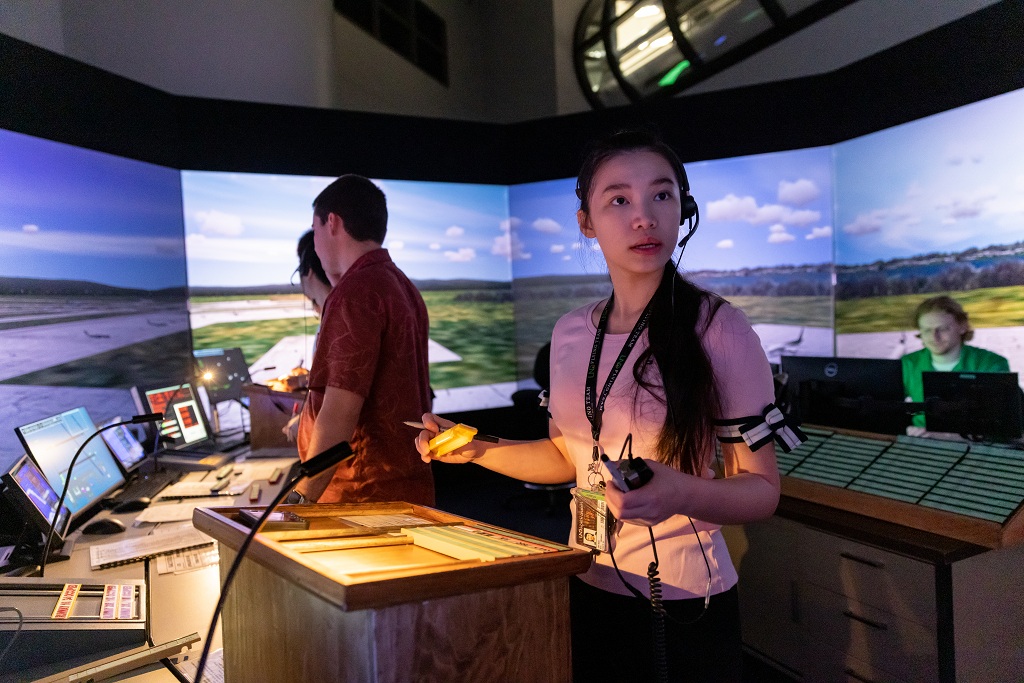
That’s why the University is home to more than 300 learning spaces, ranging from conference rooms to classrooms to auditoriums. We have more than 100 laboratory spaces, giving students the chance to explore fields such as health care, mineralogy, petrology, flight physiology, integrated biology, electronics, robotics, photography, paleontology, body movement, music, welding, clay throwing and even drilling for oil.
Student learning transformed
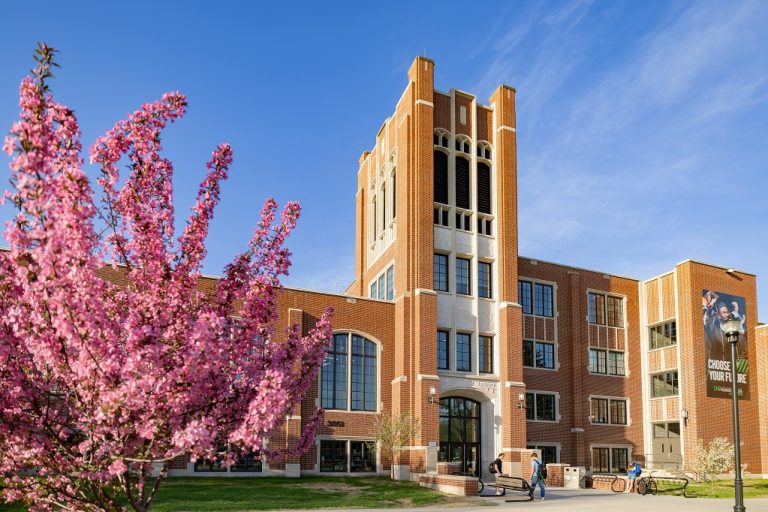
From a student perspective, the impact of these intentional, well-designed learning spaces at the University of North Dakota is both immediate and meaningful. Spaces such as Merrifield Hall — with its updated classrooms, collaborative study areas and the Cafe for Active Language Learning or CALL — have transformed the way students engage with both course content and each other.

Even in buildings that are a little older, UND continues to update spaces to meet student needs. For example, the College of Education & Human Development recently celebrated the grand opening of the Gershman Student Lounge, a welcoming place for education students to study, connect and collaborate.
As one of us, Raya Rood, notes, “I have spent countless hours in these spaces, and I’ve noticed how much their design and flexibility encourage learning and interaction. Being in spaces that are thoughtfully designed makes me feel more connected to my peers and more motivated to engage with my coursework.
“I’ve also had the chance to see this commitment through my involvement in student government,” Rood continues. “In that role, we have hosted speakers from across campus, who share the work being done to improve both physical and virtual learning environments. Hearing directly from faculty and staff has shown how intentional and student-centered these efforts are.
“And I’ve been part of early conversations surrounding the UND master planning process, where continuing to enhance learning spaces is consistently identified as a top priority,” Rood says. “It’s clear that UND is not only responding to current needs, but also planning ahead to better support future students.”
A future both ‘humbling and exhilarating’
Another of us, Kenneth Ruit, has watched this commitment shape the campus over time. “After nearly 35 years of teaching human anatomy and neuroscience — foundational sciences in medical education — at UND, I’ve had a front row seat to how dramatically learning has changed, and how profoundly our environments shape that learning,” Ruit says.
“As I reflect on the ‘Learning’ pillar of UND LEADS, I am reminded that the spaces we create, both physical and virtual, are not merely backdrops. They are active participants in how students grow into health professionals.

“Our experience in the School of Medicine & Health Sciences has shown that thoughtful design truly matters. When we built our current facility, we learned that flexibility is not simply about movable furniture. It is about creating rooms that naturally support teaching approaches and scheduling them in ways that minimize constant reconfiguration.
“That lesson is shaping our current conversations as we, in collaboration with the College of Nursing and Professional Disciplines, imagine UND’s next health professions building,” Ruit says. “We need classrooms that can seamlessly shift between lecture, team based learning and informal study, as well as shared spaces that encourage organic interaction among students from different programs.
“Equally important is the connection between physical and virtual learning environments,” he continues. “Today’s students move fluidly between in-person and online spaces, and our facilities must support that reality without leaving any learners feeling disconnected. This is especially critical as simulation, digital platforms for imaging and medical records, mobile apps and telemedicine become increasingly central to health professions education.
“High fidelity simulation and remote clinical encounters let students rehearse the realities of modern, interprofessional care — and these tools must be built into our infrastructure from the start, not added as afterthoughts.
“Looking ahead, emerging technologies — from virtual and augmented reality to AI-driven tools — will continue to reshape how we teach and how students learn,” Ruit concludes.
“At a recent national conference, I stepped into an augmented reality anatomy lab, where I could walk through a virtual human body and manipulate anatomical structures in real time. The experience was both humbling and exhilarating — a powerful reminder of how rapidly learning environments are evolving.
“As UND plans its next chapter, we have the chance to design spaces that not only meet today’s needs but also anticipate the future of health professions education.”
How UIT fits in
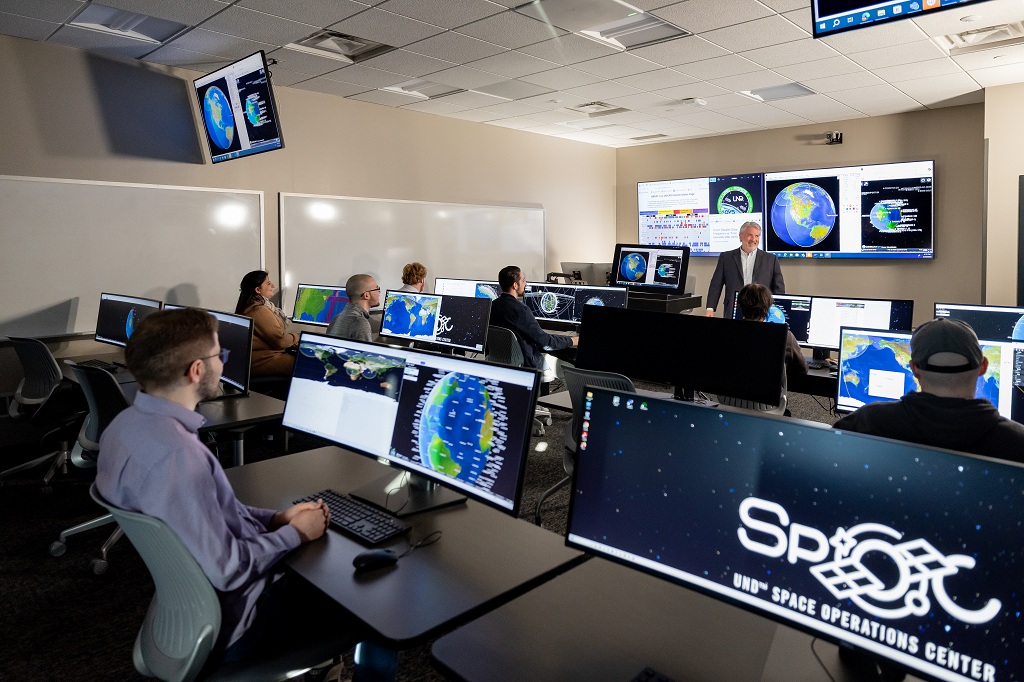
Then there is the vital role that University Information Technology or UIT plays in helping UND fulfill its “Learning” commitment.
Besides caring for UND’s information technology infrastructure, UIT works in collaboration with the Teaching Transformation and Development Academy or TTaDA, Facilities and the Provost’s Office to ensure that UND’s learning spaces are being maintained and updated consistently around campus.
This collaboration manifests itself as the Classrooms Working Group, which continuously surveys UND’s learning spaces and provides an up-to-date assessment of their condition to the Dean’s Council. The Dean’s Council uses this data to prioritize UND’s learning space renovation schedule, ensuring that the University’s resources are directed to where they are needed most.

UIT also helps by:
- Maintaining the AV systems installed in our learning spaces;
- Implementing a consistent user interface on AV systems across campus, allowing faculty members to switch between learning spaces with minimal effort;
- And evolving our AV system designs based on faculty feedback and industry best practices.
Since the COVID shutdown in 2020, UIT has strived to make sure all of our learning spaces are designed for recording content for asynchronous online courses as well as being capable of hosting online synchronous courses using Zoom.
In addition, UIT is always searching for innovative technology that will help faculty increase student engagement. For example, UIT has provided a body-motion capture system to Theatre Arts for the recording and assessment of dancer movements, a handheld USB microscope for Geology to point out rock and mineral features to students in real time, and a mobile spatial reality display that lets users see object models in a 3D environment without having to wear a VR headset.
Whether you are an incoming aviation student taking your first steps towards soloing, a nursing student learning how to administer anesthesia or a scholar/apprentice in any of our other fields of study, here’s one thing of which you can be sure: UND is a place for you to LEARN and grow.